
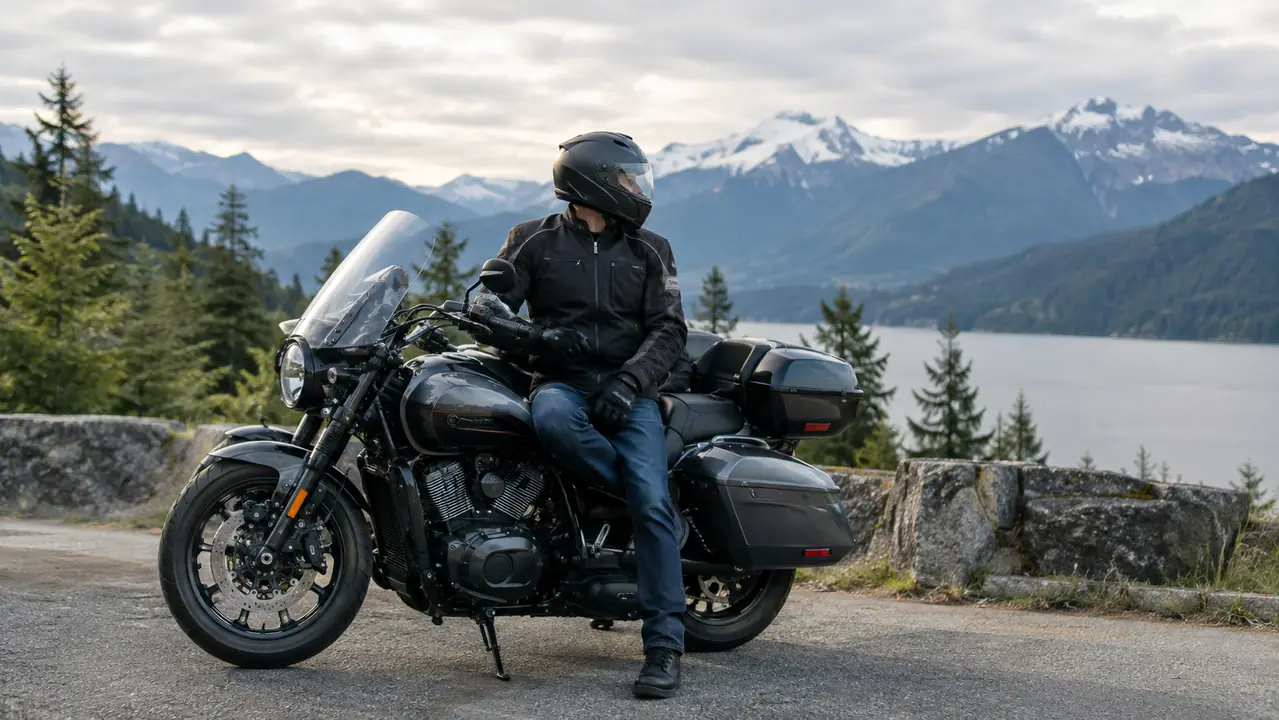
My wife Deb and I have been riding together for years, and for most of that time our conversations went like this: I would holler something over my shoulder at 55 mph, she would holler back, and we would both give up about a mile later, usually with one of us shouting 'what?' once more before silence. We tried hand signals, but those only work when the other person is looking. We tried stopping at every scenic pullout, which turned a two-hour loop into a four-hour one. We even tried one of those cheap headsets that promised hands-free riding and delivered mostly static and a battery that died before lunch.
The Cardo Spirit is the thing that finally fixed it. It is a simple two-way Bluetooth headset that clips onto a helmet, and after a few months of using it on the Road King, I can tell you exactly how to set it up, what works, and where it struggles. This is the guide I wish someone had handed me before I paired our first set.
Stop shouting over the wind and actually hear your partner
Pair two Cardo Spirit headsets in a few minutes and talk naturally at highway speed. Check today's price on Amazon and see if it fits your helmet.
Amazon Check Today's Price on Amazon →Step 1: Pair Each Cardo Spirit to Its Helmet
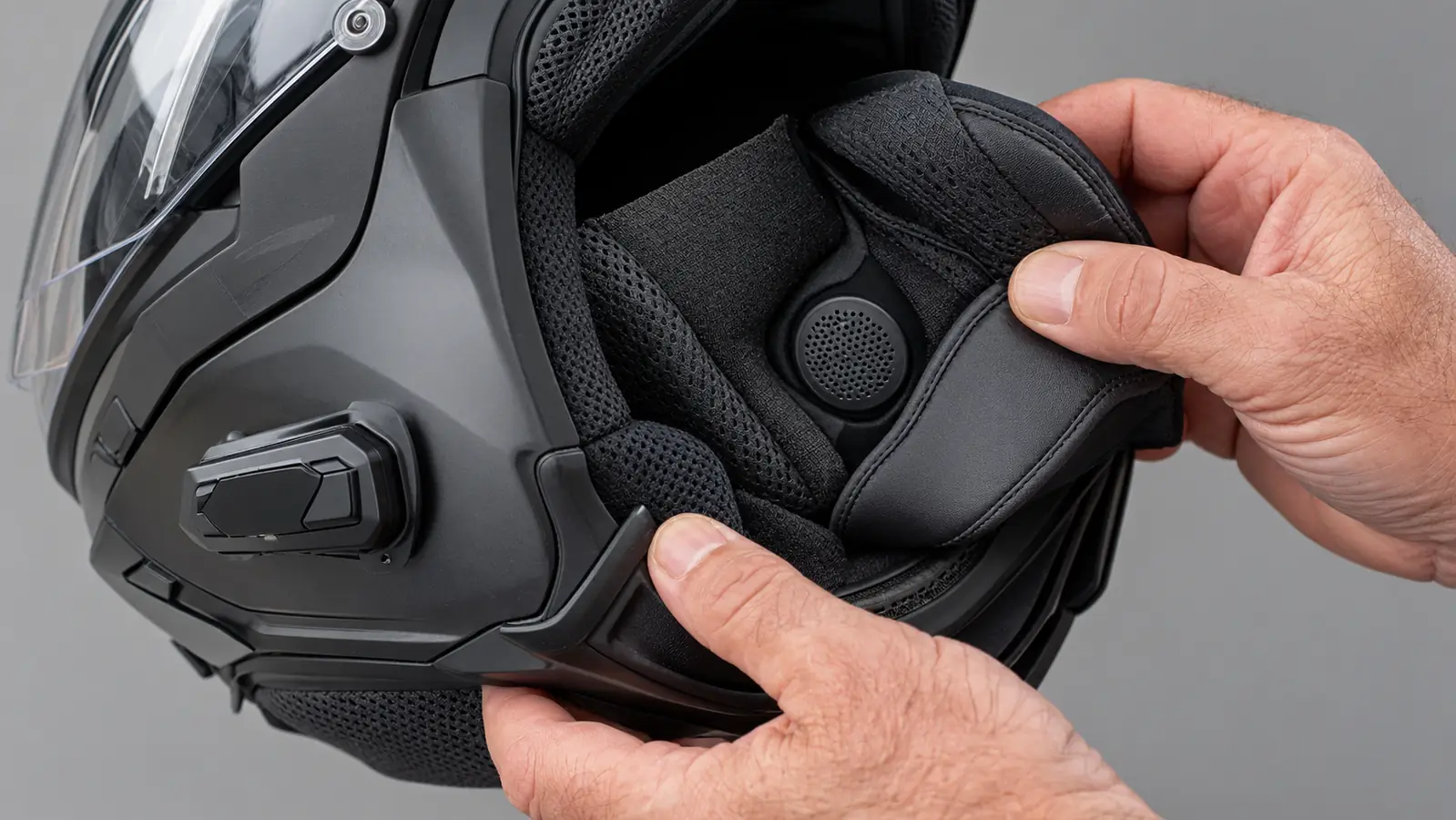
Before you can talk to your partner, you need each headset paired to the helmet it will live on. The Cardo Spirit comes with two thin speakers and a small control module. The speakers sit in the ear pockets of most helmets, and the module clips onto the left side of the shell. The whole thing is light enough that I forget it is there until I need it.
Mounting takes about ten minutes the first time. Peel the hook-and-loop pads, press them into the ear pockets, run the thin wires up under the liner, and clip the module on the outside. The wires are flat and flexible, so they hide under most helmet liners without bunching. My full-face helmet has molded speaker pockets, so the pads went in clean and stayed put. Deb's modular helmet does not have cutouts, and I still got hers mounted in about fifteen minutes by pressing the pads firmly into the liner foam. If your helmet has cutouts for speakers, use them. If it does not, the adhesive pads still hold fine. I checked both units after a month of weekend riding and neither speaker had shifted a millimeter.
One thing I learned the hard way: charge both units fully before you start. The Cardo Spirit charges with a standard USB cable and gets about eight hours of talk time. I set ours up on a Friday night ahead of a Saturday ride and skipped the charge because the lights looked fine. We got maybe four hours of conversation before the first unit went silent, and by midafternoon we were back to hollering. Now both units go on the charger every Friday night, no exceptions.
Step 2: Pair the Two Headsets to Each Other
This is the step that trips people up, because it is not the same as pairing to a phone. To link two Cardo Spirit units together, put both headsets in pairing mode by holding the main button until the LED flashes red and blue, then tap the button on one unit. Within a few seconds, both LEDs go solid and you are connected. My first attempt failed because I held the button on the second unit instead of tapping it, which put both headsets into phone pairing mode and left them ignoring each other. It took me two tries and a careful reread of the manual before I understood that the tap, not the hold, is what links the two units together.
The range is about 400 meters, which is plenty for two-up riding. We have ridden the length of the freeway between Tacoma and Olympia, stopped at opposite ends of a gas station, and the connection has never dropped once. One Sunday we wandered the back roads east of Mount Rainier, a stretch of switchbacks where I expected the signal to cut out around every corner, and it never did. If you are riding in a larger group, the Spirit supports up to four riders in what Cardo calls a conference, but the setup gets a little more involved. For a riding partner, the two-way pairing is all you need.
Once the two units are paired, they will reconnect automatically the next time you both power on. That is the detail that makes the Cardo Spirit feel like it just works. I thumb the starter, the headsets wake up, and by the time we reach the end of the driveway we can hear each other clearly. It took me a couple of weeks to trust it. I would watch the LED, wait for the solid light, and only then start the bike. Now I just put my helmet on and go.
Step 3: Set the Volume for Wind, Not for the Garage
The biggest mistake I made at first was setting the volume while the bike was parked. Everything sounded loud and clear, so I left it there. Then we hit the freeway and I could barely hear Deb over the wind. The Cardo Spirit has volume controls on the module, and they adjust up and down in small steps. Crank it higher than feels comfortable in the garage, and you will be closer to right at speed. On our first real test, a Saturday run up to Whidbey Island, I pulled into a rest area before the bridge and turned the volume up about three-quarters of the way. That setting has been right ever since, at any speed up to 70.
Wind noise is the real enemy, not the speakers. The Cardo Spirit comes with 32mm speakers that are thin enough to fit most helmets, and they do a good job for the price. But no helmet is completely quiet at highway speed. On the Road King with the windshield up, most of the wind hits my shoulders and the top of the helmet, and I still hear plenty of it at 70 mph. If you wear a half helmet or a beanie, you will hear a lot of wind no matter what. A full-face helmet makes a big difference, and so does a helmet with a decent seal around the ears.
Cardo also builds in something called VOX voice activation, which lets you answer a call or start a conversation by saying a command. In practice, I found it works better with the wind noise when I set the sensitivity carefully. If it triggers on every gust, dial it down. If it ignores you, dial it up. It takes one ride to find the sweet spot.
Step 4: Use It for Directions, Music, and Phone Calls
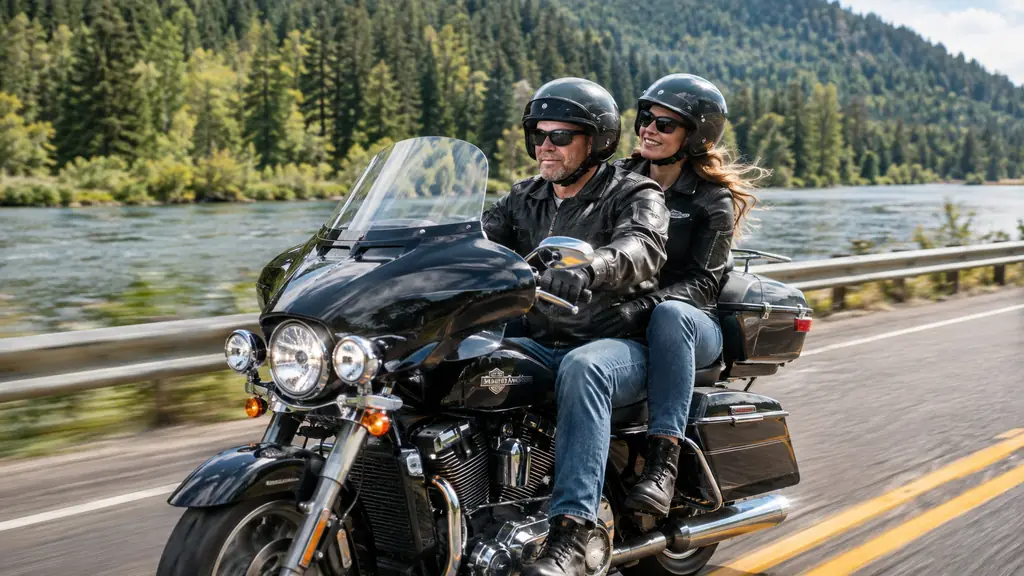
The Cardo Spirit is a two-way intercom first, but it also connects to your phone over Bluetooth. That means you can get turn-by-turn directions in your helmet, listen to music, and take a call without pulling over. Deb and I use the directions feature on longer trips. On our summer run down the Oregon coast, the voice prompts came through clearly enough that we never had to stop and dig the phone out of a pocket to figure out where we were. That alone saved us a lot of pullovers on a route full of unmarked county roads.
Music is where the Spirit is good but not great. The speakers handle spoken word and podcasts well, and music at moderate volume sounds fine. Podcasts are where it shines. Deb and I will ride an hour with a book going and it feels like listening at home. If you are an audiophile who wants concert-level sound at 80 mph, this is not that headset. For everyday riding, it is plenty. The controls let you skip tracks and adjust volume without taking your hands off the bars.
Phone calls are clear enough that the person on the other end usually cannot tell I am on a bike. The microphone does a decent job of filtering wind noise. I have taken a call while rolling through the Cascades and the guy on the other end thought I was standing in my kitchen. That is about the best endorsement I can give.
Step 5: Manage Battery and Charge Before You Need It
Battery life is the one spec you should not ignore. The Cardo Spirit gets roughly eight hours of talk time on a full charge. That is enough for a full day of riding, but it is not enough for a week-long trip without charging. I charge both units the night before a long ride, and I keep a USB cable in the saddlebag just in case. The one time I skipped it was a Saturday when I rode to a youth soccer game, refereed two matches, and then headed out for an afternoon loop without plugging in. The headset went quiet about an hour into the ride, and Deb rode the last stretch home in silence.
The charging port is covered by a small rubber flap. It charges in about two hours, and the LED changes color when it is done. If you ride every weekend like I do, a single charge on Friday night covers both Saturday and Sunday rides. If you ride every day, you will get used to plugging it in every couple of evenings.
One honest note: the Spirit does not have the fancy charging case or the long-distance range of Cardo's bigger models. It is the entry point in the lineup, and it is priced like it. For a rider and a passenger, or two riders who stay within sight of each other, it is more than enough. If you need to talk to a group of six across a mountain pass, you want the bigger Packtalk model instead.
What Else Helps
A few small things make a big difference. First, install the speakers while the helmet liner is clean and dry. The adhesive sticks better and the speakers stay put. Second, run the wires under the liner rather than over it, so they do not flap in the wind. Third, test the pairing at a gas station before a long ride, not at the start of the ride when everyone is ready to go. And fourth, if you wear earplugs, try them once with the intercom. Some riders find the combination reduces fatigue on long days, and the Cardo Spirit is loud enough to still hear clearly through them. I also update both units through the Cardo Connect app when I remember, which takes a few minutes on the phone and has smoothed out the occasional hiccup.
The first time Deb said something at 70 mph and I heard it without asking her to repeat it, I knew we were never going back to hand signals.
What I'd Tell You If We Were Sitting at the Gas Station
If you are thinking about the Cardo Spirit, here is the honest version. It is not the fanciest intercom on the market, and it does not try to be. It is a simple, reliable way to talk to your riding partner, get directions, and take the occasional call. The speakers are thin, the setup is straightforward, and the price is fair for what it does.
The things I would warn you about are the same things I would warn any rider about. Half helmets are noisy. Rain makes the controls harder to use, though the unit is water-resistant. And if you are the kind of rider who wants to chat with a group of eight people on a cross-country trip, you will outgrow the Spirit. For the rest of us, the ones who ride two-up on a Saturday morning and just want to hear our partner laugh at the same joke, the Cardo Spirit is the right tool.
Give your next ride the upgrade your ears have been waiting for
Set up two Cardo Spirit headsets in an evening and hear each other clearly on tomorrow's ride. Check today's price on Amazon and see if it fits your helmet.
Amazon Check Today's Price on Amazon →