
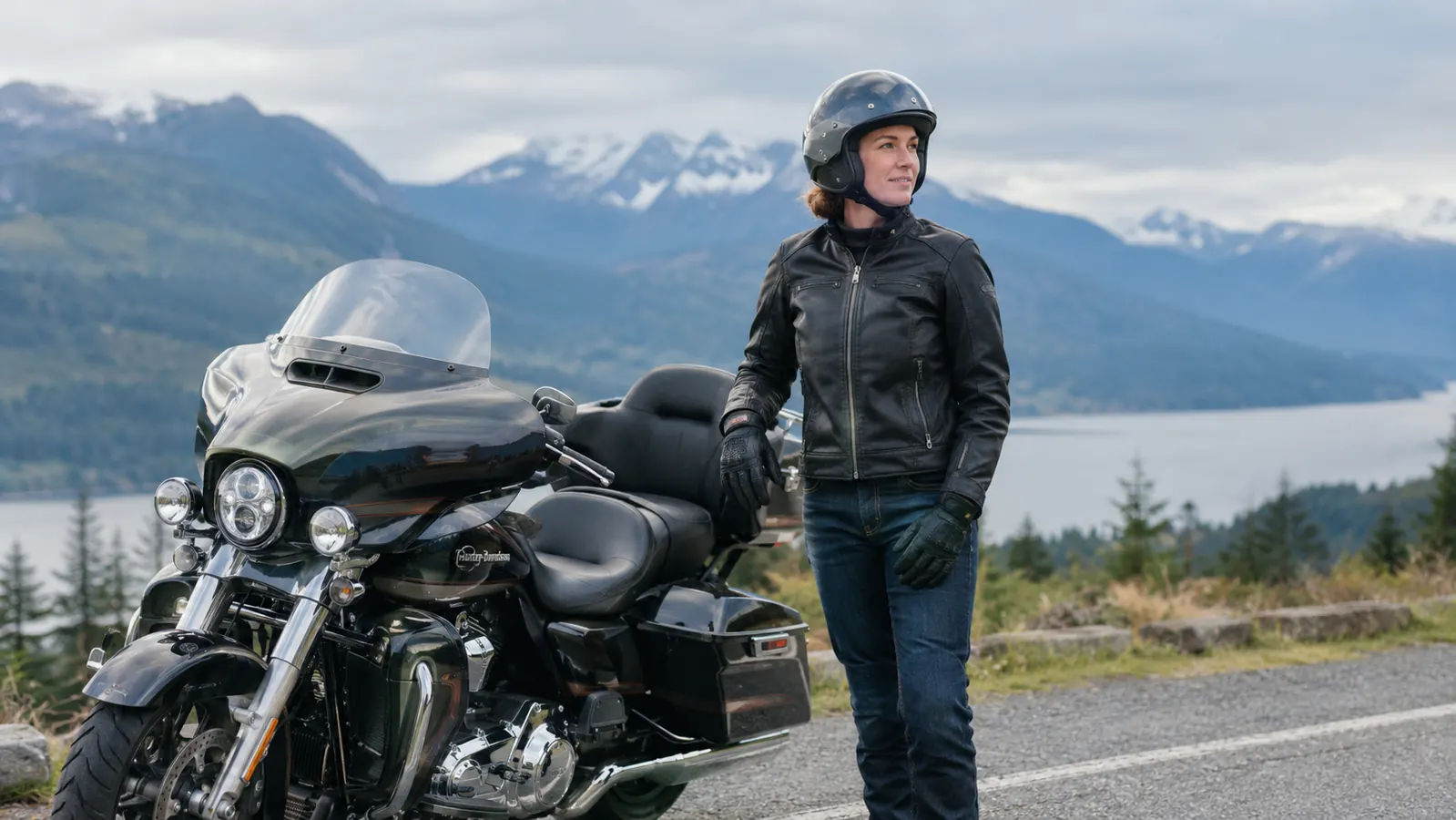
I bought the Cardo Spirit last spring, mostly because Deb and I were tired of yelling at each other through helmet shells at 60 miles an hour. She rides on the back of my Road King on weekends, and every conversation went the same way: she'd tap my shoulder, I'd turn my head, and we'd both give up after one sentence. By June I had the Spirit mounted on my half helmet and hers, and we've now put a full season of Pacific Northwest miles on it. This is the long-term review I wish I'd found before I bought it.
The Quick Verdict
The Cardo Spirit is the best value in two-rider Bluetooth intercoms I've used. It does one thing, rider-to-rider comms, and it does it reliably. The sound is clear up to about 80 mph, the battery lasts a full day of riding, and the controls are simple enough that I never had to pull over to fiddle with them. It is not a mesh system and it is not a music-first headset, so if you ride in big groups or want concert-quality audio, look elsewhere. For a couple on a cruiser, it's hard to beat.
Amazon Check Today's Price →Ride With Your Passenger, Not Just Next to Them
After a full season of use, the Cardo Spirit is still the intercom I'd recommend to any two-up rider who wants clear comms without a complicated setup. Check today's price on Amazon and see if it fits your helmet.
Amazon Check Today's Price on Amazon →How I've Used It
The Spirit has been on my helmet since the first week of May. I ride a 2016 Road King, and my routine is pretty fixed: Saturday morning youth soccer games, where I referee, and then a longer ride with Deb on Sunday when the weather cooperates. That means the intercom gets used in short bursts during the week and for four to six hours at a stretch on weekends. I've also taken it on our one longer summer trip, a five-day loop through the Cascades, where it ran from breakfast until we parked at the hotel each night.
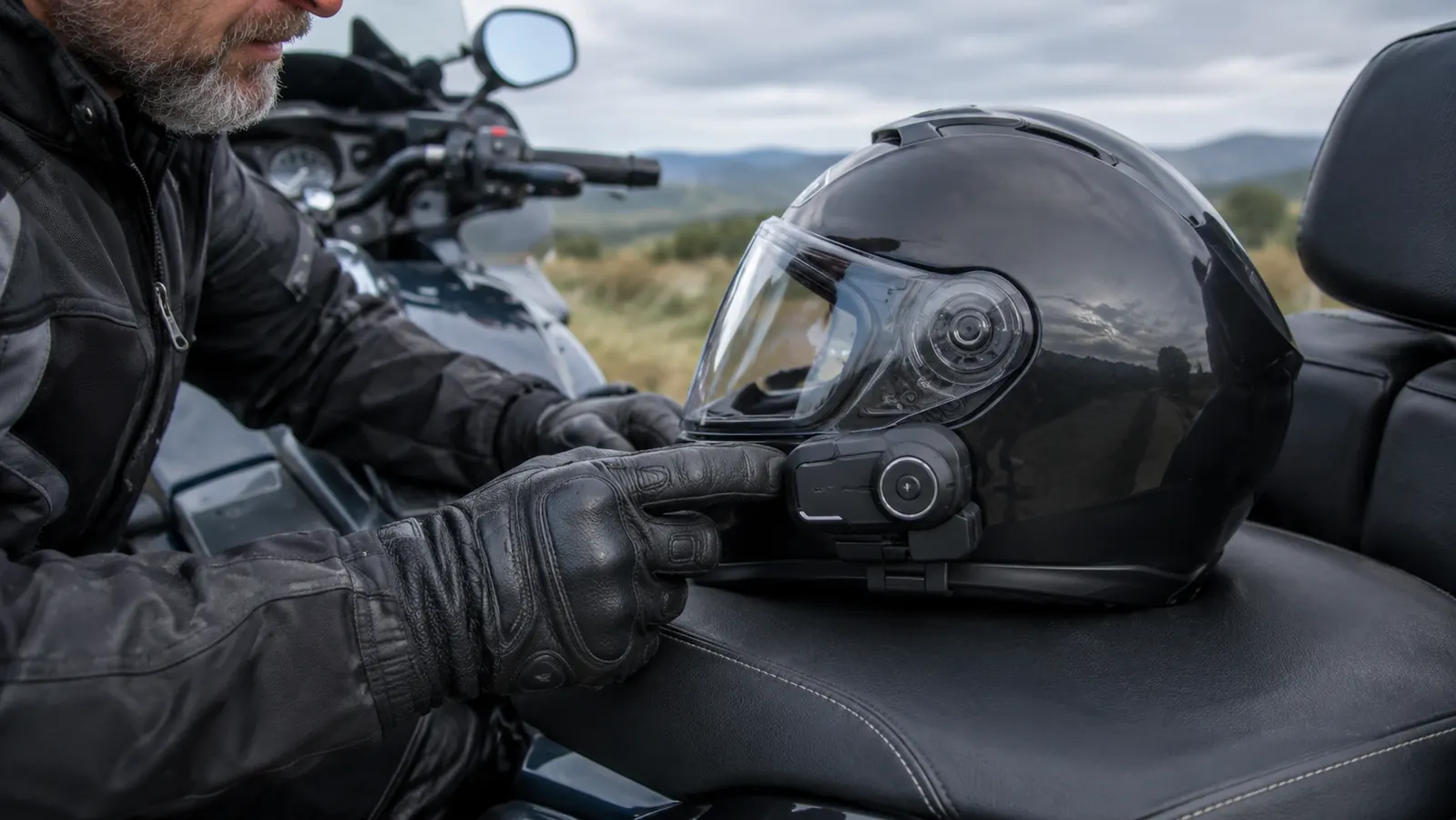
My helmet is a half shell, which matters more than you'd think. The Spirit's 32mm speakers are thin enough to sit inside the ear pockets without pressing hard against my ears, and the boom mic tucks under the shell's edge. Deb's helmet is a modular, and the same unit fit it fine. We paired the two units once, and they've reconnected automatically every ride since. I have not touched the pairing button since the first week.
The controls are two big buttons and a wheel. I can answer a call, adjust volume, and start or end a conversation without taking my eyes off the road. That sounds like a small thing, but on a bike, it's the difference between using a feature and ignoring it. I use the intercom every ride. I never once had to pull over to figure out what the unit was doing.
One Saturday in late September is the ride that sold me on the weather sealing. I had a 9:00 referee assignment in Puyallup and it was pouring when I left the house. I rode the 40 minutes with the intercom on, mostly to let Deb know I had made it through the worst of it, and the rain never fazed the unit. The buttons stayed responsive under a wet glove, and the mic kept working with water running down the shell. When I got home that afternoon the Spirit was still on, still paired, and ready to go again the next morning. That mattered to me because my bike lives under a carport, and plenty of electronics I have owned over the years did not like the damp.
What the Cardo Spirit Does Well
The headline feature is the two-way intercom, and it works. Cardo calls it a 2-way Bluetooth system, which means it connects one rider to one passenger or one rider to another rider. On the Road King, that's exactly the setup I need. Deb and I can talk at highway speeds without raising our voices. The voice quality is not phone-call clear, but it's close. She can hear me say 'gas station at the next exit' and I can hear her say 'slow down, I dropped my glove' without either of us repeating ourselves.
The range is rated for about 400 meters, and in practice that held up on open roads. When we split up to run errands, the connection stayed solid for a surprising distance. It dropped once when I went around a hillside and she was on the other side, but it reconnected automatically within a few seconds. For a two-up rider, the range is more than enough. The only time I noticed the limit was when we rode in a group of four and the other two riders were on a different system. The Spirit is not a mesh intercom, so it can't bridge into a group conversation the way Cardo's higher-end models can. If you ride in a pack every weekend, that's a real limitation. If you ride with one passenger, it's a non-issue.
Battery life is the other standout. Cardo rates it at about 10 hours of talk time, and my experience matches that. On our five-day trip, I charged it once, on the third night, and it never came close to dying. The USB-C charging port is a small thing that makes a big difference, because I can charge it with the same cable I use for my phone. The unit also charges while you ride if you plug it into a USB outlet, which I did on the last day of the trip just to be safe.
One Sunday in July is my best example. We left the house at 8:30 in the morning, rode out to the coast for fish and chips, and did not park the bike until 6:30 that evening. Ten hours with the intercom on for almost all of it, and the unit still showed two bars when we got home. I have never managed to drain the battery in a single day of riding, and I stopped carrying the charger on day rides entirely by August. That is the highest compliment I can give a piece of electronics, because every other intercom I have owned made me watch the battery meter like a fuel gauge.
Sound Quality and Music
The 32mm speakers are the thinnest Cardo makes, and they sound better than I expected. At 60 mph with a half helmet, I can hear music clearly. At 75 mph, the wind noise starts to compete, and I have to turn the volume up. The Spirit has automatic volume adjustment, which raises the volume as speed increases, and it works well enough that I rarely touch the wheel. The speakers are not audiophile grade. If you want to hear every instrument in a song, you'll want a system with larger speakers or in-ear monitors. But for talk radio, podcasts, and classic rock at cruising speed, they're perfectly good.
One thing I'll note honestly: the Spirit is not a music-first device. It pairs with your phone for music and calls, but the intercom takes priority. When Deb talks, the music ducks down automatically, and when she stops, it comes back. That's exactly what I want. The voice prompts are clear and easy to understand, and they tell you what's happening without requiring you to look at the unit. I set mine to English and never changed it.
What I Liked
- Clear two-way comms up to about 80 mph with a half helmet
- Battery easily lasts a full day of riding, with USB-C charging
- Simple controls that work with riding gloves on
- Pairs once and reconnects automatically on every ride
- Thin 32mm speakers fit comfortably in most helmet ear pockets
Where It Falls Short
- 2-way Bluetooth only, so no group comms with three or more riders
- No noise cancellation, wind noise comes through at highway speeds
- Small wheel control can be fiddly with thick winter gloves
- Stick-on mount can loosen in heat, clamp mount is more reliable
- Speakers are good but not for audiophiles
The real test was a five-day trip through the Cascades. The Spirit ran from breakfast to hotel parking every day, and we never once had to repeat a sentence.
What Nobody Tells You Before You Buy
First, the fit. The Spirit comes with a clamp mount and a stick-on mount, and the clamp is the one you'll want for most helmets. It took me about ten minutes to install, and that included figuring out which side of the helmet to put it on. The speakers sit in the ear pockets, and the wires tuck into the helmet liner. On a half helmet, the wire is visible, but it doesn't get in the way. On a modular or full-face, it disappears completely.
Second, the wind noise. The Spirit does not have noise cancellation, and it doesn't pretend to. At highway speeds, the person on the other end can hear wind noise in the background. It's not bad enough to make conversation difficult, but it's there. If you ride a bike with a tall windshield, you'll notice it less. On my Road King with a stock windshield, it was fine. On a naked bike, it would be more of an issue.
Third, the buttons. The two main buttons are easy to find with gloves on, but the wheel is small. I have big hands, and it took me a few rides to get used to rolling it without accidentally changing the volume. Once I did, it became second nature. If you wear thick winter gloves, you may find the wheel a little fiddly. It's a minor complaint, but it's worth knowing.
The stick-on mount is the option I would warn people about. I used the clamp mount on my helmet and it has never budged, but I tried the stick-on mount on a spare helmet I keep for passengers and it came loose after about six weeks of regular use. The adhesive softened in the heat of a parked bike, and the whole unit sagged until the speakers sat wrong in the ear pockets. I switched that helmet over to the clamp mount too and have not had a problem since. If your helmet has a thick trim or a shape that makes the clamp awkward, the stick-on will work, but check it every few weeks and re-seat it if it starts to shift.
How It Compares to the Alternatives
I tested the Spirit against two other options before I settled on it. The first was a cheaper no-name intercom from an online marketplace. It paired fine in the garage, but the range was maybe 100 meters, the battery died after three hours, and the sound was so muffled that Deb and I gave up on it after one ride. The second was a higher-end Cardo model with mesh networking. It was better in every way, but it cost more than twice as much, and I don't ride in groups large enough to need mesh. The Spirit sits in the sweet spot: it does the one thing I need, and it does it well, at a price that doesn't hurt.
The no-name unit is worth one more sentence because it explains why I landed where I did. On our first real ride it dropped the connection every time we rounded a curve, and the audio cut in and out so badly that Deb finally asked if I could hear her at all. I pulled over, restarted it, and it worked for maybe ten minutes before cutting out again. I returned it that week and went back to reading reviews, which is when the Spirit kept coming up as the sensible middle ground. I do not regret spending the extra money, because the difference in reliability showed up on the very first ride.
If you're comparing the Spirit to a Sena intercom, the honest answer is that both are good. Sena's entry-level units have a similar feature set, and the choice often comes down to which brand your riding buddies use. If everyone you ride with is on Sena, get a Sena. If you ride mostly with your passenger, the Spirit is the better value. I've written a separate comparison of the Cardo Spirit and Sena's entry-level intercom if you want the full breakdown.
Who This Is For
The Cardo Spirit is for the rider who wants to talk to their passenger or one other rider without shouting. It's for the couple who rides two-up on weekends, the friend who leads and the friend who follows, the rider who wants to hear directions from their phone without pulling over. It's for the person who values simplicity over features. If you want a device that works the same way every time, pairs once, and never makes you think about it, this is it. It's also for the rider on a budget who doesn't want to spend mesh-system money for a use case that doesn't need it.
Who Should Skip It
Skip the Spirit if you ride in a group of three or more and need everyone in the conversation. The 2-way Bluetooth limit means only two riders can talk at once, and you'll need a mesh system for group comms. Skip it if you're an audiophile who wants rich, full-range music. The thin speakers are good, not great. Skip it if you wear a helmet with no ear pockets and don't want to deal with adhesive mounts. And skip it if you want to record your rides or use a remote control, because the Spirit doesn't have either. It's a focused device, and that's the point.
A Full Season Later, I'd Buy It Again
The Cardo Spirit has earned its place on my helmet. If you ride two-up and want clear, reliable comms without a complicated setup, this is the one to get. Check today's price on Amazon.
Amazon Check Today's Price on Amazon →