For years I rode with nothing in my ears but wind noise and my own thoughts. The first intercom I tried was cheap enough to feel like a deal and bad enough to remind me why it was cheap, and the second one died on a wet ride home from a Saturday soccer game. When I finally switched to the Cardo Spirit on my Road King, the difference showed up on the first rainy ride to the pitch. This is a straight comparison between the Cardo Spirit and the Sena 10S, written the way I wish someone had written it for me before I spent my own money.
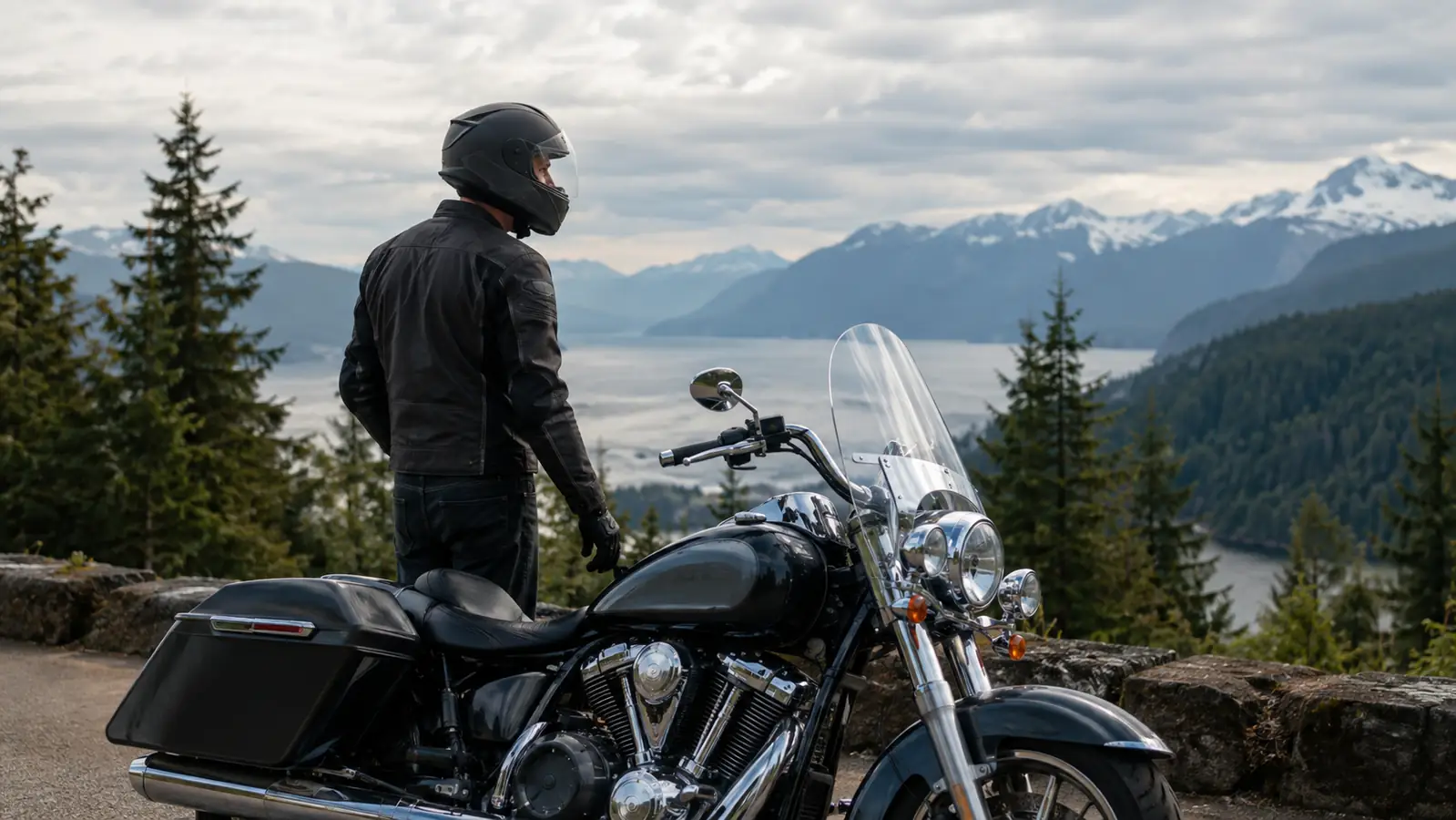
I ride a black Road King, mostly on weekends and summer evenings around the Puget Sound area, and my wife Deb rides on the back for the longer trips. That means my intercom life is mostly two people talking at highway speed, plus music, plus the occasional phone call I should not be taking. I have used the Cardo Spirit for a full riding season, and I put a few hundred miles on a Sena 10S so I could compare them head to head. The short answer is this: for a touring rider who rides one up or with one passenger, the Cardo Spirit is the better buy. If you ride in a pack of three or four, the Sena has real advantages, and I will get to those in a minute.
| Cardo Spirit | Sena 10S | |
|---|---|---|
| Price | Everyday price sits lower, and it often drops further during sales. | A step up in the catalog, and the price follows. |
| Battery life | Rated around 13 hours of talk time; I charge about once a week. | Rated around 10 hours, enough for a long day but not a full weekend. |
| Intercom range | Solid rider to passenger range and reliable contact bike to bike in a tight group. | Advertises roughly double the line of sight range, which helps when bikes spread out. |
| Group intercom | Two riders only, which is all a passenger setup needs. | Up to four riders can share one intercom conversation. |
| Speaker fit | Thin 32mm speakers designed to fit helmet pockets without cutting foam. | 32mm speakers, and some riders end up trimming foam for a snug fit. |
| Controls | One large wheel and a simple button layout, easy to find in winter gloves. | A jog dial that takes some getting used to, then works fine. |
| Weather sealing | IP67 rated, and it has handled a full Pacific Northwest rainy season. | Also IP67 rated, same story in the wet. |
| Setup | Pairs with Cardo Connect in minutes, and basic two rider pairing needs no app at all. | Works fine, but the app is basically required for setup and firmware. |
How I Compared Them
Most of my miles are two up. Deb and I do a long summer trip every year, and on those trips we talk for hours, which means the intercom has to be comfortable to wear all day and easy to operate with gloves on. I spent thirty years working as a utility lineman, so I have strong opinions about gear that holds up. I also ride alone to referee youth soccer on Saturday mornings, which means I need something quick to pair and something that will not die if I forget to charge it overnight. On top of that, the Pacific Northwest hands out rain, cold and gusty wind like it is going out of style, so weather sealing was part of the test whether I liked it or not.
For the Cardo, that meant a full season of real use: highway miles, stop and go traffic around Tacoma, a week long trip with Deb, and more rain than I care to count. For the Sena, I logged several hundred miles on a unit borrowed from a rider I met at a gas stop, riding one up and with Deb on the back, so I could judge the same routes, the same speeds and the same helmet. I judged both on the things that actually matter on a long ride: battery staying alive, voice clarity at speed, ease of pairing, and how easy the controls are when the temperature is hovering around forty degrees.
Where the Cardo Spirit Wins
Start with the battery. The Cardo Spirit is rated around 13 hours of talk time, and in a full season I have never once had it run dry. I ride to a soccer game on Saturday morning, sometimes out again Saturday night, then a long Sunday loop, and I still do not plug it in until Monday. The Sena 10S is not bad at 10 hours, but on a three day trip the Cardo is the one you are not watching. Nobody wants to be the rider hunched over a gas station charger on day two of a trip, and the Cardo simply removes that from the list of things to think about.
The everyday price of the Cardo Spirit also sits lower than the Sena 10S, and it tends to drop further when either unit goes on sale. For a rider who just wants rider to passenger comms, that difference is real money, and in my book it is better spent on a good tank bag or a better pair of gloves than on features you will never use. I would rather have the cheaper unit that covers ninety percent of my riding than the pricier one with group features I do not need. That is not a knock on the Sena. It is a statement about what a touring rider actually uses.
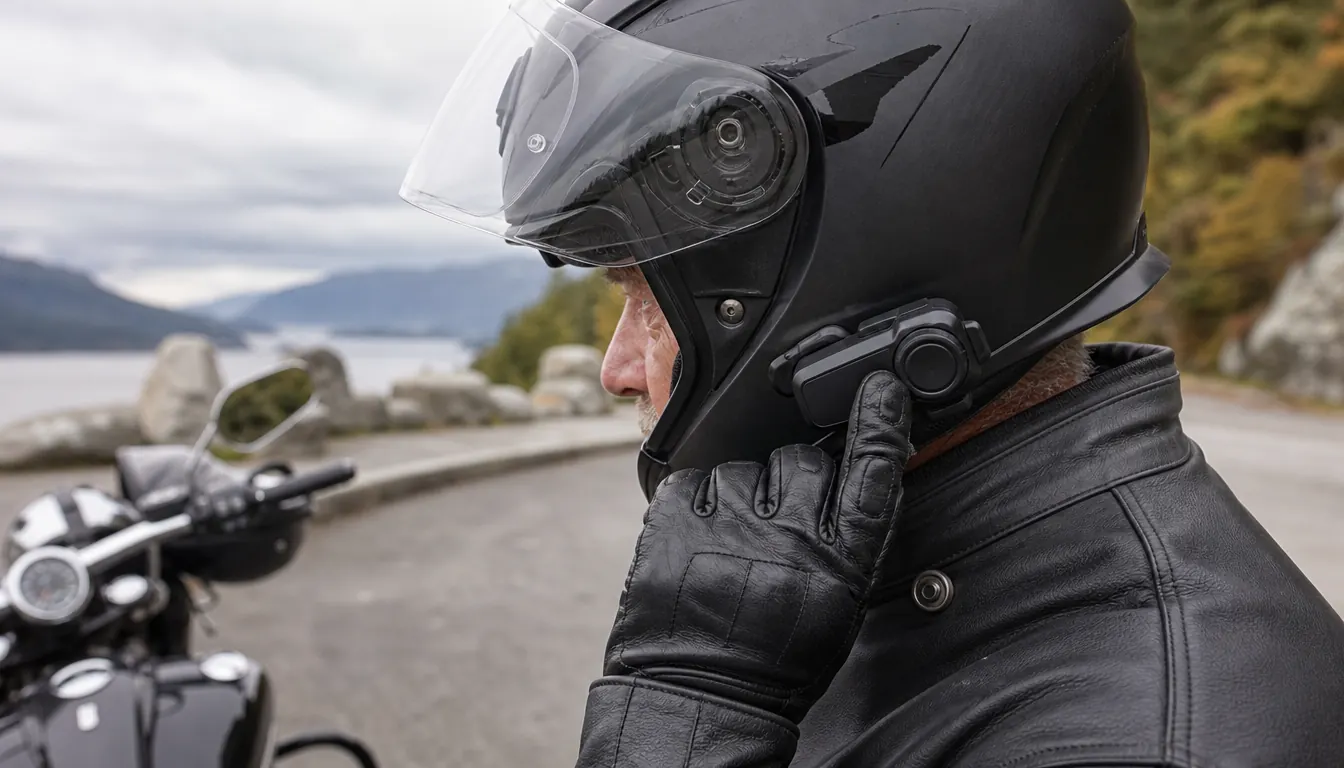
The other thing that sold me is how the Spirit fits inside a helmet. The 32mm speakers are thin, and they dropped into the pockets of my helmet without me having to carve out any foam. The main unit mounts cleanly on the left side, and the big wheel is easy to find with gloves on, even the thick winter ones. I am not a person who enjoys phone apps, and the Cardo does not force me to become one. Pairing with Deb's headset takes about a minute and no app at all, which matters on a cold morning when you just want to get moving. Simple is not a small thing on a motorcycle.
Where the Sena 10S Wins
The Sena 10S wins the two areas that matter most to group riders. First, the advertised intercom range is roughly double the Cardo's. On a sweep with bikes spread out a quarter mile apart, the Sena holds a signal where the Cardo drops out. For a touring rider that is usually irrelevant, because your passenger is right behind you, but for a group covering ground on a two lane road it is the difference between staying in touch and watching brake lights from a distance. If you ride sweep on group rides, that extra range is not a spec sheet number, it is the whole ballgame.
Second, the Sena handles up to four riders in one intercom conversation. The Cardo Spirit is a two rider unit, full stop. If your usual Saturday ride is three or four bikes, the Sena is the difference between everyone chatting on the move and everyone riding in silence until the next stop. You can pair a Cardo into some group setups, but it is fiddly, and honestly it is not what the Spirit was built for. If group chat is your normal Tuesday night, the Sena is the better tool.
There is also the simple fact that Sena is the name most riders already have. When you pull into a rally or a staging area and every other rider is on a Sena, the path of least resistance is a Sena. The 10S jog dial is a proven design once you learn it, and the Sena utility app, while more involved than Cardo Connect, gives you fine control over audio, intercom behavior and firmware updates. If your regular group already rides Sena, being the one person on a different brand means you will be the one who cannot join the group channel. That social reality is worth more than any spec sheet.
What Neither Manufacturer Tells You
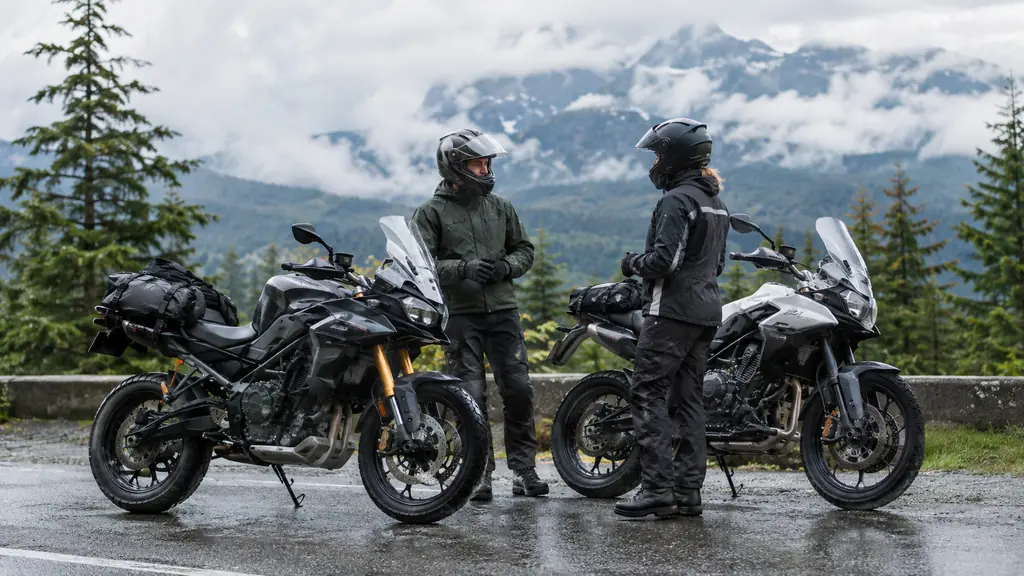
Both of these units are waterproof to the same IP67 standard, and in real rain both worked for me. What the marketing does not tell you is that wind noise is the real enemy, not rain. At highway speed, a lot of what you hear is the wind tearing past the microphone, and no budget intercom fully fixes that. The Cardo and the Sena are both acceptable in this department, but neither is quiet. If you are coming from nothing, both will feel like a revelation. If you are coming from a premium mesh unit, both will feel like a step down. Set your expectations at clear enough to have a conversation and you will be happy.
The other thing nobody tells you is that mixing brands is clumsy. A Cardo and a Sena can pair to each other over standard Bluetooth, but you lose features and the pairing process is more annoying than pairing two of the same brand. If you and your passenger each buy a different unit because you each read a different review, you will spend an afternoon making them talk to each other. My advice is to buy two of the same unit, whatever brand you choose, and you will have a much easier season. This is the advice I give everyone at the gas stop, and it saves more marriages than any other tip I know.
If You Ride With a Passenger, the Cardo Spirit Is the One
Thirteen hours of battery, thin speakers that fit your helmet without cutting foam, and a two rider intercom that pairs in about a minute. For touring riders who ride one up or with one passenger, it does everything a comm unit needs to do, usually for less money than the Sena. I have used mine through a full Pacific Northwest season, rain and all.
Amazon Check Today's Price on Amazon →Who Should Buy Which
Buy the Cardo Spirit if you ride mostly alone or with one passenger, if you want a battery that lasts a full weekend, and if you would rather not fight with an app on a cold Saturday morning. That is the touring rider's daily reality, and it is exactly the job the Spirit was built for. It is also the unit I would buy again tomorrow for my own Road King.
Buy the Sena 10S if you ride in a group of three or four on a regular basis, if your riding buddies are already on Sena, or if you need the extra intercom range for long stretches of open road. The group intercom is the one thing the Cardo simply cannot do, and if that is your riding life, the Sena is worth the extra money. The range advantage also matters if you and your group like to spread out on purpose.
If you are still on the fence, find a way to borrow one of each for a weekend before you buy. A lot of riders make the mistake of buying the unit their friend swears by without checking how it fits their own helmet and their own kind of riding. The best intercom is the one you will actually wear every ride, and the one that fits your helmet without a fight. Both of these units are good. The difference is which one fits your particular corner of the riding world.
The Bottom Line
After a full season on the Cardo Spirit and a few hundred miles on the Sena 10S, my answer is the same every time someone asks at a gas stop. If your rides look like mine, one bike, one passenger, and a lot of wet Pacific Northwest miles, the Cardo Spirit is the intercom I would tell you to start with. It lasts longer, costs less, fits more helmets without surgery, and it does the two rider job as well as anything I have tried. The Sena 10S is a good unit, and it is the right call for group riders. But for the touring rider with a passenger, the Cardo Spirit is the one that earns its place on the helmet.
The Verdict for Touring Riders
I bought the Cardo Spirit for my own bike after a season of comparing, and it has been the most reliable piece of riding gear I have added in years. If your rides look like mine, this is the intercom I would start with.
Amazon Check Today's Price on Amazon →