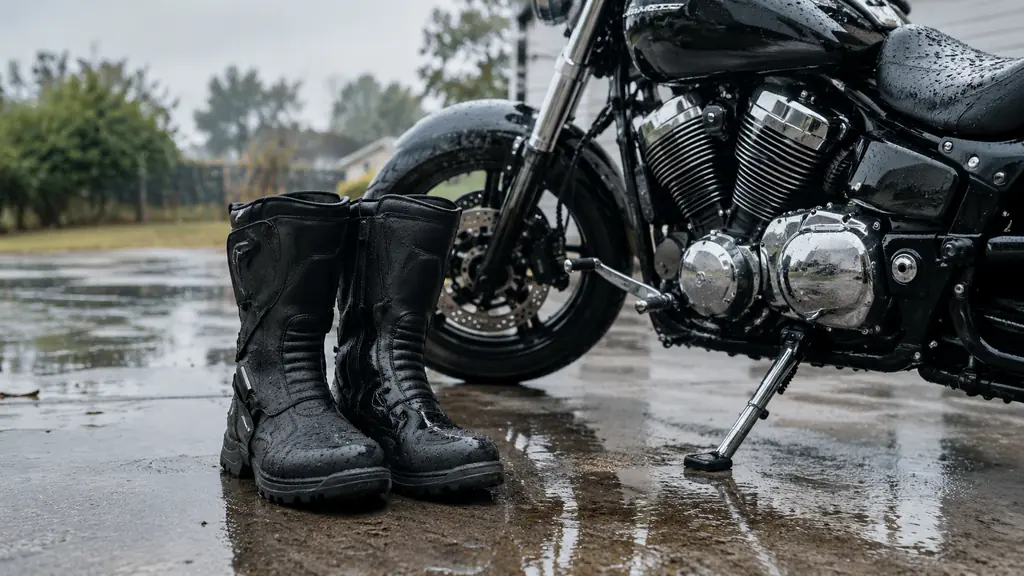
The first time I rode home from a Saturday morning soccer match in a proper Pacific Northwest downpour, I learned the difference between boots that can handle rain and boots that just look like they can. I was wearing a pair of leather work boots I thought were waterproof. Forty minutes later I pulled into the driveway outside Tacoma with socks soaked through and feet gone numb. That miserable cold ride changed how I buy gear. Waterproofing now sits at the top of the list, right next to how a boot feels at the end of a full day on the footpegs.
This guide is the short version of what I figured out the hard way over a few wet seasons. It is the five-step routine that keeps my feet dry and protected on the roads around Puget Sound, and it is built around the boot I have been wearing for years now, the Harley-Davidson Altman waterproof motorcycle boot. The Altman is the boot I reach for first on a rainy Saturday, and it is the one I will talk about throughout this article. Let me walk you through the steps in the order they matter.
I have owned enough gear that did not hold up to know that the claims on the box matter less than the construction. This article is about the details that actually keep water out, the fit that keeps you comfortable for eight hours, and the simple maintenance that makes a good boot last. No theory. Just what works on the road.
Keep your feet dry on the next wet ride
The Harley-Davidson Altman is the waterproof boot I reach for before every rainy ride. It has carried me through three Pacific Northwest seasons with dry socks every time. Check today's price on Amazon and see if it earns a place in your boot rotation.
Amazon Check Today's Price on Amazon →The five steps that keep water out
The order matters here. Fit comes before break-in. Break-in comes before the first wet ride. And maintenance runs through the whole season. Each step builds on the last, and skipping one is how you end up with wet feet on a cold Saturday.
Step 1: Check the waterproofing system, not just the outer material
Most riders look at a boot and judge it by the outer material. That is backwards. The outside is only half the story. What keeps your foot dry is the waterproof layer between the outer material and your sock. Some boots rely on a heavy coating on the outside that works for a while, then wears off at the toe where the boot flexes every time you shift. The boot you wear in the rain needs a waterproof liner built into the construction, not a spray-on finish you have to reapply every month. The Harley-Davidson Altman is built that way, with a waterproof lining built into the boot instead of painted on, and it shows on long wet days.
When you inspect a pair of boots in person, flex the toe and the ankle in your hands. If you can see the lining pulling away from the boot, that is a weak point. Press on the toe. A composite toe like the one on the Altman protects you from a falling bike and keeps your toes from feeling like blocks of ice in cold weather, because composite does not conduct cold the way steel does. That matters more than most riders realize on a 45-degree morning ride in the fall.
When you flex the boot, watch the tongue. If the tongue gaps away from the side of the boot when you bend your ankle, that gap is a leak waiting to happen. A boot that keeps its shape through that flex, the way the Altman does, is doing the quiet work that keeps your socks dry. It is not a flashy feature, it is just geometry, and it matters.
Step 2: Get the fit right before you trust them in the rain
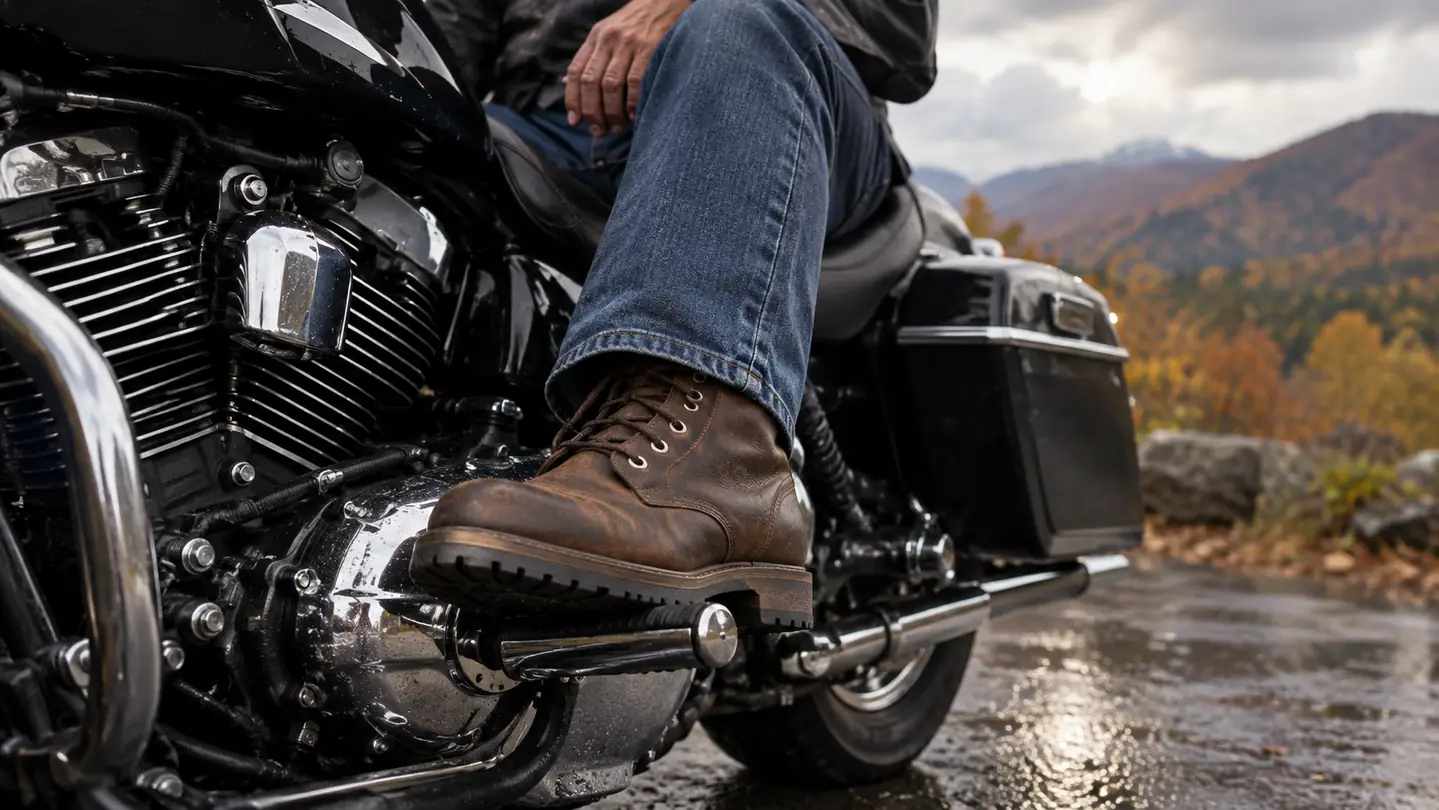
The most waterproof boot in the world will fail if it does not fit. A boot that is too tight cuts off circulation, and cold feet are miserable even when they are perfectly dry. A boot that is too loose lets water work its way in around the collar, and once water gets past the opening, the liner does not matter. I buy riding boots with the same socks I ride in. I try them on in the evening, because feet swell through the day, and I leave a thumb's width of room at the toe.
Pay attention to the collar. The opening of the boot is where water gets in nine times out of ten. The boot should close snugly around your calf without needing to be cinched down so hard that it digs in. If rain pants are part of your wet-weather kit, wear them when you try the boot on, so you know the collar works with the pant leg over it rather than fighting it.
Some riders add an insole for arch support, and that is fine, but keep the original insole in place if the boot fits right out of the box. A thick aftermarket insole can push your foot up and change how the collar sits around your calf. If the boot fits with the insole it came with, leave it alone.
Step 3: Break them in before the first rainy ride
A stiff new boot and a wet road are a bad combination. New waterproof boots have thick outer material and a fresh liner, and both need to flex with your ankle before they feel natural. I broke in my pair of Altmans over a couple of dry weeks, running errands around Tacoma, wearing them around the house in the evening, and taking a few short rides before I trusted them on a full day out. That break-in period is not optional. A boot that has not flexed yet will rub, and a rubbed heel is a distraction on a rainy corner.
Take the break-in slow and wear the socks you plan to ride in. If a hot spot shows up after a short ride, let the boot cool and adjust your sock or the lacing before you go farther. The goal is a boot that feels like part of your foot before the weather gives you no choice.
I have also learned not to break in two new pairs of boots at the same time. When I bought the Altmans, I kept my old pair in rotation for the first few weeks. That way, if a new boot gave me a hot spot on a long day, I had a known pair to fall back on. It is a small thing, but it means you never discover a blister during a two-hundred-mile day.
Step 4: Keep the waterproofing working
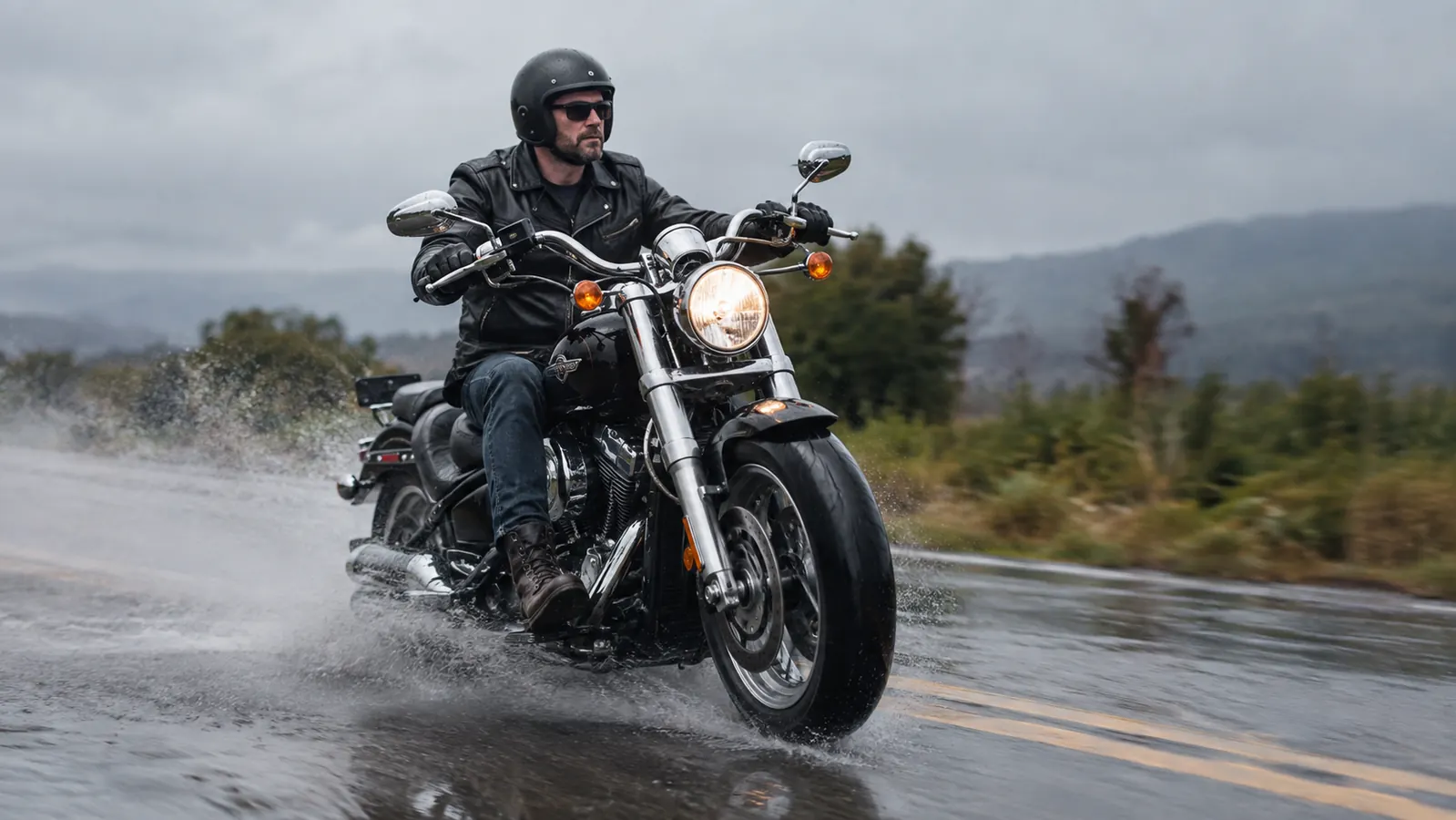
Waterproof is not a permanent property. It is something you maintain. The outer material needs cleaning and conditioning to stay tight, and the seams need attention even on a boot with a waterproof liner. Dirt and road grime work their way into the material and into the stitching, and that is where leaks start. I clean my boots after a wet weekend, let them dry slowly away from heat, and treat the outer material a few times a year. It takes twenty minutes and it has saved me from buying a second pair.
The one time my Altmans let water in was my own fault. I skipped the outer material treatment for an entire spring, then rode through a hard rain in June. The leak was not through the liner. It was a seam at the heel that had dried out and opened up. A fresh conditioning treatment fixed it, and the boots have been dry since. Take care of the outside of the boot and the inside stays dry.
The stitching around the sole is the first place waterproof boots fail. That thread takes a beating every time you put your foot down at a stop. I run a finger along the welt every few weeks looking for loose or broken threads. Catching a loose stitch before it becomes a gap is a lot cheaper than finding out about it on a wet interstate.
Step 5: Manage moisture from the inside
Your boots do half the work. Your socks do the other half. Cotton socks soak up sweat and hold it against your skin, and a clammy foot gets cold fast even inside a dry boot. Wool or a synthetic moisture-wicking sock keeps the wet away from your skin and keeps your feet warmer in the 40-degree mornings that are common around here. I keep a spare pair of dry socks in the saddlebag on long days, and those dry socks are the cheapest insurance you can carry.
It also helps to let the boots dry fully between rides. I stuff mine with newspaper on a rainy weekend and leave them overnight in the garage, never near a heater. Direct heat dries out the material and the liner and shortens the life of both. If the boots are still damp in the morning, the newspaper trick pulls out more moisture than you would believe, and the next ride starts with a dry boot.
One more thing I do in the rainy months is take the insoles out of the boots once a week and let them air out separately. A damp insole sits against your foot all day and holds odor and moisture even after the boot itself feels dry. Two minutes to pop them out, and the boots start the next ride fresher.
What Else Helps
Beyond the boots themselves, a few cheap additions make wet riding easier, and I use every one of them. Rain pants worn over the boot collar stop water from running down your leg and into the boot opening, and that one habit solves the most common cause of wet feet. I also keep a small tube of conditioner for the outer material in the garage, and it gets used more than most of my other gear. For the hardest downpours, a simple pair of gaiters over the boot opening adds another layer of protection without adding bulk or weight to the boot.
On a long trip, I stash a spare pair of dry socks in a zippered bag in the saddlebag, and I check the boot liners at the end of each season for worn stitching or a cracked seam. The weather around Puget Sound does not give you many dry weeks to deal with problems, so I fix the small issues while the sun is out, not during the first rain of autumn. A little maintenance in June saves a miserable ride in October.
The one time my Altmans let water in was my own fault: I skipped the outer material treatment all spring. A fresh conditioning treatment fixed it, and the boots have been dry since.
Here is the bottom line. You do not need a drawer full of boots to keep your feet dry. You need one solid waterproof pair, fitted properly, broken in before the rain, maintained through the year, and paired with the right socks. The Harley-Davidson Altman has been that boot for me for three seasons now, and it is the one I will keep riding until the soles tell me otherwise. If you are shopping for your first waterproof pair or replacing one that let you down, start with the fit, check the waterproofing construction, and give the boots the same care you give the rest of your bike. The full long-term review of the Altman boots is on this site if you want the deeper dive.
Put your feet first for the wet miles ahead
Three seasons in, the Harley-Davidson Altman is the boot I trust on the wettest days. It is comfortable on the footpeg, protective at the toe, and honest about what it is. Check today's price on Amazon and see if it is the boot for your bike.
Amazon Check Today's Price on Amazon →