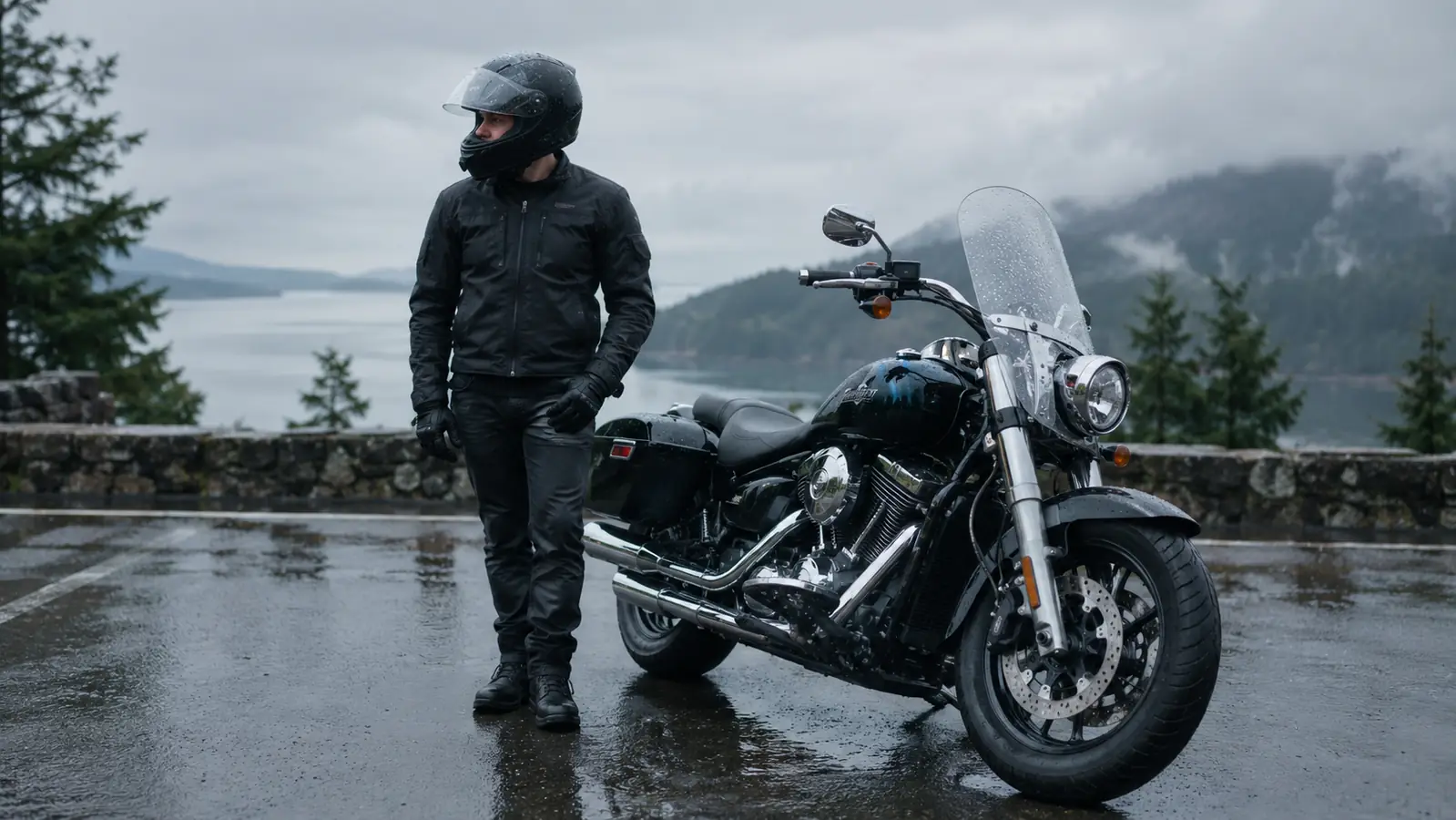
Twelve months ago I pulled the Harley-Davidson Altman boots out of the box on a rainy Tuesday, the kind of day when you check the radar before committing to a ride and still end up wet. Twelve months later, they have done something no other boot I have owned has managed: they got through an entire Pacific Northwest year, including the stretch from November to March, without once letting water in. That is not a small thing when you live outside Tacoma and ride a Harley-Davidson Road King to a youth soccer game on a Saturday morning in steady drizzle, with a thermos of coffee in one saddlebag and two dry socks in the other.
I bought them because I was tired of arriving with wet socks, and I nearly did not buy them because of the cost. I kept them because they stayed dry, because the composite toe has saved my foot more than once when the kickstand slipped on wet pavement, and because after roughly 6,000 miles they still look like a boot a working rider would wear. I have not treated the leather, I have not replaced the laces, and I have not once had to dry them out overnight.
The Quick Verdict
The Harley-Davidson Altman boots are the best wet-weather riding boot I have owned in thirty years of riding. They are not cheap, they need a real break-in, and the sizing runs large. But if you ride a cruiser in a rainy climate, they earn their place on your feet, and after 6,000 miles I would buy them again today.
Amazon Check Today's Price →Stop riding with wet socks
A full year of rain, cold mornings and long days in the saddle, and my feet stayed dry in the Harley-Davidson Altman boots. See today's price on Amazon and read what more than 1,700 riders say before you pull the trigger.
Amazon Check Today's Price on Amazon →How I've Used It
I am 58 years old, a retired utility lineman, and I have been riding for about thirty years. My bike is a black Harley-Davidson Road King that I have owned for nine years. Most of my riding is weekend and evening runs around the Puget Sound area, plus one longer trip every summer. My wife Deb rides on the back sometimes, and I referee youth soccer on Saturday mornings, which means I ride to games in weather that would keep a lot of riders parked.
The Road King is stock except for a taller windshield and highway pegs. It is a heavy bike, and it does not like being pushed around in a parking lot, which is why the boots matter as much as they do. When the bike starts to lean at a stop, your feet are the only things between you and the pavement, and that is the moment a boot that slips turns a minor inconvenience into a dropped bike.
I wore the Altman boots for every kind of ride in that first year: a 90-minute commute to a game in steady rain, a 400-mile day up to the Olympic Peninsula with Deb, cold mornings in the mid-30s, and a stretch of evening rides in June where the boots sat in the sun for hours. I did not baby them. I did not treat the leather. I just wore them the way a normal rider wears a boot, and I kept a note in my phone every time my feet got wet.
The note is the point. I started it because I did not trust my memory. By April I had stopped logging, not because I lost interest but because the entry never changed: dry. On one January afternoon I rode to Olympia and back in rain that never let up, about 100 miles of road spray and standing water, and my feet were still dry when I pulled the boots off in the garage.
January 17 is the day I stopped doubting them. I had to referee a game in Puyallup. The ride was 45 minutes each way, and it rained the whole time. I wore my normal wool socks and the Altman boots. When I got to the field, my feet were dry. Ninety minutes later I rode home in the same rain. Still dry. That was the ride that made me trust these boots the way I trust the Road King.
Waterproofing: The Main Event
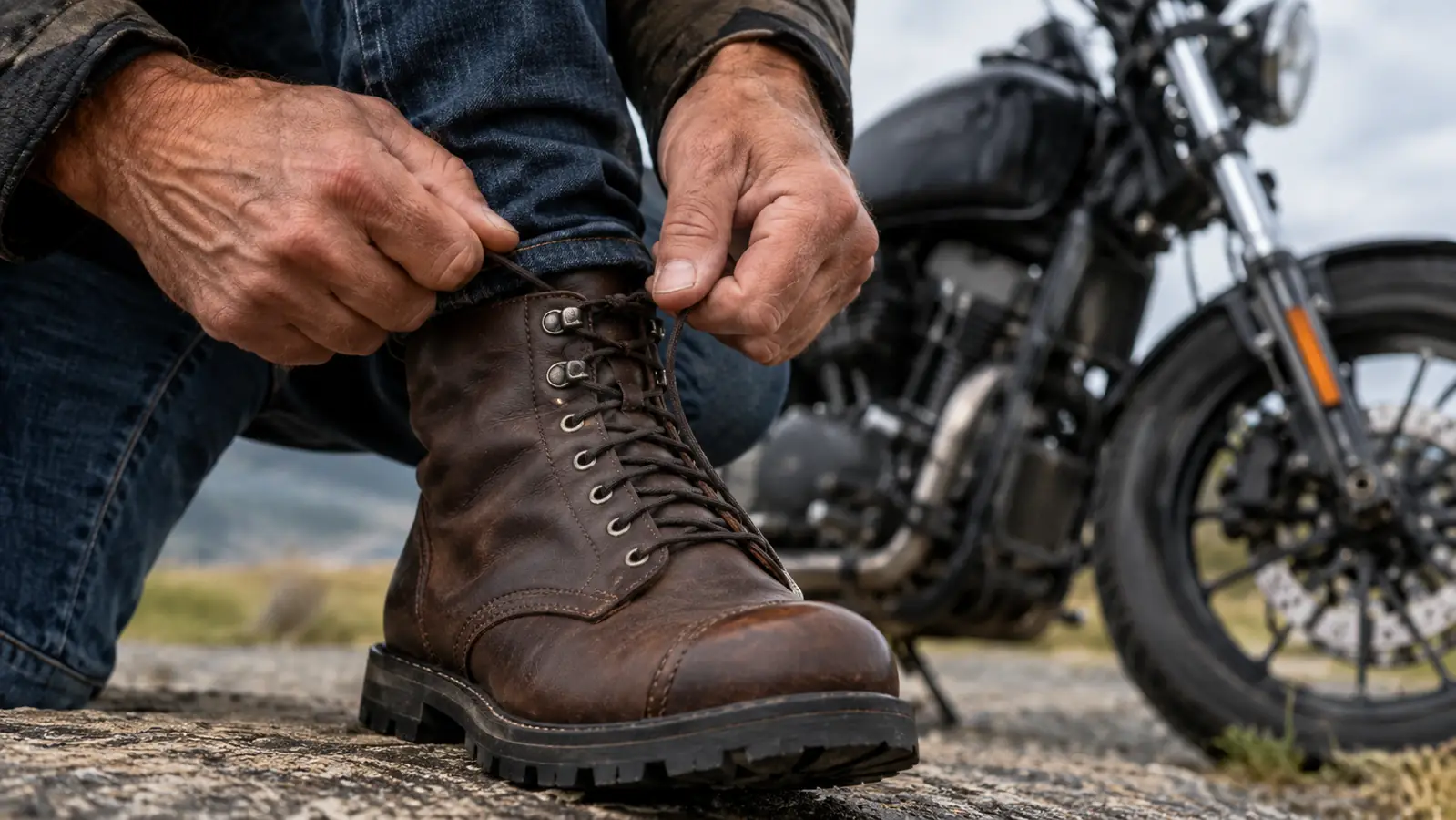
The headline feature of the Harley-Davidson Altman boots is the waterproof lining, and it is the real thing. I have stood in puddles at a gas pump, ridden through the kind of rain where the road turns into a river, and walked across a wet soccer field in the dark to find the team manager before kickoff. My socks stayed dry every time. That includes one Thursday in mid-January when I made a point of running through the deep puddles at the edge of the driveway just to see if the water would find a way in.
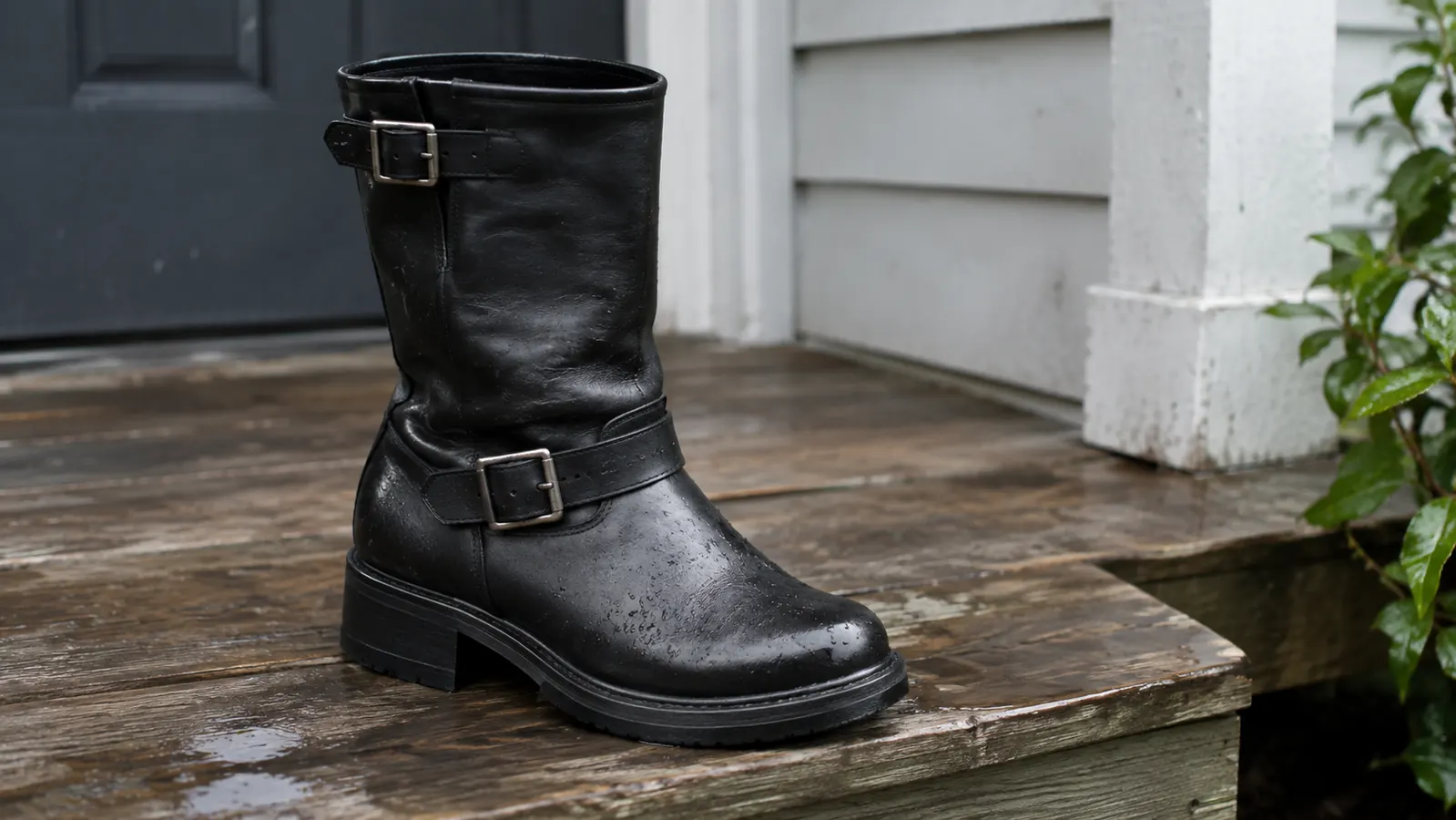
The key is the combination of full-grain leather and a waterproof membrane that sits between the leather and the lining. Water beading on the surface is not just a trick of the finish. After a full year, the leather still repels water instead of soaking it up like a sponge. That matters because a boot that wets out on the outside gets cold even if the membrane holds. The Altman boots never did that, and on a 34-degree morning the difference between a cold boot and a warm one is the difference between a good ride and a miserable one.
One honest note: waterproofing is not the same as being a rubber boot. If you stand in standing water for ten minutes, you will feel the cold coming up through the sole. I would not use these for wading. For riding, which is what they are built for, the protection is as good as I have tested in a boot at this level, and I have tested a lot of them.
In twelve months of Pacific Northwest riding, my feet stayed dry on every single ride. No other boot I have owned can say that.
Comfort, Fit and the Break-In
The Altman boots run large. I normally wear a 10.5 in most boots. I ordered a 10 and they fit with a thick sock. If you are between sizes, go down, not up. The break-in is real. The leather is stiff at first, especially around the ankle and the top of the foot. The first two weeks felt like wearing a pair of new work boots that had not met my feet yet. I wore them around the house and on short rides before I trusted them for a full day.
The stiffness does go away. By the end of the third week, maybe 300 miles in, the leather had molded to my foot and the boots felt like they had always been mine. I have flat feet, and the stock insole was good enough that I wore it for the first eight months. When I swapped in a pair of arch supports after that, it was a preference, not a fix. The fabric lining is thick enough that I have never worn a hole in the heel cup, and the padded collar sits above the ankle without digging in, even after a 400-mile day.
The shaft height is tall enough to tuck jeans into, which is how I wear them. The boots do not flop around at the ankle when you walk, and they shift smoothly when you use the shifter. There is a small speed-lace hook system near the top that I use when I am in a hurry, and it has held up without bending or breaking. The only thing I changed after the first few months was the laces, and I will get to that in the downsides section.
Traction, Protection and Real-World Wear
The outsole has a proper tread pattern. I have put my foot down on wet ferry ramps, oil-slick gas station concrete, and gravel at the edge of a campground. The grip has been predictable. I have not had the foot slip that used to happen with a pair of smooth-soled boots I wore for years, and I have not had the heel snag when I put my foot down at a stop on a painted line.
The composite toe is the feature I did not know I needed. Twice this year the Road King tipped past the point of no return while I was stopped on a slope, and both times the boot took the impact of the motorcycle resting against my foot. A steel toe would have done the job, but the composite toe is lighter and it does not turn into an ice cube in cold weather. For a rider who has had a bike come down on a foot, this is the difference between a bad afternoon and a broken toe. I know that difference because I have been on both sides of it.
After 6,000 miles the soles show normal wear at the heel and the toe, but there are no bald spots, no separated seams, and no cracks in the leather where it flexes. The stitching is still tight, the eyelets are not pulling through, and the only cosmetic issue is a scuff on the right toe where I dropped a saddlebag on it. That is honest wear, not a defect, and it has not spread or let any water in.
The Downsides Nobody Mentions
No boot is perfect, and the Altman boots have three things I want you to know before you buy. First, the break-in. This is not a boot you can wear straight out of the box for a 300-mile day. Give yourself a week of short rides first. Second, the sizing runs large, and if you order your usual size, they will feel sloppy and you will blame the boot. Third, the shaft is not as tall as a traditional tall touring boot. If you ride in deep water or heavy brush, you will want a taller boot.
The other honest note is the cost. The Altman boots are not the cheapest riding boots you can find. You can buy a pair of basic waterproof boots for less, and I have owned several. What you are paying for is a boot that does not leak, does not fall apart, and protects your feet when the bike goes over. After a year of real use, that is exactly what these boots have done, and I would spend the money again without hesitating.
If I could change one thing, it would be the laces. The stock laces are round and they come loose after a few hours of riding unless you double-knot them. I ended up replacing them with flat laces after about four months. That is a small thing, and it does not affect the waterproofing, but it is worth knowing before you buy.
What I Liked
- Genuinely waterproof through a full Pacific Northwest winter
- Composite toe protects without conducting cold
- Traction on wet ferry ramps, gas stations and gravel
- Comfortable for 400-mile days after break-in
- Leather still repels water after a year
Where It Falls Short
- Break-in takes a week or two of short rides
- Sizing runs large, order a half size down
- Shaft is not as tall as a traditional touring boot
- Cost is higher than basic waterproof boots
Who This Is For
The Harley-Davidson Altman boots are for the rider who rides in real weather and needs a boot that works every time. If you ride a cruiser or a touring bike, if you ride in rain and cold mornings, if you have ever arrived somewhere with wet socks and spent the day miserable, these boots are for you. They are also for riders who have had a bike come down on their foot and do not want to repeat that experience. I am that rider, and these boots are the first pair I have trusted to do both jobs.
They are also a good match for the weekend rider who wants one boot that does it all: riding, walking around a gas station, standing at a soccer sideline, and sitting at a campground fire. The composite toe means they pass a lot of workplace safety requirements too, so if you ride to work, they may do double duty. Check your own workplace rules, but for me they have covered both for a full year without complaint.
Who Should Skip It
If you only ride in the summer, in dry weather, on short trips, you do not need the waterproof membrane or the break-in. A lighter riding shoe will be easier to live with. If you need a tall boot that covers most of your calf for serious off-road or deep-water work, the Altman shaft will not be tall enough.
And if you are the kind of rider who wants gear to feel broken-in on day one, the first two weeks of stiffness will annoy you. That stiffness goes away, but it is real. The Altman boots reward the rider who gives them a little patience, and that is not everybody.
A year of dry feet, one boot
If you ride in rain and you are tired of wet socks, the Harley-Davidson Altman boots are the pair I would buy again tomorrow. They have earned their place in my garage. Check today's price on Amazon before you decide.
Amazon Check Today's Price on Amazon →