
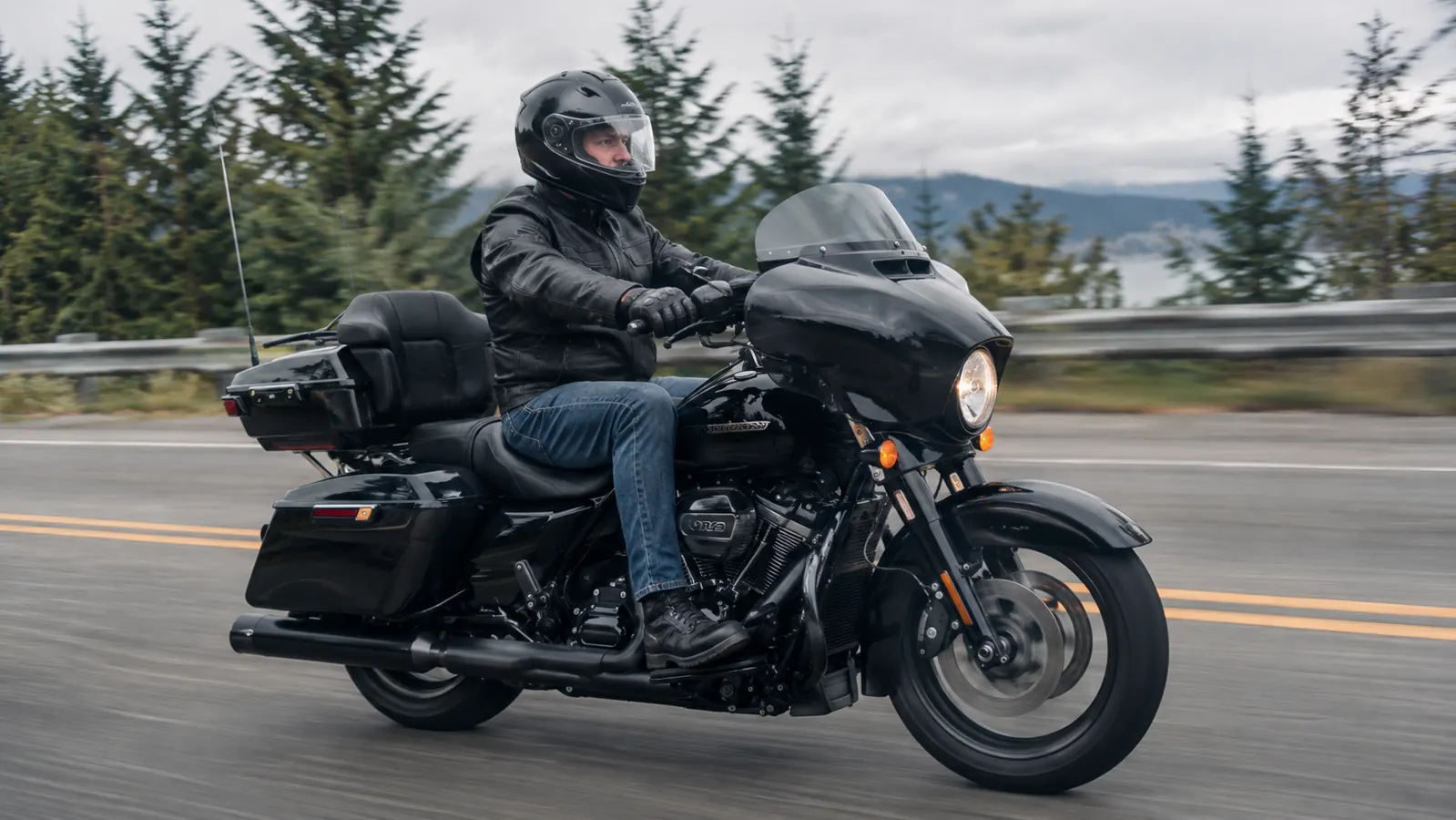
I will say this up front: the Cardo Spirit is not the intercom Cardo wants to sell you, and that is exactly why I bought it. I ride a 2015 Harley-Davidson Road King around the Puget Sound area, mostly weekend and evening rides with my wife Deb on the back, and I referee youth soccer on Saturday mornings. I did not need a seven-rider mesh conference or a JBL speaker array. I needed to hear my wife say 'turn here' and I needed to hear music at 70 mph without feeling like I was wearing earbuds. The Spirit is the cheapest way into the Cardo system, and after nine months and about 4,000 miles with it, I have some opinions that do not show up on the Amazon page.
Let me start with the short version. The Cardo Spirit sounds better than any helmet speaker I have used, the battery genuinely lasts all day, and the phone call quality is good enough that my daughter thought I was in the kitchen. But the buttons are fiddly with riding gloves, the FM radio is a gimmick you will use twice, and pairing a second headset is not the 'tap and go' the box promises. I would still buy it again. I just want you to know what you are getting into before you do.
The Quick Verdict
The best cheap intercom for solo riders and two-up couples who want solid music, clear phone calls and a battery that lasts a full day of riding. Just budget a few evenings to learn the button choreography.
Amazon Check Today's Price →The honest bottom line: this is the intercom most riders actually need
The Cardo Spirit does not have the fanciest feature list, but it does the two things that matter on every ride: it lets you hear your passenger and it lets you hear your music. That is why it stays on my helmet.
Amazon Check Today's Price on Amazon →How I've Used It
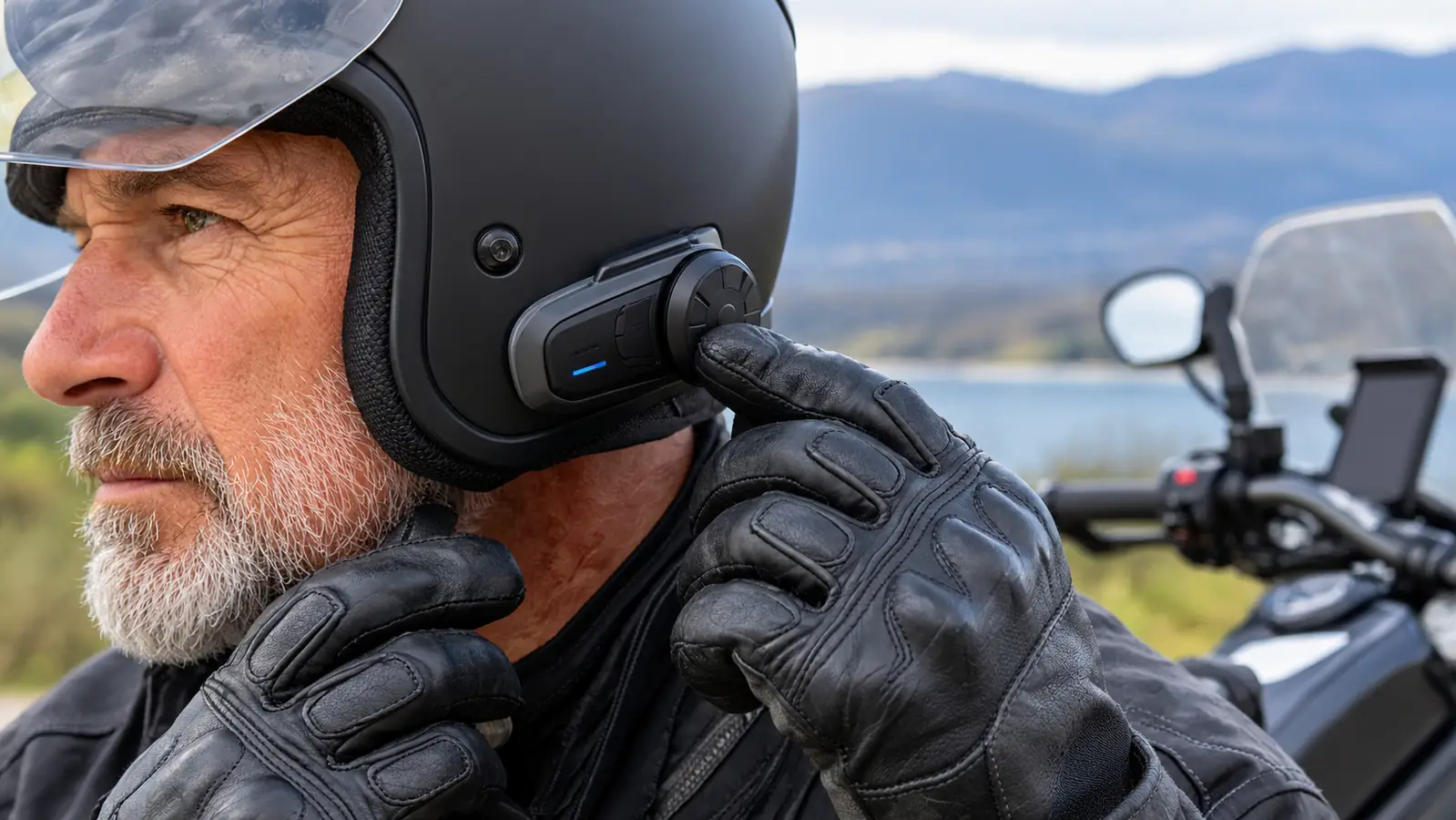
I installed the Spirit on my half helmet in April, which in western Washington means I immediately tested it in rain. The unit mounts on a clip that slides onto the helmet shell, and the speakers sit in the pockets of a stretchy liner that goes inside the shell. Installation took me about 25 minutes, and the only fiddly part was routing the speaker wires so they did not pinch when I put the liner back in. The whole thing is thin enough that my helmet still fits snug, and that was my biggest worry going in. I measured the speaker unit before I ordered, because a helmet that stops fitting right is the fastest way to abandon a piece of gear, and the 32mm speakers are thin enough that the liner went back in without a fight.
Since then I have used it on almost every ride. That includes a nine-day trip down the Oregon coast, a few cold morning runs to soccer games, and a lot of evening loops around the sound with Deb. The unit has been rained on, left in a hot saddlebag once (my fault), and dropped on the garage floor. It still works. The buttons still click. The charging flap still seals. On the Oregon trip I hit a stretch of heavy rain south of Astoria, about forty minutes of steady downpour at 55 mph, and the music never cut out and the microphone never picked up wind noise on Deb's end. That was the day I stopped worrying about whether the weatherproofing was real.
The pairing process deserves its own paragraph. The Spirit pairs with your phone the normal way, hold the phone button for a few seconds and select it in Bluetooth settings. That part took me two minutes. Pairing a second Spirit for two-rider intercom is where the manual becomes important, because it involves a different button combination and you have to do it in the right order. The box says 'tap and go.' The reality is more like 'hold both buttons, wait for the tones, then hold them again.' It is learnable. I have done it at the gas station with another rider in about a minute. But if you buy two of these expecting them to just find each other, you will be annoyed for an evening first. The first time I tried it with a buddy, we spent ten minutes in a parking lot before I reread the manual and realized the second unit has to be the one that starts the pairing, not the first. Once I had that straight in my head, it took one more try and both units linked. I wrote the order down on a scrap of paper and keep it in the saddlebag, because I know I will not remember it next spring.
Sound Quality: The Part That Surprised Me
I have used three other helmet speaker setups over the years, including a cheap no-name unit and a mid-priced name brand, and the Spirit is clearly the best of the three. The 32mm speakers are thin, but they produce real bass at speed. At 60 mph with a half helmet, I can hear the low end of a rock song without cranking the volume to max. That has never happened before for me. At 70 mph on the interstate, I have the volume at about 80 percent and the music stays clear, although the wind noise of a half helmet eventually wins no matter what you do. If you ride with a full-face helmet, the sound will be even better, because you are not fighting the open air.
Voice clarity is the other surprise. Deb and I tested the intercom on a two-hour ride along the water, and I could understand every word she said at 65 mph. There is a voice-operated mode where the speakers go quiet when someone talks, and it worked well enough that I left it on. I did have to turn the sensitivity down one notch, because at first the wind on my microphone was triggering it and cutting the music off every few seconds. Once I made that one change, it behaved. Phone calls are the strongest feature. I called my daughter from the road once, and she asked if I was still at home. That is the highest compliment a bike intercom can get. The clearest test came on Highway 101 north of Lincoln City, where the pavement is rough and the wind comes straight off the ocean. Deb said 'next gas station' and I heard 'next gas station,' not a guess. On that same stretch my old headset had me asking her to repeat herself every few miles.
The strongest feature on the Cardo Spirit is the phone call quality. My daughter thought I was standing in my own kitchen, not rolling down the interstate at 65.
Battery Life: The Number That Actually Matches
Cardo claims 13 hours of talk time and 7 days of standby. I have not measured either with a stopwatch, but I can tell you this: on the Oregon coast trip, I rode six days without charging and used the intercom, music and one phone call each day. The battery meter on the app showed about 30 percent when I got home. On a normal weekend, I charge it once a week, usually Sunday night, and it has never died on me mid-ride. The longest single day was about nine hours in the saddle from Astoria down to Bandon, with music running the whole way and the intercom on for maybe two hours of that, and the meter still showed better than half when I pulled into the motel. The one time I forgot to charge it, before a Saturday morning youth soccer game, the unit still made it through the 45 minute ride to the field, the ride home, and a twenty minute phone call with Deb before I plugged it in that evening. That gave me a lot more respect for the standby claim.
The charging port is USB-C, which is the right call in 2025. A full charge from empty takes about two hours. There is no fast charging, so you cannot get a meaningful top-up in the ten minutes you spend at the gas station. Plan for it the night before a long ride and you will never care. I keep a spare USB-C cable in the saddlebag, and on the Oregon trip I charged the unit in the motel room while I had dinner. It was full by the time I went to bed.
One battery note that nobody mentions in the reviews: the Spirit does not tell you the battery percentage with a voice prompt when you turn it on. You get a series of tones, and you have to learn which tone means what. The app shows the percentage, but you have to open the app and connect to the unit to see it. After a few months I stopped checking and just charged it on a schedule. It works, but it is not the polished experience you get on the pricier Cardo models. If you are the kind of person who leaves for a ride with a 20 percent phone battery and hopes for the best, this unit will punish you, because there is no warning voice telling you it is about to go dark. I learned this the hard way on a short evening loop around Gig Harbor, when the unit went quiet just as I was merging onto the freeway. I had assumed the tones meant half a charge. They did not mean anything close to half a charge.
What Annoyed Me: The Honest List
The buttons are the first thing. The Spirit has three physical buttons, and they are small and flush with the body of the unit. With thin summer gloves they are usable. With insulated winter gloves they are a guessing game. I have skipped songs when I meant to lower the volume, and I have ended a call when I meant to mute it. The volume button is the one I still hit wrong about once a ride. You learn to look down and feel for the raised dot on the middle button, but on a rainy day at speed, you will make mistakes. On a cold November morning ride to a soccer game, I tried to raise the volume and instead skipped three songs in a row because I was pressing the top button with a thick glove. I pulled over at a gas station to fix it, and that morning it was 38 degrees with a wet road, so I did not want to take a hand off the bar for long. I took my glove off and found the raised dot by feel. It took two minutes, but it was two minutes I should not have needed. That is the experience you should expect in winter.
The FM radio is the second thing. It exists, it works, and I used it for about an hour total across nine months. The problem is that you have to be in an area with decent FM reception, and the station scan takes forever. I wanted it for traffic reports on the way to soccer games, but by the time the scan found a station, I was already at the field. I would not buy the Spirit for the radio. I would buy it for the intercom and the music. If you live somewhere with weak FM signals, you will likely forget the radio even exists, which is what happened to me by July.
The app is the third thing. The Cardo Connect app works, but it is not what I would call polished. Setting the voice-operated intercom level took me a few minutes of hunting through menus. The equalizer presets are buried. And the app occasionally loses the connection to the headset and needs a re-pair. None of this is a dealbreaker. It is just not the 'it just works' experience that the marketing implies. The firmware update process is the clunkiest part of the whole thing. You have to plug the unit in, open the app, and let it sit there for twenty minutes while it downloads. I did it once, and I will not do it again until I have to.
And the fourth thing, which is the one I think new buyers should know: this is a two-rider intercom, not a group intercom. If you ride with three or more friends and you all want to talk to each other, the Spirit is not the tool for that. It does two riders, period. The pricier Cardo models with mesh can do whole groups. The Spirit is for you and a passenger, or you and one buddy. I ride with one buddy sometimes and it handles that fine. If your group rides are bigger, save up for something else.
Who This Is For
The Cardo Spirit is for the rider who wants three things: music at highway speed, clear phone calls, and the ability to talk to a passenger without yelling into the wind. It is for the person who does not want earbuds in their ears on a motorcycle, because earbuds isolate you from traffic sounds and that bothers me more every year. It is for the person who wants a brand name with a good reputation at a price that does not hurt. And it is for the person who rides with one other person, not a pack of ten. If that sounds like you, this is the intercom to buy.
Who Should Skip It
Skip the Spirit if you ride with a group of three or more and want everyone on the same channel, because the two-rider limit will frustrate you within a month. Skip it if you want the absolute best sound quality money can buy, because the pricier Cardo models with larger JBL speakers are genuinely better in a side-by-side comparison, and if you are an audiophile, the difference will matter to you. Skip it if you cannot stand fiddly buttons and want everything to work with voice commands, because the Spirit is a button-driven device at heart. And skip it if you want to charge your gear in the five minutes before a ride, because the two-hour charge time means you have to plan ahead.
What I Liked
- Best sound quality I have heard from a helmet speaker under this price
- Battery genuinely lasts a full day, and a full weekend on normal use
- Phone calls are clear enough that people think I am at home
- USB-C charging, which is the right call in 2025
- Weatherproofing held up through forty minutes of steady rain
Where It Falls Short
- Buttons are small and flush, and a nightmare with winter gloves
- Pairing a second unit is not the 'tap and go' the box promises
- No voice prompt for battery percentage; you have to learn the tones
- FM radio is a gimmick you will use twice
- App is clunky and the firmware update takes twenty minutes
Still not sure? This is the test I use
If the only intercom features you actually use are music, phone calls and talking to your passenger, the Cardo Spirit does all three well and does not charge you for features you will never touch. That is why it stays on my helmet.
Amazon Check Today's Price on Amazon →