
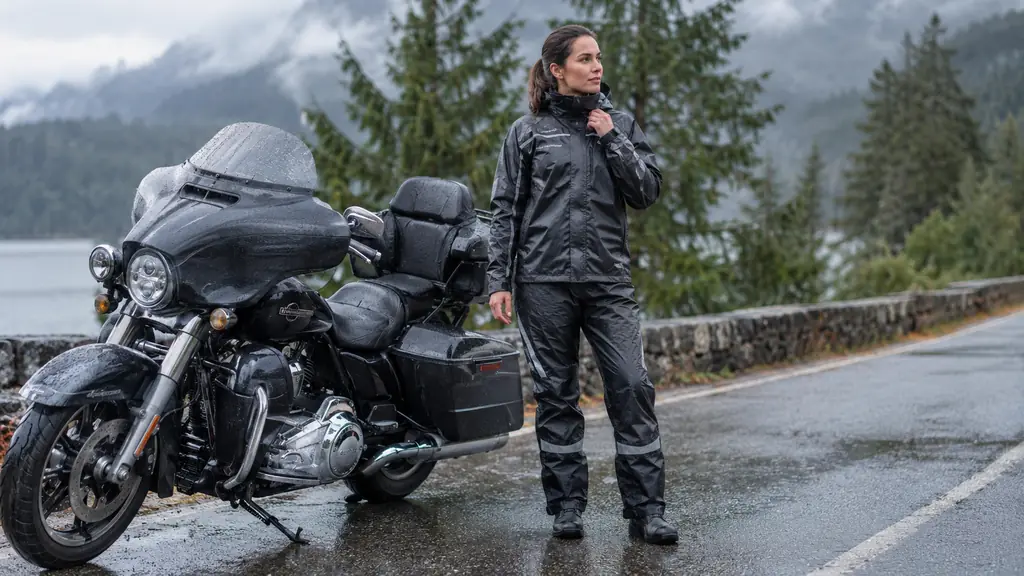
You know the feeling. You are ten miles from home, the sky opens up, and you start doing the math on how wet you are going to be by the time you get there. I used to carry a cheap poncho in the saddlebag. It flapped like a flag at freeway speed, and the water still found its way down my collar. Then a buddy at a gas stop outside Olympia pointed me at the Nelson-Rigg Stormrider. Two seasons later, it is the one piece of gear I will not ride without in the Pacific Northwest.
This is the honest version of that review. The Stormrider is not a fancy suit. It does not breathe, it does not look like something from a race paddock, and the hood that comes attached is mostly useless under a helmet. What it does, it does flat out: it keeps you dry in rain that soaks through everything else. That is the whole job, and it does it better than suits that sell for several times as much. If you ride a cruiser or a tourer in a place where rain is a regular part of the season, this review is about whether the Stormrider earns its spot in your saddlebag.
The Quick Verdict
The Stormrider is a no-frills rain suit that does the one thing that matters: it keeps you dry. It is clammy, boxy and short on breathability, but for wet-weather riding it beats suits at twice the price. If you want a dry ride, not a fashion statement, this is the one.
Amazon Check Today's Price →Rain stops being a reason to cancel the ride.
The Stormrider is the suit I keep packed in the saddlebag from October through April. It goes on over my riding jacket in about two minutes, and it has brought me home dry from every downpour I have pointed it into. If you ride where the radar is all green, this is the suit to grab.
Amazon Check Today's Price on Amazon →How I've Used It
I ride a Harley-Davidson Road King, and I live outside Tacoma, where rain is not a surprise, it is the default. Most of my riding is weekend loops around the Puget Sound area, plus one longer trip in the summer. On Saturday mornings I referee youth soccer, and more than once I have ridden home from a rain-soaked field with the Stormrider over my referee shirt and the bag of wet cones strapped to the passenger seat.
One Saturday in November, I rode forty minutes through steady rain to referee a youth soccer match, pulled the Stormrider off in the parking lot, hung it over a fence, and rode home in the same suit three hours later. It never leaked once. That is the kind of test that matters to me, a full day of wear, not a quick splash through a puddle.
I have owned this suit for two seasons and change. It has been through the steady drizzle that never quite becomes rain but soaks you anyway, and it has been through real downpours on I-5 where the trucks throw a wall of water over the next lane. Deb has borrowed the jacket on a couple of cold rides and come back dry, which is the highest praise she gives any piece of gear.
The way I test gear is simple. I wear it. I do not set up a sprinkler in the driveway and call it a review. This suit has sat through a full day of riding in the kind of rain that makes you question your life choices, and it has also sat in the saddlebag for six weeks straight waiting for a break in the weather. Both matter, and both are in this review.
Last summer I took the long trip I do every year, four days down the Oregon coast and back. The first day out was clear. The second day was rain from Bandon to Florence, steady and cold, the kind of day that separates rain gear from rain clothing. I wore the Stormrider for six hours and stayed dry the whole way. That ride is the reason this review is as positive as it is.
What the Waterproofing Actually Holds Up To
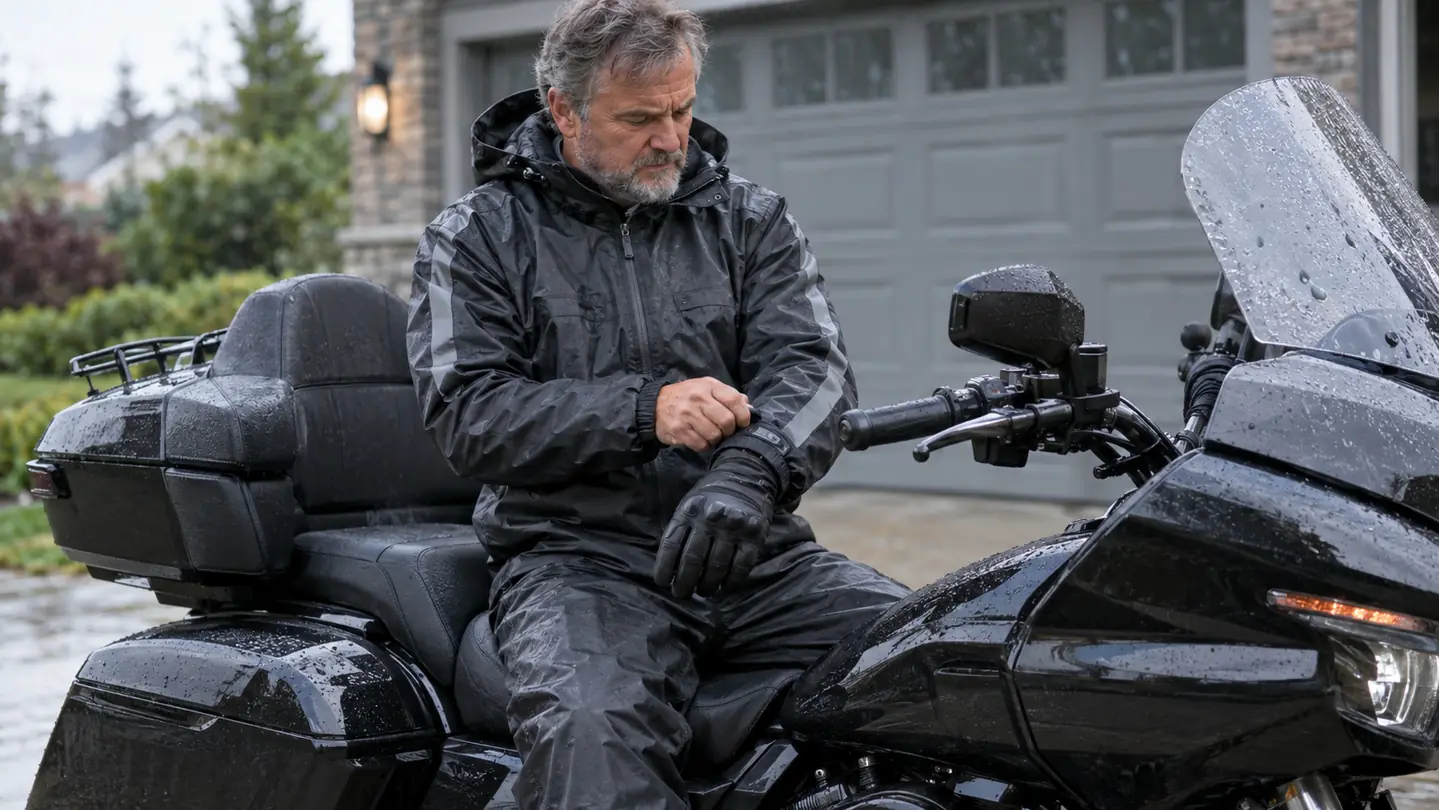
Here is the part every listing gets right and every review skips: the Stormrider is actually waterproof. Not water resistant, not showerproof. Waterproof. The shell is a coated fabric, and water runs off it in beads. I have sat through a forty-five minute ride in steady rain and pulled the jacket off to find my flannel shirt completely dry. That is not a small thing. I have owned waterproof gear that soaked through at the shoulders inside twenty minutes.
The seams have held up too, and that is where cheap rain gear fails first. It is why the poncho era ended for me. Two seasons of folding, cramming into the saddlebag, and pulling the suit on at the side of the road have not produced a single seam that wicks water. The zippers sit behind a flap, and as long as you seat the flap flat, water does not find its way in. The one spot I have to watch is the collar. If the jacket is zipped all the way up, you stay dry. If you leave it half open for airflow, water can drip down your chest. That is user error, not a design flaw, but it took me one wet ride to learn it.
The coldest test came last January, a thirty-five degree ride from Tacoma down to Centralia and back, with sleet mixed into the rain for the last hour. The outside of the suit was covered in ice by the time I got home. The inside was dry, and so was I. That is the moment I stopped doubting the Nelson-Rigg and started trusting it.
The honest flip side is that this suit does not breathe. At all. On a cold, wet day that is a blessing. On a mild day with a light sprinkle, you can work up a sweat under it, and then you are damp from the inside instead of the outside. I have learned to dress under it, one layer less than I think I need. That is the tradeoff you accept with a suit that is truly waterproof. It keeps the rain out, and it keeps your heat in, and sometimes that heat has nowhere to go.
Fit: Room for a Jacket, or Everything at Once
The Stormrider is cut generous on purpose. It is meant to go over whatever you are already wearing, so it is not a slim fit and it never will be. I wear a large in my riding jacket, and I sized the suit to go over that jacket rather than over a t-shirt. That is the right call. With the jacket underneath, the shoulders do not bind, the sleeves reach my wrists, and I can move around on the bike without the suit riding up my arms.
The pants are pull-on with an elastic waist and elastic at the cuffs. They go over jeans and over boots, which is exactly what you want. On the bike, the legs are cut long enough to stay put when you are in a riding position, and they have not bunched up behind the knee on a two-hour stretch. If you are between sizes, size up. A rain suit that is too tight will split at the worst possible moment, usually when you swing a leg over the bike.
The jacket is boxy through the chest, and the sleeves are roomy enough to go over gloves. That is a feature, not a flaw, for what this suit is for. It is a shell that lives in the saddlebag and goes on over your normal gear when the sky opens up. If you want a slim, tailored rain suit, this is not it. If you want to stay dry, the roomy cut is the price of entry.
The leg openings are wide enough to go over a boot without tucking, and the waist has enough give that it does not bind when I lean forward to reach the bars. I have also learned to zip the pants fully before pulling on the jacket, because trying to do it in the other order leaves me fighting with both layers at once.
One thing I checked on the first ride was how it behaves at freeway speed. Some rain suits balloon up and flap like a sail. The Stormrider stays put. The jacket has enough structure to hold its shape at seventy, and the pants do not creep up or balloon around the calves. It is not a tight fit, but it is a settled fit, and that counts for a lot on a long ride.
What Nobody Tells You About the Hood, the Cuffs, and the Sweat
The hood. The Stormrider comes with a hood that folds into the collar, and on the bike it is close to useless. It bunches under a helmet, it flaps at speed, and the first thing I did was tuck it back into the collar and leave it there. I can see why Nelson-Rigg includes it, for walking from the parking lot to the diner, but nobody tells you that it will not work under a helmet. Plan on ignoring it.
The cuffs are the other spot that needs attention. The jacket cuffs are elastic, and the trick is to get them over your gloves, not under them. If you tuck the sleeve into the glove, water runs down the inside of the sleeve and finds your wrist. If you pull the cuff over the glove, it seals and you stay dry. It sounds like a small thing. It is the difference between a dry ride and a wet sleeve, and it took me one soggy forearm to figure it out. There is also a small thing about the zippers. The main zipper on the jacket has a big pull, which matters more than you would think. With gloves on, at the side of the road, in the rain, a zipper pull you can grab is the difference between getting suited up in two minutes and standing there fumbling while the rain soaks through your jeans. The Stormrider gets this right.
One thing I did not expect: the suit gets less clammy the faster you ride. The airflow at freeway speed does not make it breathable, but it moves the dampness around enough that the chill stays off. In stop-and-go traffic on a wet evening, that is when the suit feels its worst. Keep that in mind if your commute is all lights and slow miles.
And the sweat. I will say it plainly: on any ride where you are working, you will get damp under this suit. That is the nature of a waterproof shell with no breathability. On a cold rainy day, the dampness is barely noticeable. On a mild day with drizzle, you may find yourself unzipping at every stoplight. The fix is to wear less underneath and to accept that dry from the rain is not the same as dry all over. Once I made peace with that, the suit went from good to great in my book.
One more thing nobody tells you: the reflective striping is real. It runs across the jacket and down the legs of the pants, and on a wet, gray afternoon it is the difference between being seen and being a gray shape in a gray world. I notice it most when cars pass me on the freeway and drift a little wider than usual.
After ninety minutes of steady rain between Portland and Tacoma, my shirt was dry. The sweat on my back was my own doing, and I would not trade that for a wet chest.
How It Packs and Carries
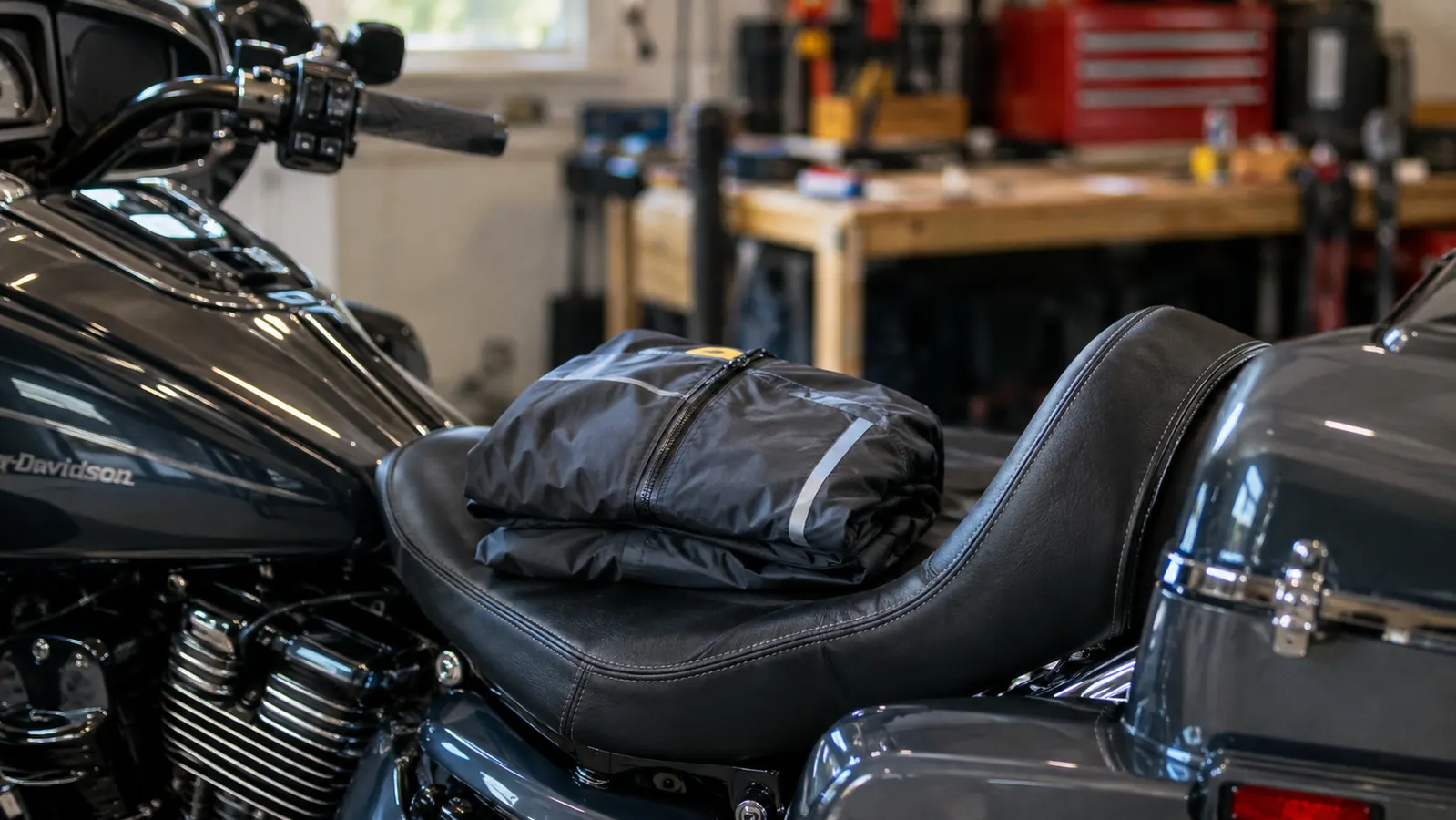
This is the part that matters more than most riders think. A rain suit that stays home because it is too bulky is no rain suit at all. The Stormrider packs down small. I keep it rolled tight in the saddlebag from October through April, and it takes up less room than a folded jacket. It is always there when I need it, and that is the whole point.
It also goes on fast. Two minutes, from saddlebag to fully suited. Jacket over the riding jacket, pants over the jeans, pull the cuffs over the gloves, and you are back on the road. When the rain starts while you are already moving, speed matters. The Stormrider is one of the easiest suits I have used in that department. No fiddly straps, no complicated closures, just zippers and elastic and go.
That combination, small when packed and quick to put on, is what separates a rain suit you actually use from one you leave at home. The best waterproofing in the world does not help you if the suit is hanging in the garage when the storm hits.
What I Liked
- Genuinely waterproof. Two seasons of Pacific Northwest rain and not a drop through the fabric or the seams.
- Packs small and lives in the saddlebag without a fight.
- Roomy cut fits over a riding jacket, so it works with gear you already own.
- Reflective striping on the jacket and pants shows up in gray daylight.
- Simple to put on and take off at the side of the road.
Where It Falls Short
- No breathability. You will sweat on any ride where you are working.
- The attached hood bunches under a helmet and is close to useless on the bike.
- Boxy, generous cut. Not for riders who want a slim fit.
- Cuffs and collar need to be set up right, or water finds its way in.
- It is a rain shell, not a riding suit. No armor, no abrasion protection, so it goes over your real gear.
Who This Is For
The Stormrider is for the rider who wants to stop cancelling rides because of rain. It is for the cruiser and touring crowd, the weekend riders, the people who park the bike all winter because the weather wins. It is for the rider who already owns a good jacket and a good helmet and just needs a waterproof shell that goes over them. If you ride in a place where rain is a season, not an event, the Nelson-Rigg earns its saddlebag space. It is also a strong pick for a newer rider who wants gear that removes the worst of the misery from riding in the wet.
Who Should Skip It
If you ride somewhere hot and dry, you will not love the Stormrider. The lack of breathability turns a warm rain shower into a sauna. If you want a slim, technical fit, or if you expect a rain suit to double as a riding suit with armor and abrasion resistance, this is not that. And if you are the kind of rider who will not stop to put a suit on when the rain starts, no rain suit will help you, not even this one. If you want the most breathable shell money can buy, there are more expensive options, and they are worth a look. The Stormrider is the practical choice, not the exotic one.
Pack this suit before the next storm.
Two seasons in, the Nelson-Rigg Stormrider is the gear I tell every rider to buy before the rain starts. It is not glamorous. It is dry. Check the current price on Amazon and keep one in your saddlebag before the next front moves in.
Amazon Check Today's Price on Amazon →