
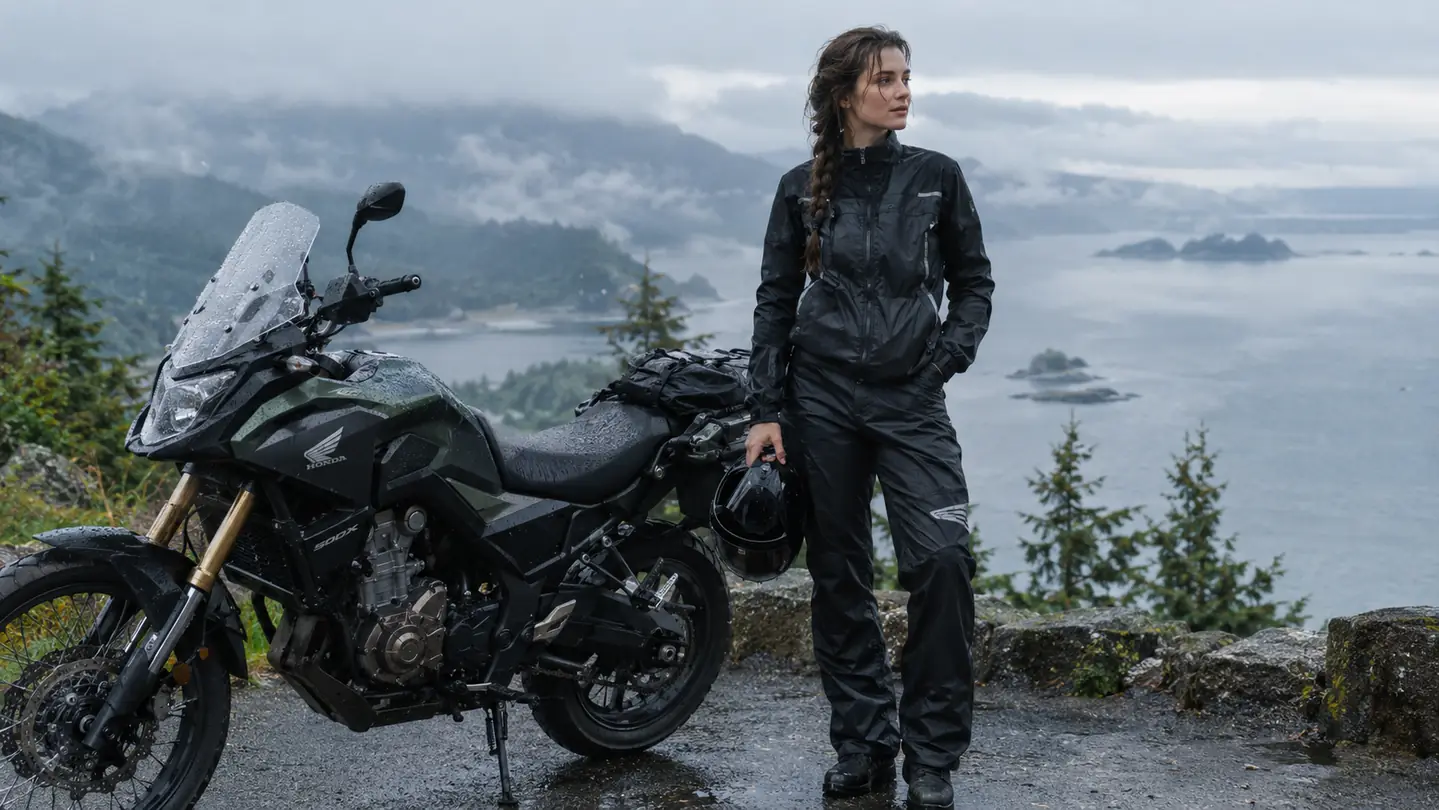
I have been riding the same black Road King for about nine years now, and for the first six of those I treated rain gear as an afterthought. I owned a jacket that claimed to be water-resistant, which meant it stayed dry for about twenty minutes in a real Puget Sound downpour. I owned a cheap rubber rainsuit that kept the rain out but turned me into a sweat lodge by the time I reached the ferry. Then, three seasons ago, a riding buddy let me borrow his Nelson-Rigg Stormrider for a wet Saturday morning, and I have not gone back.
That first loaner sold me on the basics: a proper waterproof layer that does not make you feel like you are riding inside a trash bag. I bought my own suit a week later, and this review is what a full Pacific Northwest wet season taught me about it. I am not a gear reviewer and I did not get this suit for free. I am a retired utility lineman who rides for the fun of it, and I bought it the same way you would. Rain, cold, wind, the occasional surprise shower on the way home from a Saturday soccer game, all of it. I am going to tell you where the suit shines, where it falls short, and exactly who should buy one.
The Quick Verdict
The Stormrider is the rain suit I reach for every time the forecast turns wet. It keeps you dry, packs small, and layers over your regular gear, but it is a shell, not armor, and it gets warm on mild days.
Amazon Check Today's Price →Stay dry through a real Northwest downpour
After three wet seasons, the Nelson-Rigg Stormrider is the suit that stays in my saddlebag. See the current price and read the fit notes before you order.
Amazon Check Today's Price on Amazon →How I've Used It
I referee youth soccer on Saturday mornings, which means I ride to a lot of early games in weather most people would just drive through. A typical February Saturday starts at 42 degrees with a steady rain and a wind off the water that finds every seam in a jacket. The Stormrider goes on over my riding jeans and a fleece, and it stays on until I get home. That is a 40-mile round trip, most of it at 55 to 60 mph, and it is the test that matters to me: not a five-minute drizzle, but a full morning of wet. I have done that ride a dozen times this winter, and I have shown up dry for every game.
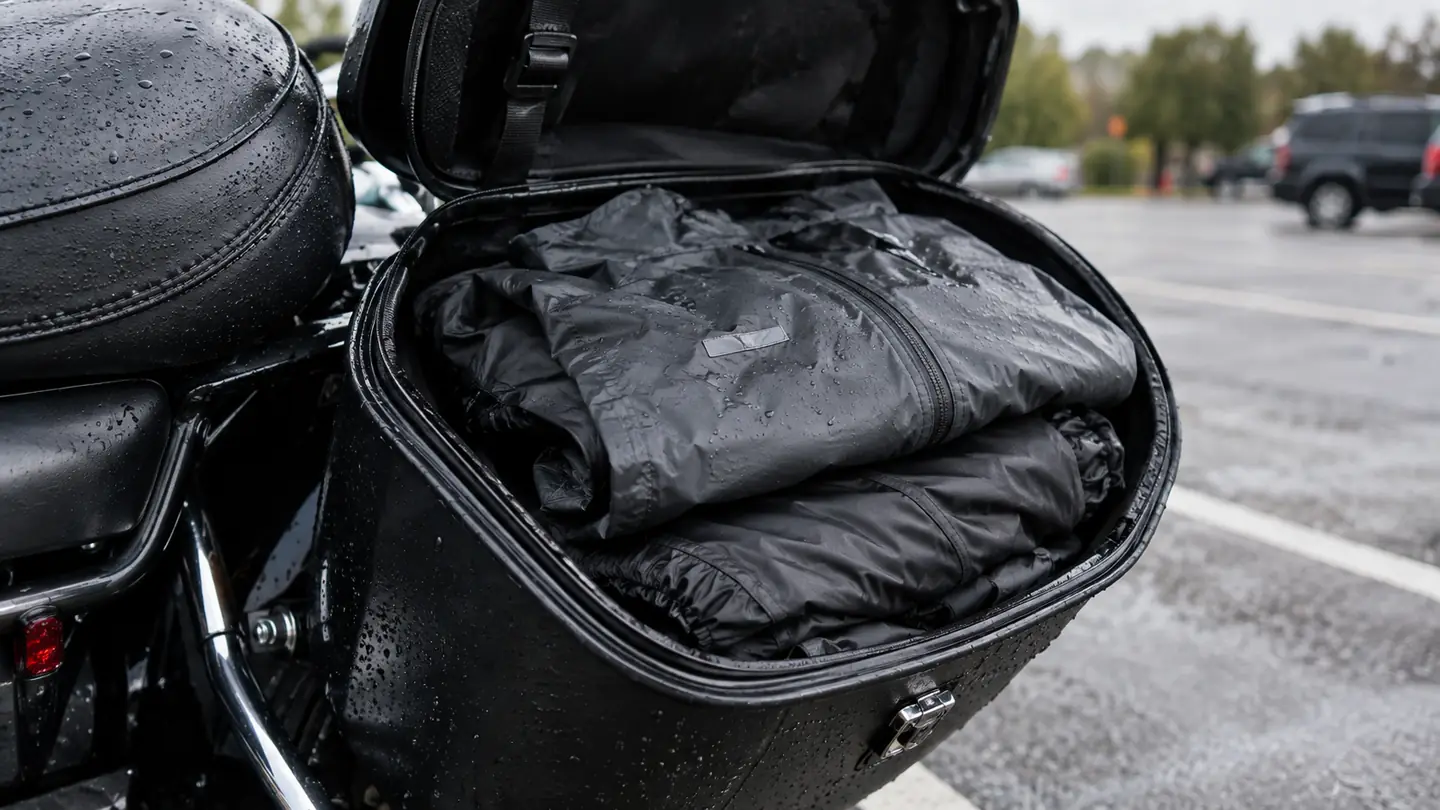
I have also worn it on the longer summer trip I take every year, where it rode in a saddlebag for six days until a cold front turned an afternoon in Idaho into a 50-degree rainstorm. It went on over a t-shirt and jeans in a gas station parking lot and kept me dry for the three hours it took to ride out of the weather. When it dried out, it went back in the bag. That kind of packability is the whole reason it stays on the bike. A rainsuit that lives in the garage is a rainsuit you will not have when you need it.
Deb has worn one too, on the back of the Road King during a wet weekend ride. Same verdict from her: dry where it matters. That matters to me, because a suit that only works for the rider in front is only half a solution. She also noticed what I did: the suit is loud when you move in it, which is normal for this kind of fabric, and it keeps the wind off in a way a regular jacket does not.
What the Stormrider Actually Is
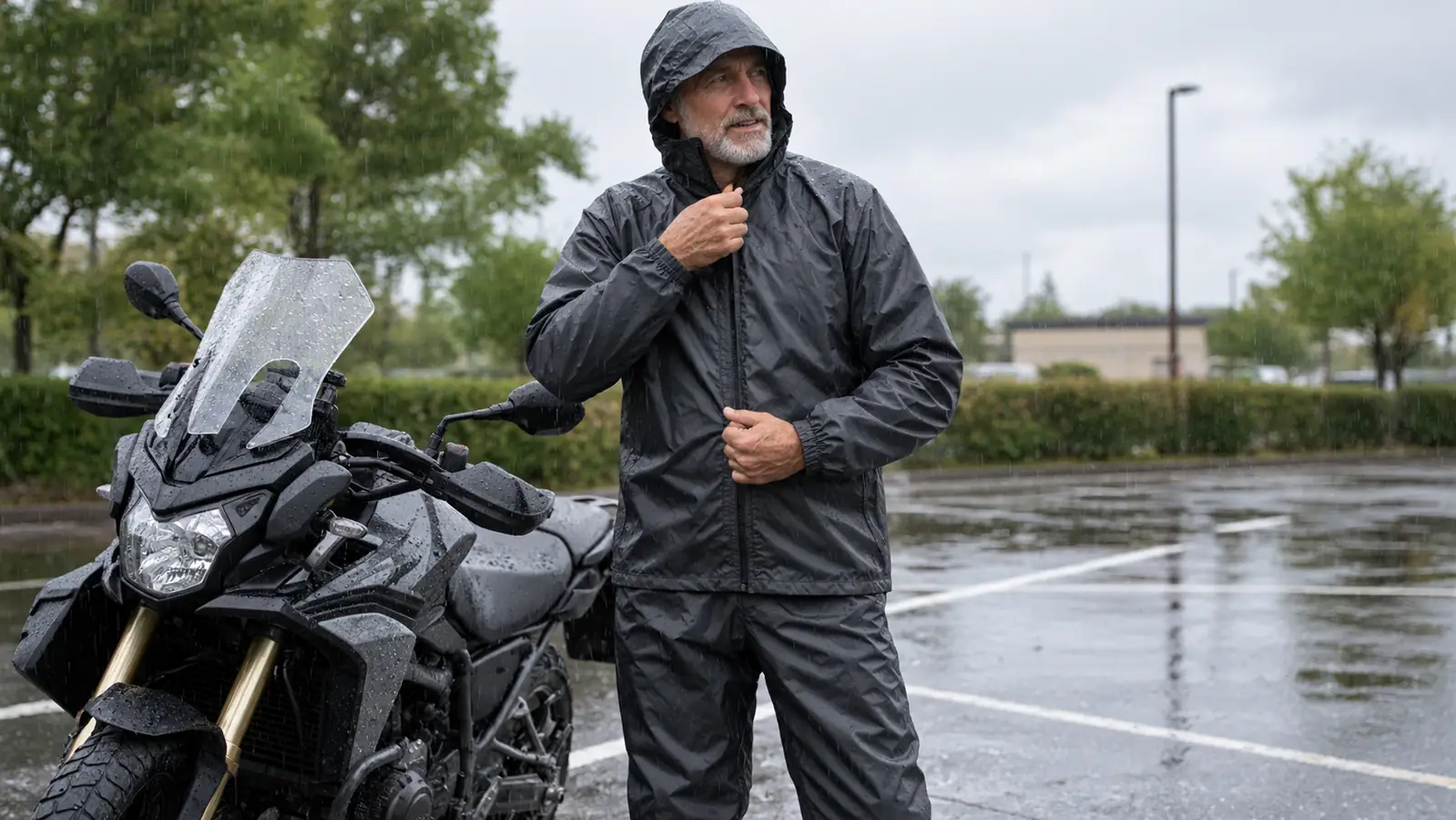
The Nelson-Rigg Stormrider is a two-piece rain shell, not an armored riding jacket. That distinction matters, because it explains both what the suit does well and where you should not expect it to save you. The jacket and pants are made from a coated fabric that the company rates as 100 percent waterproof, with sealed seams and a storm flap over the main zipper. There is reflective striping on the jacket and on the pants, which I appreciate on gray winter afternoons when visibility is half the battle. The whole point is to keep the water off the gear you already own.
It is not insulated and it does not carry armor. I wear it over my regular riding layers, and it adds a solid windbreak on top of them. On a 40-degree morning, a fleece under the Stormrider keeps me comfortable. On a 50-degree rainy day, a t-shirt is enough. That layering approach is exactly what I want from rain gear, because the same suit works from April to October. You are not buying a winter jacket and a summer jacket. You are buying a shell that makes whatever you already wear work in the wet.
The details are where the suit earns its keep. The cuffs close snug around my gloves. The collar sits high enough to keep water from running down my neck. The pants have enough room to go on over riding boots, which sounds like a small thing until you have tried to wrestle a rainsuit over a pair of boots in a gas station parking lot. The waist cinches, and the legs close snug at the bottom so they do not flap around your ankles. Small stuff, but it is the small stuff that separates gear you use from gear you leave at home.
A Full Wet Season, Field Notes
Over the course of a wet Pacific Northwest season, the Stormrider has kept me dry in the conditions I actually ride. Steady all-day rain on the way to a soccer game. Drizzle that turns heavy halfway through an evening loop. The cold front in Idaho that dropped the temperature fifteen degrees in an hour. The suit does what the name says: the water stays on the outside. I have come home from all of it dry to the skin, and for a rider in this climate, that is the entire job.
After three seasons, the coated fabric still beads water instead of soaking through, and the reflective striping still lights up when a car's headlights hit it. The zippers still run smooth, the snaps still hold, and the fabric has not gone stiff or sticky the way cheap rain gear does after a season in the garage. I have owned rain suits that felt like they were falling apart after one winter, and I have owned jackets that wet out in the shoulders after a year of use. This one still feels like the day I bought it.
The honest limit is breathability. On a mild day, or when I am working hard in stop-and-go traffic, the suit traps heat and I sweat. That is the tradeoff with any fully waterproof shell, and the Stormrider is no exception. On cold wet days it is exactly what I want. On a humid morning with the sun trying to come out, I unzip the jacket partway and accept that I will be a little damp from the inside. I would rather manage sweat than ride home soaked. That is the calculation every rain rider has to make, and I make it every time I suit up.
Three seasons in, the fabric still beads water instead of soaking through, and the reflective striping still lights up when a car's headlights hit it. That is the proof that matters in rain gear.
The Tradeoffs You Should Know About
Every piece of riding gear is a set of compromises, and the Stormrider's are worth naming before you buy. The biggest is breathability, which I already mentioned: this is a waterproof shell, not a breathable membrane like a premium jacket that costs several times more. You manage it with layers and zipper position. That tradeoff is exactly why the suit sells for a fraction of what a premium shell costs. You are trading a little comfort on mild days for a lot of savings and full coverage in the wet.
Second is the fit. The cut is generous, which is what you want when you are pulling it over riding gear, but if you are between sizes, I would not automatically size up. It layers better when it fits close. The suit is meant to go over your regular riding clothes, so a snugger fit still leaves room for a fleece underneath. I would rather have the sleeves come up a little short than have fabric flapping in the wind at highway speed.
Third is the way it behaves off the bike. This is not a jacket you wear into a restaurant. It is a rainsuit: it rustles, it folds stiffly, and it looks like what it is. I do not care about that when I am riding, but if you want one piece of gear that works on and off the bike, this is not it. It is a tool for wet miles, and it is very good at that job. I keep mine in the saddlebag and forget about it until the sky opens up.
Alternatives I Considered
There are three alternatives I weighed before settling on the Nelson-Rigg. The first is the cheap disposable rainsuit, the kind that comes folded in a pouch at a truck stop. It keeps you dry for one ride and then starts tearing at the seams. I have owned several, and the Stormrider has outlasted all of them combined. If you ride once a year in the rain, the disposable is fine. If you ride every weekend through a Pacific Northwest winter, it is a false economy, because you will buy a new one every month and still get wet.
The second is a premium breathable riding jacket with a waterproof membrane. That is genuinely better gear in almost every way, and it costs several times more. The problem is that it solves only the top half. You still need rain pants, and you still need to trust a membrane that has been through years of washings. The Stormrider covers everything for a fraction of the money, and when it wears out, replacing it does not hurt the same way. For a weekend rider, that math is hard to beat.
The third is a one-piece rainsuit. They are excellent at keeping water out, but they are a chore to put on at the side of the road, and they do not pack as small. For a rider who lives in a wet climate, the two-piece with a jacket that zips over your regular gear is the practical answer. That is the Stormrider. You can put the pants on without taking off your boots, and the jacket goes on like any other jacket.
A Few Care Notes From Three Seasons
Rain gear does not ask for much, but it does ask for a little. I rinse mine off with a hose when the roads have been salty or gritty, and I let it dry completely before it goes back in the bag. That matters more than you would think. Packing a damp rainsuit into a saddlebag for a week is how they get that sour smell and how the coating starts to break down.
I also re-treat the fabric coating once a year with a spray-on waterproofing meant for nylon. A thirty-minute job at the kitchen table, and the suit keeps beading water the way it did on day one. Do not put this suit in the washing machine and do not dry it on high heat. Treat it like a tool you want to last, and it will.
What I Liked
- Keeps you dry through all-day rain; the coating still beads water after three seasons
- Jacket and pants together in one purchase, with reflective striping on both
- Layers well over regular riding clothes, so one suit works most of the year
- Packs small and lives in a saddlebag without complaint
- Replacing it later will not break the bank the way a premium shell would
Where It Falls Short
- Not breathable on mild days; you will sweat in stop-and-go traffic
- No insulation and no armor, it is a shell and nothing more
- Fit runs generous, so check the sizing before you order
Who This Is For
The Stormrider is for the rider who treats rain as a condition, not a reason to stay home. If you ride a cruiser or a touring bike for pleasure, if you have a standing Saturday commitment like a game or a ride with friends, if you would rather be riding than watching the radar, this suit makes wet mornings manageable. It is also for the rider who wants one set of gear that works from a cold April morning to a warm September downpour, and who is willing to layer underneath instead of buying a different jacket for every season. That is the rider I am, and this is the suit I would buy again tomorrow.
Who Should Skip It
Skip it if you ride in the rain rarely enough that a cheap rainsuit living in your trunk for emergencies is plenty. Skip it if you want your rain gear to double as armor or insulation, because the Stormrider is a shell and will not protect you in a slide. And skip it if you spend long days in hot, humid weather, because no amount of zipper management will make a fully waterproof shell comfortable when it is warm and sticky. For those riders, a breathable membrane jacket is worth the money. For the rest of us, the Stormrider is the honest answer, and I will keep buying it as long as they keep making it.
Ready for a dry ride next weekend?
The Nelson-Rigg Stormrider has earned its spot in my saddlebag for three seasons. Check the current price and the sizing notes on Amazon before you order.
Amazon Check Today's Price on Amazon →