

There is a lot of junk in the motorcycle glove aisle, and most of it falls apart or fits like a gardening glove. I have bought enough of both kinds over the years to be picky, so when the Milwaukee Leather Cruising Gloves showed up I did what I always do: wore them around the house for a week, then put them through a full season of weekend rides around Puget Sound. This is the honest review I wish somebody had handed me before I bought my first pair of cruiser gloves.
Quick version for people in a hurry: the Milwaukee Leather Cruising Gloves are a solid, good-looking leather glove for cruiser and touring riders who want a clean look and decent palm padding without spending a fortune. They are not racing gloves, they are not winter gloves, and the sizing runs a little small, so read that part before you order.
The Quick Verdict
A clean-looking leather glove that fits well once you size up, grips the bars better than I expected, and wears honestly. Just don't expect them to be waterproof or to last forever if you ride in the rain a lot.
Amazon Check Today's Price →A leather glove that actually fits a cruiser rider's hand
I wore these for a full season of weekend miles. If you want a clean, comfortable leather glove with gel palm padding, check today's price on Amazon.
Amazon Check Today's Price on Amazon →How I've Used Them
I am Walt, 58, a retired utility lineman, and I ride a black Harley-Davidson Road King that I have owned for about nine years. Most of my riding is weekend and evening loops around the Tacoma area, plus one longer summer trip every year. That means a little of everything: cold mornings, damp roads, wind off the water, and the occasional surprise downpour that the Pacific Northwest specializes in. I am not the guy who rides through a deluge for fun, but I also do not park the bike because the sky looks iffy. I plan around the weather when I can and take what comes when I cannot.
I wore these gloves for roughly six months, from the first dry weekend in early April through the end of September. Not every single mile, because I switch gear around depending on the forecast, but they got the majority of my dry and mild rides. I would guess somewhere around 2,000 to 2,300 miles total. The Road King's odometer rolled past 61,000 on a Saturday run up toward the pass, and a solid share of those miles happened with these gloves on the bars. The longest single day came on the summer trip, a 380-mile loop east over the Cascades and back through the valley. The morning started at 46 degrees and the afternoon hit the low 80s. The gloves stayed on from sunup until we stopped for lunch, and then went right back on for the return leg. That is the kind of day that tells you everything about a glove, and these came through it without a complaint.
The soccer detail matters more than it sounds like it should. On Saturday mornings I referee youth games, and I usually ride to the fields. That means the gloves have to go on fast in a dark garage, work for a twenty-five minute ride in whatever the morning threw at us, and then come off quick when I need to grab my whistle and my water bottle. One Saturday in May I had to be at the fields by 8:15, and it was drizzling when I left the house. The gloves went on in the garage, stayed on for the whole ride, and sat on the seat while I worked the line. They never made me think about them, which is the highest compliment I can pay a piece of riding gear.
My wife Deb rides on the back sometimes, and she has her own gear, so this review is purely about how these gloves work for the rider. No passenger considerations here.
What Nobody Tells You About the Fit
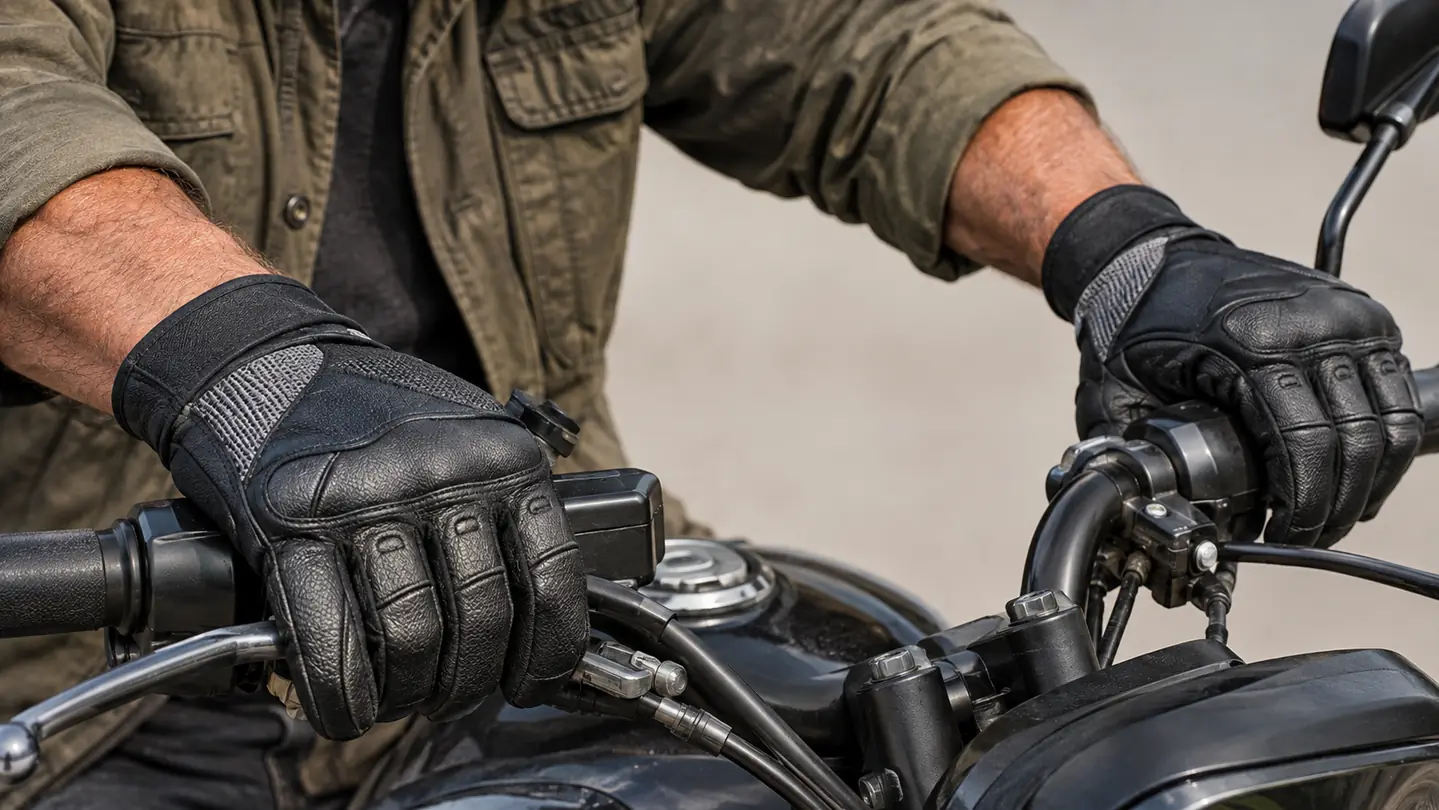
Here is the thing nobody tells you before you order: the Milwaukee Leather Cruising Gloves run small. I normally wear a large in most riding gloves, and I ordered a large the first time. They were tight across the palm and the fingers felt a little short. I measured my palm the way the sizing charts tell you to, laid a tape measure across the widest part, and by the numbers I should have been a large. The numbers lied. I exchanged them for an XL, and the XL fit the way a leather glove should: snug at first, then shaped to my hand after a few rides.
The exchange itself was painless, which I did not expect. I kept the large pair for about a week and wore them around the house for an hour or two each evening to see if they would give. They did not give enough. The palm was okay, but the fingertips stayed short and the thumb seam sat right at the base of my thumb instead of below it. Back they went, and the XL arrived a few days later. The first ride with the XL was the difference between a glove I was ready to send back and a glove I have now worn for six months.
That snug-at-first thing is worth understanding. Leather breaks in. A glove that feels perfect in the store is often loose after a month, and a glove that feels slightly tight is often perfect after a few hundred miles. The trick is to size up one from what you normally wear, then give the leather a couple of weeks to conform. I wore the XL around the house for a few evenings, did a short thirty-mile loop, then a longer run the next weekend. By the third week the leather had softened across the back of the hand and the palm had started to mold to the grips.
The other fit detail people do not mention: the fingers run a little short relative to the palm. If you have long fingers, these may not be your glove. For my hand, with the XL, it worked out fine, but I can see how a rider with longer fingers would find the fingertips landing a little early. The index and middle fingers were where I noticed it most on the large pair. On the XL it stopped being an issue, but I would still tell anybody with long fingers to try them on before they commit. One more fit note while I am here: the wrist opening is snug without being a fight to get into. Some leather gloves make you wrestle the cuff every single time you put them on. These slide on clean, and the cuff sits close enough that I never noticed cold air working its way up my sleeve on a forty-five degree morning.
Grip and Feel on the Bars
The gel palm padding is the feature that gets the most attention, and I get it, because it is the thing you can feel right away. On a Road King with stock grips, I noticed the difference mostly on longer rides. The padding does not make the grips feel mushy, which was my worry. It just takes the edge off the vibration and the pressure points. On a two-hour loop it is the difference between getting off the bike with hands that feel normal and hands that feel like they have been gripping a paint shaker.
The clearest example was a 220-mile day I did in August, out to the coast and back. By the last hour my hands were still comfortable enough that I did not think about them. I have done that same ride with unlined leather gloves and with a pair of cheap synthetic gloves, and both of those had me flexing my fingers at every stoplight by the end. The gel palm does exactly what it is supposed to do.
What surprised me more was the grip itself. The leather palm is smooth, which sounds like it would be slippery, but on the bars it grips better than I expected. I think it is because the leather conforms to your hand and the grip, so you get more contact area than with a padded synthetic glove. I never felt like my hand was going to slide off, even with the Road King's engine vibration at highway speeds. The throttle hand stayed planted at 70 without me having to squeeze. I also had them out in a light rain once, long enough to get the leather damp. The palm got a little slicker when wet, which is true of any leather glove I have owned, but it was nothing that made me nervous. I backed off the pace a notch and it was fine. If you ride in steady rain all the time, you will want something with a waterproof membrane. For a passing shower, the leather holds up.
Controls are worth a mention because a lot of gloves get this wrong. The thumb and index finger are thin enough that I could work the turn signal, the horn, and the brake lever without hunting for them. The clutch lever pull stayed clean even with the extra layer of leather. Some bulky gloves make you feel like you are operating the bike with oven mitts. These do not. One thing to know: these are not gloves for aggressive riding. If you are dragging pegs in the twisties or doing track days, you want a gauntlet-style sport glove with hard knuckle protection and a different kind of palm slider. These are cruiser gloves. They are for sitting back, holding the bars at a relaxed angle, and putting in miles.
Wear and Tear After a Season
I mentioned earlier that there is a lot of junk in the glove aisle. The reason I said that is because I have owned gloves that started falling apart after a few weeks. Seams pulling, lining coming out, the whole thing looking like it went through a washing machine. That is the standard I am measuring against. I have also owned a pair that looked fine on the outside while the lining rolled up inside the fingers, which is its own special kind of annoying because you cannot fix it once it starts.
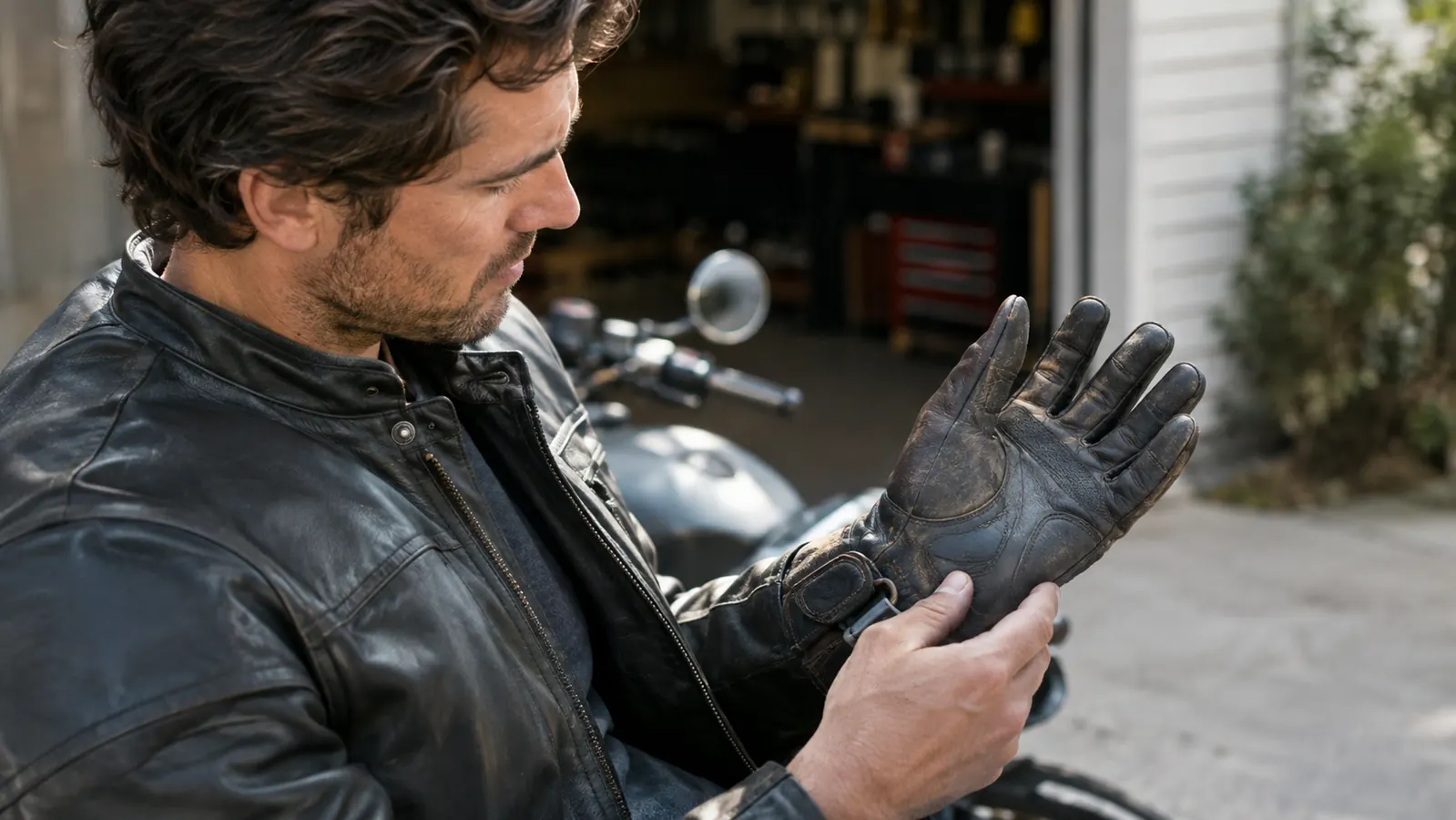
After six months and somewhere around 2,000 miles, the Milwaukee Leather Cruising Gloves look good. The leather has softened and picked up a natural patina, which I like on a leather glove. The stitching on the fingers and the palm is holding up, with no loose threads and no separation. I went over the seams with a reading light one evening in late September, the way you check a piece of gear you are not sure about, and I could not find a single stitch that had pulled or a seam that was starting to open.
After six months and maybe 2,000 miles, the stitching is still holding, the leather has broken in nicely, and the gel padding has not shifted. That is more than I can say for most gloves in this price range.
The gel padding has not shifted or flattened in any way I can feel. That was my biggest worry about a gel glove, because I have seen padding ball up and bunch in the palm. It has not happened here. The palm side of the left glove, which is the one I use for the clutch and the turn signal, shows a little wear where the leather has rubbed against the controls. It is the normal kind of wear any leather glove picks up, not a hole and not a weak spot. The closest these gloves came to trouble was one evening in September when a shower rolled in off the water and I got caught about twenty minutes from home. The leather got good and damp before I made it back. I dried them slowly at room temperature, the way you are supposed to, and they were fine the next weekend. If I had let them dry next to a heater they probably would have stiffened up. Leather does that.
The honest caveat: I am a fair-weather rider. These gloves have not been through a real Pacific Northwest winter, and they are not waterproof. If you ride in heavy rain regularly, the leather will soak through, and soaked leather that dries wrong will get stiff and can shrink. For my use, which is mostly dry miles with the occasional sprinkle, they are holding up great.
The Pros and Cons
What I Liked
- Gel palm padding that takes the edge off vibration without feeling mushy
- Clean, classic cruiser look that goes with any jacket
- Good grip on the bars once the leather breaks in
- Solid stitching and materials for the price
- Easy to pull on and off, which matters when you ride to a soccer game and need to swap gloves quickly
Where It Falls Short
- Sizing runs small, so order one size up
- Not waterproof, and leather does not love heavy rain
- Fingers are a bit short for riders with longer hands
- No hard knuckle protection, so not for aggressive riding
Who This Is For
If you are a cruiser or touring rider who wants a glove that looks right sitting on the bars of a Road King or a Softail, and you ride mostly in dry or mild conditions, the Milwaukee Leather Cruising Gloves are a genuinely good choice. They are the kind of glove you can wear all day, forget you are wearing, and not feel cheated when you look at the price.
They are also a great option if you are newer to riding and want a solid first pair of leather gloves without overspending on something you are not sure about yet. The Milwaukee Leather brand makes a lot of gear for this exact rider, and these gloves are a reasonable place to start. You can wear them for a season, learn what you like and do not like, and still have a pair of gloves worth keeping when you upgrade the rest of your kit.
Who Should Skip It
If you ride in the rain a lot, or you do serious cold-weather riding, these are not the gloves for you. They are not waterproof, and they are not insulated. You can layer with a liner, but there are better options for genuinely cold or wet conditions. I switch to a warmer glove myself once the mornings stay below about 45 degrees.
If you are an aggressive rider who wants maximum protection, look at a sport glove with hard armor. And if you have long fingers, try them on before you commit, because the fit is a little short in the fingers for some hands. None of that makes these bad gloves. It just means they are built for a specific kind of riding, and that kind of riding is exactly what most cruiser and touring riders do.
A full season of honest miles says these are worth a look
The Milwaukee Leather Cruising Gloves fit well once you size up, grip the bars, and wear honestly. Check today's price on Amazon and see if they are right for your riding.
Amazon Check Today's Price on Amazon →