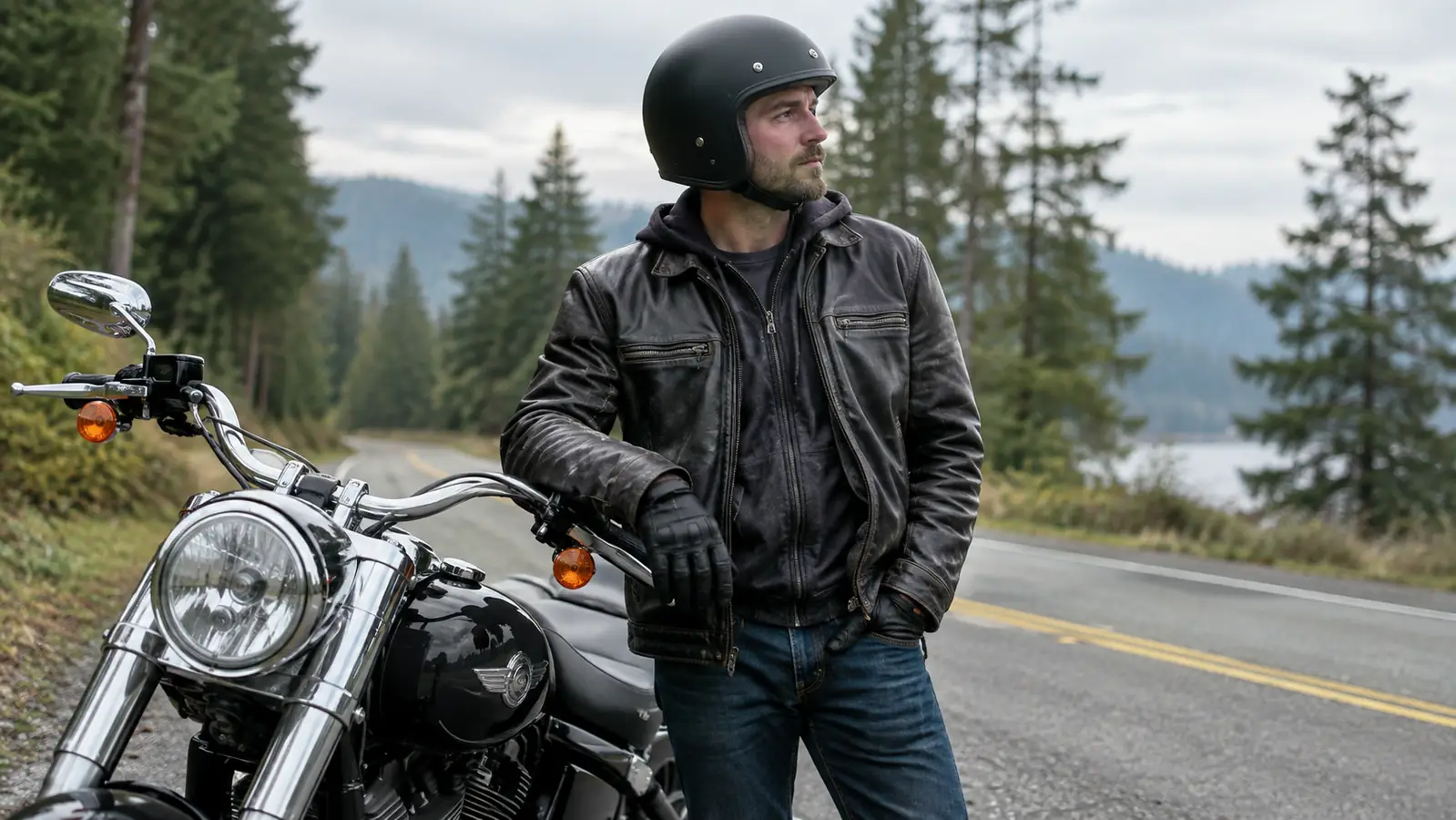
If you ride a cruiser, you have stood in front of the helmet rack and asked yourself the same question I did: do I want the wind in my face or the full open road feel? I am Walt Brenner, 58, a retired utility lineman who lives outside Tacoma, Washington, and I have put about nine years of weekend miles on a black Harley-Davidson Road King. This past season I spent real time in the ILM open face 3/4 helmet and a basic half helmet, often switching between them on back to back rides around the Puget Sound area. I bought the half helmet first because I liked the bare bones look, and I rode with it for most of April. It took exactly one cold Saturday morning on I-5 to realize I had made the wrong call for the kind of riding I actually do.
Here is the short answer: the ILM 3/4 open face helmet is the better all around choice for most cruiser riders. It covers your ears and the back of your head, it blocks a meaningful share of wind noise and rain, and it still gives you the open air view that draws people to half helmets in the first place. The half helmet is not useless. It wins the narrow job of slow, warm, short rides around town. But for the rider who does a mix of back roads, highway stretches and cool Pacific Northwest mornings, the ILM 3/4 is the one I keep reaching for. The rest of this comparison is the honest details, including the places where the half helmet still beats it.
| ILM 3/4 Open Face Helmet | Half Helmet | |
|---|---|---|
| Wind and weather protection | Covers the back and sides of your head, blocks a lot of the wind noise and cold that a half helmet lets through | Leaves the back and sides of your head exposed, so cold mornings and highway wind hit you directly |
| Noise level | Noticeably quieter on the highway, with less buffeting around the ears | Louder at speed, and wind noise builds fast once you pass 55 mph |
| Field of view | Open face design gives a wide, unobstructed view, and the visor keeps rain and bugs off your face | Wider than a full face but you trade it for zero face protection |
| Face and chin protection | No chin bar, but the shell and visor protect your face from wind, rain and small debris | Your face is fully exposed to rain, bugs and wind |
| Cool factor | Classic cruiser look that still reads as a real motorcycle helmet | Maximum bare bones style, the closest thing to wearing no helmet while staying legal |
| Storage and portability | Bulkier, takes up more room in the saddlebag or on the passenger seat | Smaller and lighter, easy to tuck under an arm or pack for a trip |
| Best for | Weekend riders who do a mix of town, back roads and the occasional highway stretch | Riders who want the most open feel on slow, warm, short rides close to home |
Where the ILM 3/4 Helmet Wins
The first thing I noticed was the wind, and I noticed it on the first Saturday in May. The temperature was 45 degrees when I left the house, which is normal for spring here, and on the ride from Tacoma down toward the Key Peninsula the ILM shell covered the back and sides of my head. My ears stayed warm, and the buffeting around my neck was nothing like what a half helmet gives me on the same road. By the time I hit 60 mph on the highway, the difference was obvious. The ILM 3/4 is not a quiet helmet, no open face design is, but it cuts the worst of the roar. I can hear my own thoughts, I can hear traffic around me, and I finish a two-hour loop less worn out than I did with the half helmet. That matters more as I get older. After a full day of riding, the constant blast of wind noise from a half helmet leaves me with a dull headache and a feeling of being drained. The ILM 3/4 does not eliminate that, but it brings it down to a level I can live with. I tried a few workarounds with the half helmet before I switched. Foam earplugs helped with the noise, but they made me feel cut off from traffic, and on a big cruiser you already sit higher than most cars, so I want to hear what is around me. A bandana under the shell helped with the cold but made the fit sloppy and it shifted around. Nothing I tried fixed the basic problem, which was that the half helmet simply did not cover enough of my head for the riding I do.
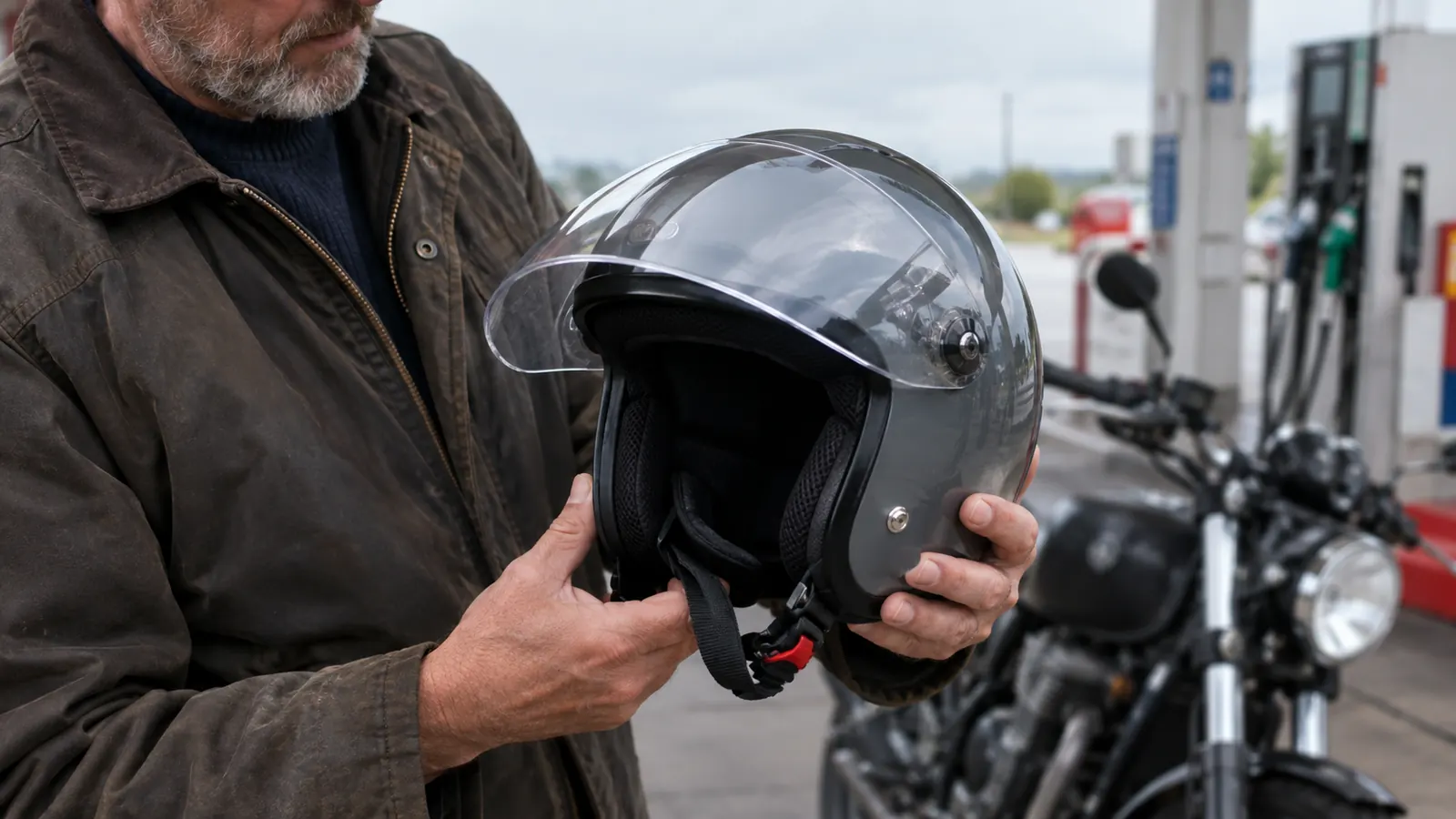
The visor is the other big win, and I did not appreciate it until the first rain. One Tuesday evening in late September I rode home through a steady drizzle, the kind that does not look like much until you are in it for twenty minutes. With the ILM 3/4 I flipped the visor down and kept riding without squinting or wiping my face. My glasses stayed dry, and the rain rolled off the shell instead of running down my neck. With the half helmet, that same drizzle is a steady stream of water on your glasses and cheeks within ten minutes. I have also had bugs and the occasional gravel truck spray hit the visor instead of my face. For a rider who does evenings and longer loops, that alone is worth the switch. The ILM 3/4 also fits the cruiser look better than I expected. It is a proper helmet shape, not a novelty shell, and it looks right sitting on the seat next to the Road King when I stop for gas. My wife Deb rides on the back sometimes, and she noticed the difference too. She said the first time I wore it that I looked like I was riding with a real helmet instead of a shell, and coming from her that means more than it probably should. The fit is snug without being tight, the padding sits where it should, and the chin strap is easy to fasten with gloves on. I have worn it for six hours on a full day ride and it never gave me a hot spot or a pressure point.
Fit is the part nobody talks about at the rack. I measured my head with a soft tape about an inch above the eyebrows before I ordered, and I came in right on the line between two sizes. I went with the larger one and used the thicker cheek pads that come in the box, which pulled it snug without pressing on my temples. After a ninety minute loop out toward Gig Harbor and back, there were no hot spots and no red line across my forehead, which is more than I can say for the half helmet I wore for years before it.
Where the Half Helmet Wins
I will be straight with you: the half helmet is not a bad piece of gear. It is a piece of gear for a narrower job, and I still own mine for that job. On a hot July afternoon, riding slowly through town at 30 mph, the half helmet is glorious. You feel every bit of the air on your head, and the world feels completely open. I use it for short errands close to home, the kind of ride where I am on the bike for fifteen minutes and never get above 45 mph. It is also easier to carry. It tucks under my arm when I walk into a diner or a gas station, and it fits in the saddlebag without any wrestling. The ILM 3/4 is bulkier, and while it still fits, it takes up most of the bag and leaves less room for the rest of my gear. On the Road King I have a pair of saddlebags that are not huge, so that space matters when I pack for an overnight trip. The half helmet is also cooler in the summer. On a 90 degree afternoon, there is no contest. The air moves over your head and you do not feel like you are wearing a bucket.
There is also the style factor, and I am not going to pretend that does not matter. The half helmet has that bare bones cruiser look that some riders love, and on a slow sunset ride around town it genuinely feels right. I rode with it for most of June because I liked the look, and I kept telling myself the noise was fine. Then I did a longer ride, about 140 miles round trip to a soccer tournament I was refereeing on a Saturday morning, and by the time I hit the highway on the way home I was tired of the roar. The wind noise is tiring, the cold creeps in fast once the sun drops, and rain has nowhere to go but your face. I have done both helmets on the same route, and on any ride over 30 minutes or over 50 mph, the ILM 3/4 is the one I want. The half helmet is at its best when the ride is short, slow and warm. The moment any of those three things changes, it starts giving back everything it gave you. I would not tell anyone to throw a half helmet away. I would tell them to know what it is for, and to reach for something else when the ride is bigger than that.
Weight is where the half helmet earns its keep. You feel almost nothing on your head, and on a short hop to the hardware store or across town to a Saturday morning soccer game, that is a fair trade for a lot of riders. The ILM 3/4 is noticeably heavier in the hand, but on the road the extra shell sits low and balanced, and I stopped noticing it within the first twenty minutes. Where I did notice it was at the end of a long, hot August day, when the extra padding around the ears held a little more heat.
Want the open face feel without the wind noise?
The ILM 3/4 open face helmet covers your ears and the back of your head while keeping the open road view. It is the helmet I reach for on most weekend rides now.
Amazon Check Today's Price on Amazon →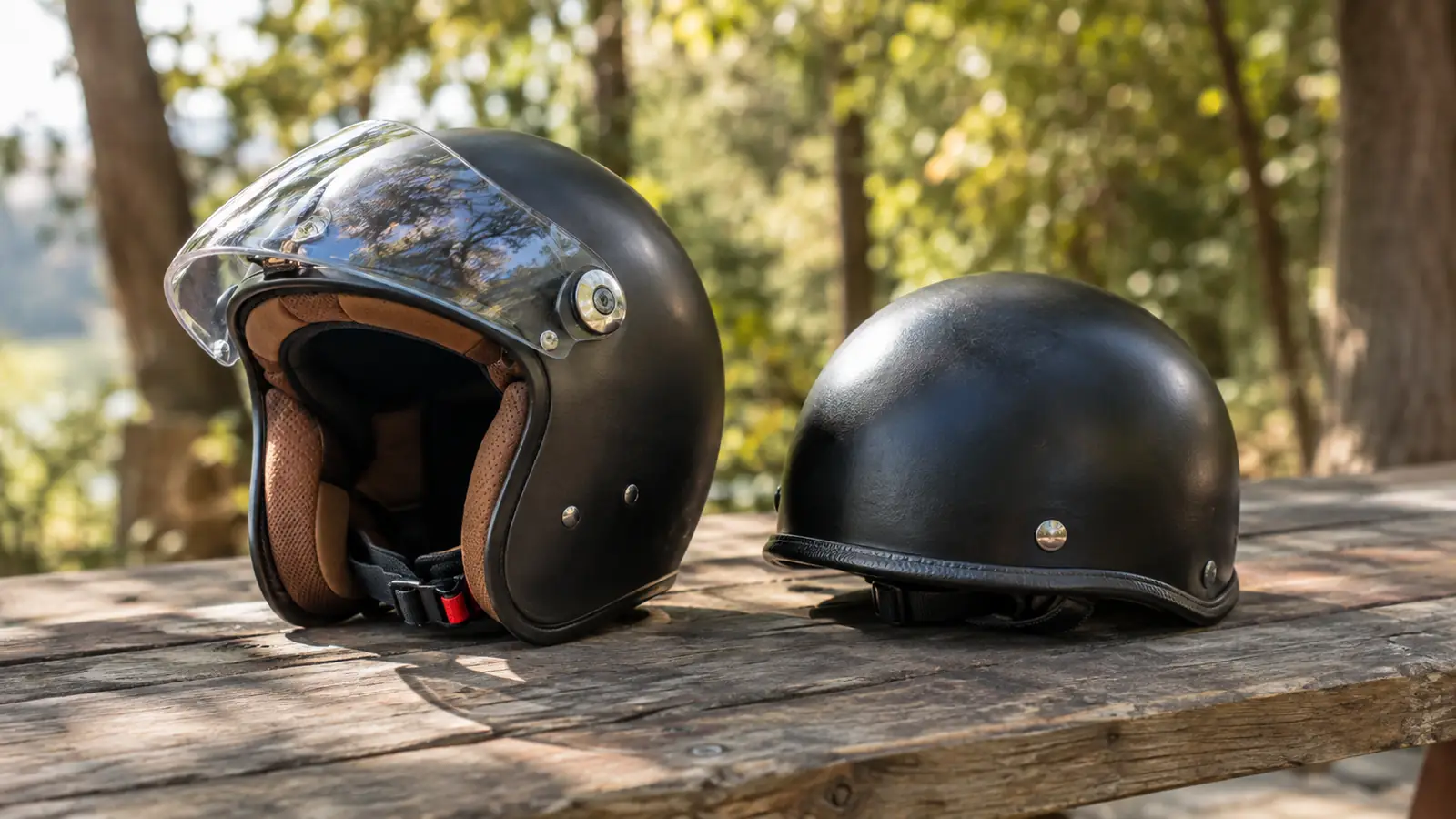
Who Should Buy Which
If you are a weekend cruiser rider who does a mix of town riding, back roads, and the occasional highway stretch, buy the ILM 3/4 open face helmet. It gives you most of the open air feel while protecting your ears, the back of your head, and your face from the weather and the noise. I have put about 2,000 miles on mine since May, including a week long trip down the Oregon coast in August, and it has made every one of those miles more comfortable. The half helmet came with me on that trip too, and I wore it exactly once, for a slow ride around town in the evening. Every other mile I chose the ILM 3/4. That is the simplest summary I can give you. It is also the helmet I reach for on Saturday mornings when I ride to the soccer fields to referee. Those rides are usually twenty to thirty minutes each way, often in the cool morning air, and the ILM 3/4 makes them feel like a small pleasure instead of a chore.
Who should skip the ILM 3/4 and keep a half helmet? The honest answer is riders who mostly ride slow, warm, short distances close to home, and who are willing to accept the wind and noise when they do get on the highway. If you ride a couple of miles to the store on a hot day and that is most of your riding, the half helmet is lighter, cooler and easier to carry. I still use mine for quick trips on summer afternoons. But for the rider who wants one helmet that works for the whole season, including the cold mornings and the rain that are part of riding in the Pacific Northwest, the ILM 3/4 is the better choice. It is the helmet I keep on the passenger seat for a Saturday morning ride, and it is the one I would buy again tomorrow. If you are still torn, think about your last ten rides. How many of them were over 30 minutes? How many were on the highway? How many were in weather that was not perfect? That answer will tell you which helmet you actually need. For me, eight of the last ten rides were over an hour, and six of them were on the highway. The half helmet lost before I even left the driveway.
One last practical point before you choose. Whatever you buy, check for the DOT sticker on the back and the label inside the shell, try it on in the afternoon when your head is at its largest, and plan to replace it after any real impact, even a drop onto concrete from the seat. Neither style protects your face and jaw the way a full face helmet does, so if you ride hard or in heavy traffic, weigh that honestly. For the relaxed cruiser riding most of us actually do, the ILM 3/4 gives you more coverage without giving up the open air feel.
Make the switch before your next cold morning ride
The ILM 3/4 open face helmet is the everyday choice for cruiser riders who want wind protection without losing the open road feel.
Amazon Check Today's Price on Amazon →