
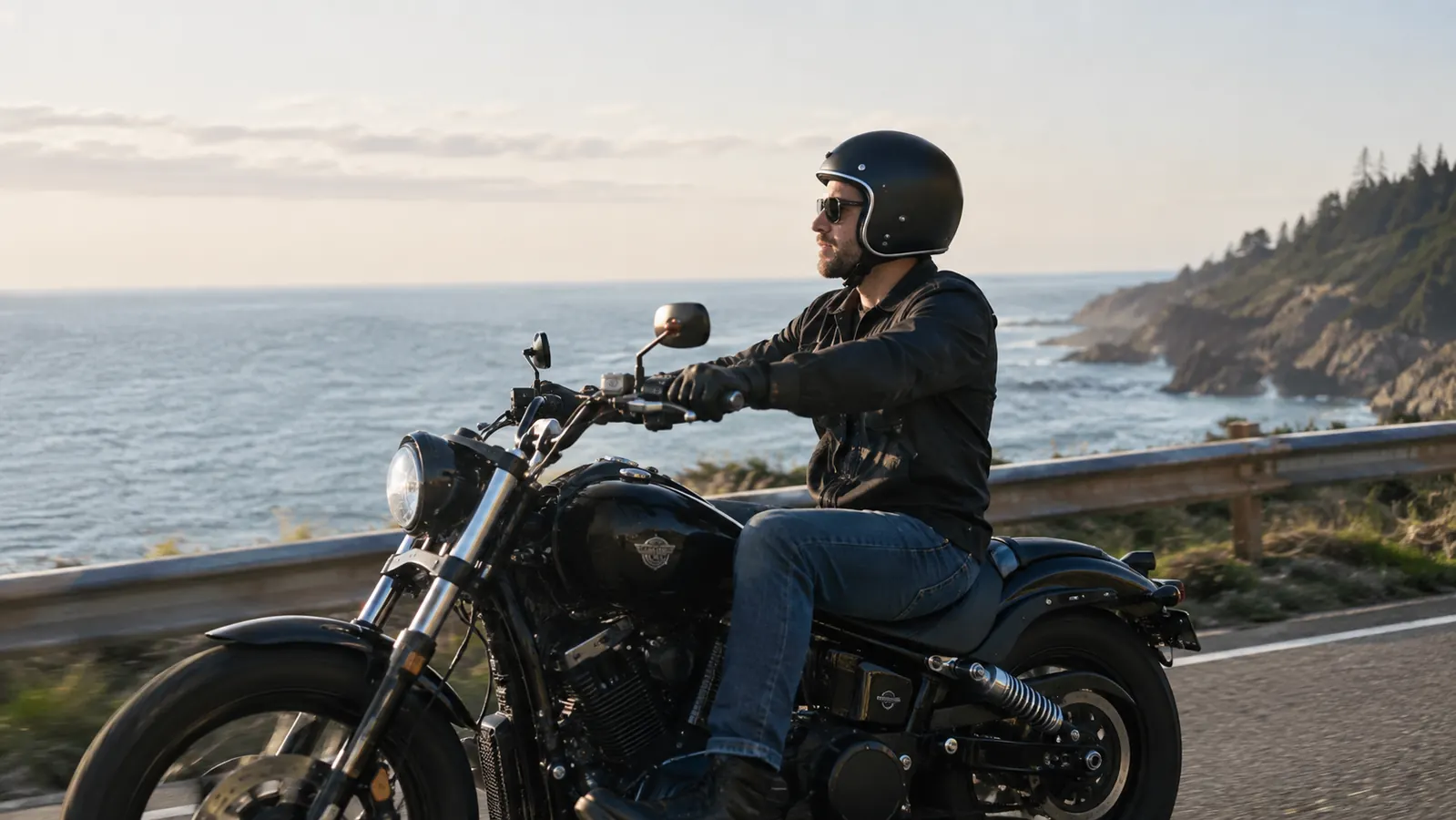
I've owned my share of helmets over nine years on a Harley-Davidson Road King, and most of them ended up in a box in the garage. Too heavy. Too tight at the temples. Or so hot by August that I'd rather ride without one, which I know is a bad habit. When I ordered the ILM Open Face 3/4 helmet last spring, I expected another box-filler. Instead, it became the helmet I reach for on almost every ride around the Puget Sound area, and it's still going strong months later.
On a Road King you sit upright, you don't lean forward, and you rarely go fast enough for a chin bar to feel necessary. For the kind of riding I do, weekend loops, evening runs, and Saturday mornings heading out to referee youth soccer, an open face helmet makes more sense. The ILM gives me the wind in my face that I actually want, without the flapping and roar I got from a half helmet. This review is about the long haul: how it fits, how it wears, where it's weak, and who should buy one.
The Quick Verdict
A comfortable, well-vented 3/4 helmet that does what a cruiser rider needs and nothing it doesn't. The shield mechanism is the weak point. After a full season, it's still the helmet I reach for first.
Amazon Check Today's Price →The helmet I reach for on every cruiser ride
After months of real riding around the Puget Sound area, the ILM Open Face 3/4 Helmet is still the one I grab first. Check today's price on Amazon and see if it fits your style of riding.
Amazon Check Today's Price on Amazon →How I've Used It
I bought the ILM in March of last year, before the riding season really got going. My criteria were simple: it had to fit my head without pressure points, it had to work with the Road King's windshield, and it had to be light enough that I wouldn't take it off at every gas stop. The ILM checks those boxes. It weighs noticeably less than the full-face helmet I used to own, and after a three-hour ride I don't feel the neck fatigue that used to set in.
Most of my riding is short to medium distance. A typical week is a couple of evening rides after dinner, maybe forty miles each, and a Saturday morning run to a soccer field in Puyallup with the helmet on the whole way. Once a year I take a longer trip. Last summer I did a six-day loop through the Cascades and down to the Columbia River Gorge, and the ILM came along. That trip is where a helmet either earns its place or gets replaced, and the ILM earned its place.
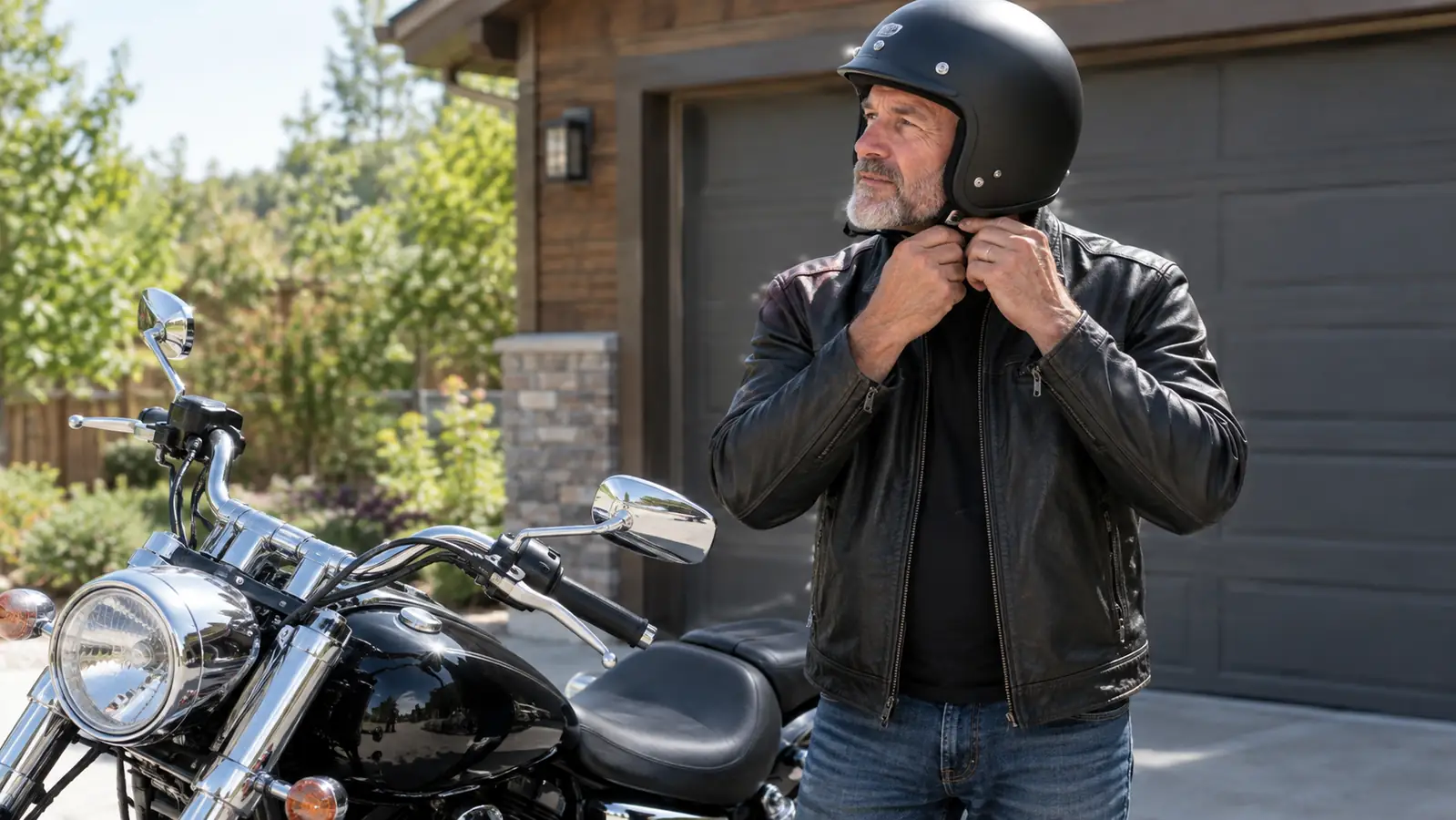
I wear a size large. The fit is snug but not tight, with no hot spots after a full day. The padding is firm, and the liner is removable, which matters more than most people think. On a warm afternoon, I can pull the liner, rinse it in the sink, and have it dry by the next morning. The chin strap uses a quick-release buckle, so the helmet goes on and off easily even with riding gloves on.
Deb rides with me on the longer trips, and she wears a full-face helmet, so I get a side-by-side contrast every time we stop for gas. She's happy with her choice, and I'm happy with mine. On a warm afternoon the difference is stark. When we stop, her helmet comes off immediately. Mine stays on until I decide to take it off.
What an Open Face Helmet Does on a Cruiser
Before I bought the ILM, I spent a season on a half helmet. It was light, sure, and it looked right on a cruiser, but it did nothing for the wind. Above 45 miles an hour, the noise was bad enough that I'd arrive home with a headache, and the strap flapping against my jaw drove me crazy. The ILM covers more of your head than a half helmet, and that changes the ride in ways you notice immediately.
The 3/4 coverage means your ears are covered, which cuts the worst of the wind noise, and the back of your head is protected, which matters if you're ever in a situation you didn't plan for. I don't ride without a helmet, ever, and I tell my riding buddies the same thing. The ILM is a step up in protection from a half helmet without the closed-in feeling of a full face.
You do trade some protection compared to a full-face helmet. There's no chin bar, and on a bad day that's a real difference. I'm honest about that tradeoff. For the riding I do, at the speeds I ride, the visibility and comfort are worth it to me. You'll have to make that call for yourself.
The Shield, the Visor, and the Details That Matter
The ILM comes with a clear shield and a drop-down sun visor, and the sun visor is the feature that sold me. I used to carry two pairs of sunglasses and swap them at every change in light. Now I flip the visor down when the sun is low over the water and flip it back up when I hit a shaded section of road. It takes a second, and I can do it with gloves on. That sounds small, but on a road that runs along the sound with the sun in your eyes for twenty minutes at a stretch, it's the difference between riding comfortably and squinting the whole way.
The clear shield covers most of your face but leaves the chin open. In light rain it keeps your eyes dry, which is more useful than I expected in the Pacific Northwest. The shield sits far enough from your face that it doesn't fog the way a full-face shield does, though on a cold morning you can still get some fog at the bottom edge. I fixed that by cracking the shield a notch, and it clears right up.
The vents are simple. There's a top vent and a chin vent, and both move real air. On an 80-degree afternoon in July, with the shield up and the vents open, the helmet stays comfortable. I can't say that about the full-face helmet I used to wear, which turned into a sweatbox the moment I stopped moving.
The drop-down sun visor is the feature that sold me. On a road that runs along the sound with the sun in your eyes, it's the difference between riding comfortably and squinting the whole way.
Wind, Noise, and Rain: Where It Earns Its Keep
Let's talk about the stuff the product photos don't show you. Wind noise at highway speed is still there. The ILM is quieter than a half helmet, noticeably, but it is not a quiet helmet. At 65 miles an hour on I-5, I wear foam earplugs, and I'd recommend anyone do the same on any open face helmet. With earplugs in, the ride is comfortable, and I can still hear traffic and the bike.
Rain is the bigger test. A full-face helmet keeps your whole head dry. The ILM keeps your eyes dry behind the shield, but the top of your face gets wet, and in a real downpour water finds its way around the shield edge. My approach is simple: I don't ride in heavy rain when I can avoid it, and when I can't, I accept that an open face helmet is the wrong tool and slow down. For drizzle and mist, which is most of what the Puget Sound area serves up, it's fine.
I remember one ride last October, coming back from a soccer game in a steady drizzle. The shield kept my eyes clear, and the vents let enough air through that the shield never fogged badly. I got home damp around the cheeks but not miserable. That's the realistic bar for an open face helmet in the Pacific Northwest, and the ILM clears it.
The chin strap is worth a note. It's a quick-release style, not a D-ring, and some riders prefer D-rings because they're the standard on higher-end helmets. The quick release is easier with gloves on, and after months of daily use, mine has never come loose or worn. It's a detail, but it's the kind of detail that tells you where the manufacturer put the effort.
Tradeoffs I Live With
Here's what nobody tells you about a 3/4 helmet: it changes how you plan a ride. In cold weather, your face is exposed, and a balaclava becomes part of your kit. I keep one in the saddlebag from October through March. In hot weather, the open face is a blessing, but the sun beats down on your neck, and sunscreen becomes part of the routine. These aren't flaws in the ILM, they're the nature of the style, but they're real.
On a cold morning, say 38 degrees on the way to a soccer field, the first ten minutes are the hard part. The balaclava handles that. What surprised me is how well the helmet holds what little warmth your face does generate. Once you're moving and the blood is up, 45 degrees is entirely rideable in this helmet with a scarf and the shield down.
The shield is the weakest part of the helmet. The mechanism that holds it is simple, and after months of use, mine has developed a little play. It doesn't affect function, the shield stays where I put it, but it's not the solid, engineered feel you'd get on a helmet costing several times more. The same goes for the drop-down visor mechanism. It works, but it's not buttery. I've learned to be gentle with it.
That's the honest summary. The ILM delivers a lot for the price point it sits at, and the weak points are all things I knew about going in. If you want a helmet that feels like a precision instrument, this isn't that. If you want a comfortable, practical 3/4 helmet for cruiser riding, this is very much that.
Alternatives I Considered
Before settling on the ILM, I tried a couple of other options. A buddy let me borrow his half helmet for a weekend, and I covered the wind noise problem above. I also looked seriously at a modular full-face helmet, the kind where the chin bar flips up. The modular solves the open-face desire at highway speeds, but it adds weight, and the ones that fit me well were heavier and hotter than I wanted on a summer ride.
I kept coming back to the 3/4 style, and the ILM had the combination of features, the drop-down sun visor, the removable liner, and the light weight, that the others didn't. I also looked at ILM's own full-face model, but that's a different tool for a different kind of riding. On the Road King, I wanted the open face. The ILM is the version of that idea that I've stuck with.
What I Liked
- Light enough for all-day rides without neck fatigue
- Drop-down sun visor that works with gloves on
- Removable, washable liner
- Good airflow in summer heat
- More coverage than a half helmet at a similar weight
Where It Falls Short
- Wind noise at highway speed, earplugs recommended
- Shield mechanism developed slight play after months of use
- Open face leaves you exposed to cold and rain
- No chin bar, so less protection than a full-face helmet
Who This Is For
The ILM open face helmet is for the rider who values visibility and comfort over maximum protection, and who's honest about that tradeoff. If you ride a cruiser or a touring bike, mostly on weekend days and warm evenings, at speeds under 70, this helmet will serve you well. It's also a strong choice for short trips, errands, or surface-street commutes, where seeing and hearing everything around you matters more than aerodynamics.
If you're coming from a half helmet, the ILM is a clear upgrade in comfort and coverage. If you're coming from a full face, it's a different experience, more exposed, but for many cruiser riders, that exposure is exactly the point. It's the helmet I wear for the riding I actually do, not the riding I imagine doing.
Who Should Skip It
Don't buy the ILM if your riding is mostly high-speed freeway miles or aggressive canyon carving. At 75 miles an hour for hours at a time, an open face helmet is a wind-noise machine, and a full-face helmet with a good shield is the better tool. Don't buy it if you ride in heavy rain regularly, because no 3/4 helmet keeps your face dry in a downpour. And if you're a new rider still building confidence, I'd steer you toward a full-face helmet for the first couple of seasons. You can always add an open face later, once you know what you want from a ride.
This is a case of the right tool for the right job. The ILM is the right tool for a lot of cruiser miles. It is not the right tool for every mile. I ride with mine several times a week, and I'll keep riding with it until it wears out, which at this rate is going to be a long time from now.
Ready for a helmet that fits how you actually ride?
The ILM Open Face 3/4 Helmet has held up through a full season of Puget Sound riding. Check today's price on Amazon and see why it's the one I reach for first.
Amazon Check Today's Price on Amazon →