

Four hours into a Saturday ride, my right hand went dead. Not tingly. Dead. I could still work the throttle, but I could not feel the grip, and for the last hour of the ride home I kept glancing down at my fingers, hoping they would come back. If you ride a cruiser or a touring bike, you know exactly what that feels like, and you know it is not something you can just ignore.
Hand numbness on long rides is one of the most common complaints I hear from other riders my age, and it is not something you have to accept. The fix is usually a combination of small changes, and the biggest one for me was switching to a pair of gel palm gloves like these Milwaukee Leather cruising gloves. I am Walt, I am 58, and I have been riding a big cruiser around the Puget Sound area for about nine years. This is the routine that finally worked for me, step by step, with the honest caveats included.
Skip the dead-finger hour: gel palms are the fix that worked for me
The gloves that ended my numb-hand problem are the Men's Leather Cruising Gloves with Gel Palm from Milwaukee Leather. They are what I reach for on every long ride now. Check today's price on Amazon before you plan your next trip.
Amazon Check Today's Price on Amazon →What I Ride and Why This Matters
I ride a Harley-Davidson Road King, black, and I have had it for about nine years. It is a big bike with a wide bar, and it is exactly the kind of motorcycle that sends vibration and pressure into your hands on a long day. I mostly ride weekends and evenings around the Puget Sound area, with one longer summer trip every year, and I referee youth soccer on Saturday mornings, so I ride to games and back. That means a lot of my riding is stop and go, and a lot of it is cold and damp, because Pacific Northwest weather does not wait for dry roads.
When my hands started going numb a few years ago, I assumed it was age or the bike. I tried loosening my grip. I tried thicker grips. I tried resting my hands on the bar ends. Some of it helped a little, but nothing got rid of the dead finger feeling until I added a glove with a real gel palm. I want to be honest about that: it was not one big fix. It was a series of small ones, and the glove was the largest. The steps below are the order that worked for me.
Step 1: Rule out the mechanical causes first
Before you spend a dollar on gloves, look at how you hold the bars. Most riders grip too hard, and a death grip is the number one cause of hand numbness on a long ride. Pressure on the base of the palm, vibration through the bars, and a locked wrist position all combine on a cruiser, and they all push on the same nerves. If you only fix one thing, fix the grip.
Check your bar angle and your posture before anything else. Your wrists should be close to straight when you reach for the grips. If your wrists are bent sharply, no glove on the market will fully fix that. I raised my bars about an inch and rolled the grips back slightly, and that alone cut the early tingle that used to start around the hour mark. A motorcycle shop did the adjustment for me in about twenty minutes, and it was money well spent.
Keep this in mind as you work through the steps. The glove is the part that protects your palm from pressure and vibration, but it works with your setup, not against it. Fix the bike first, then give the gloves a fair chance. Otherwise you will be blaming a good pair of gloves for a problem that is really in the bars.
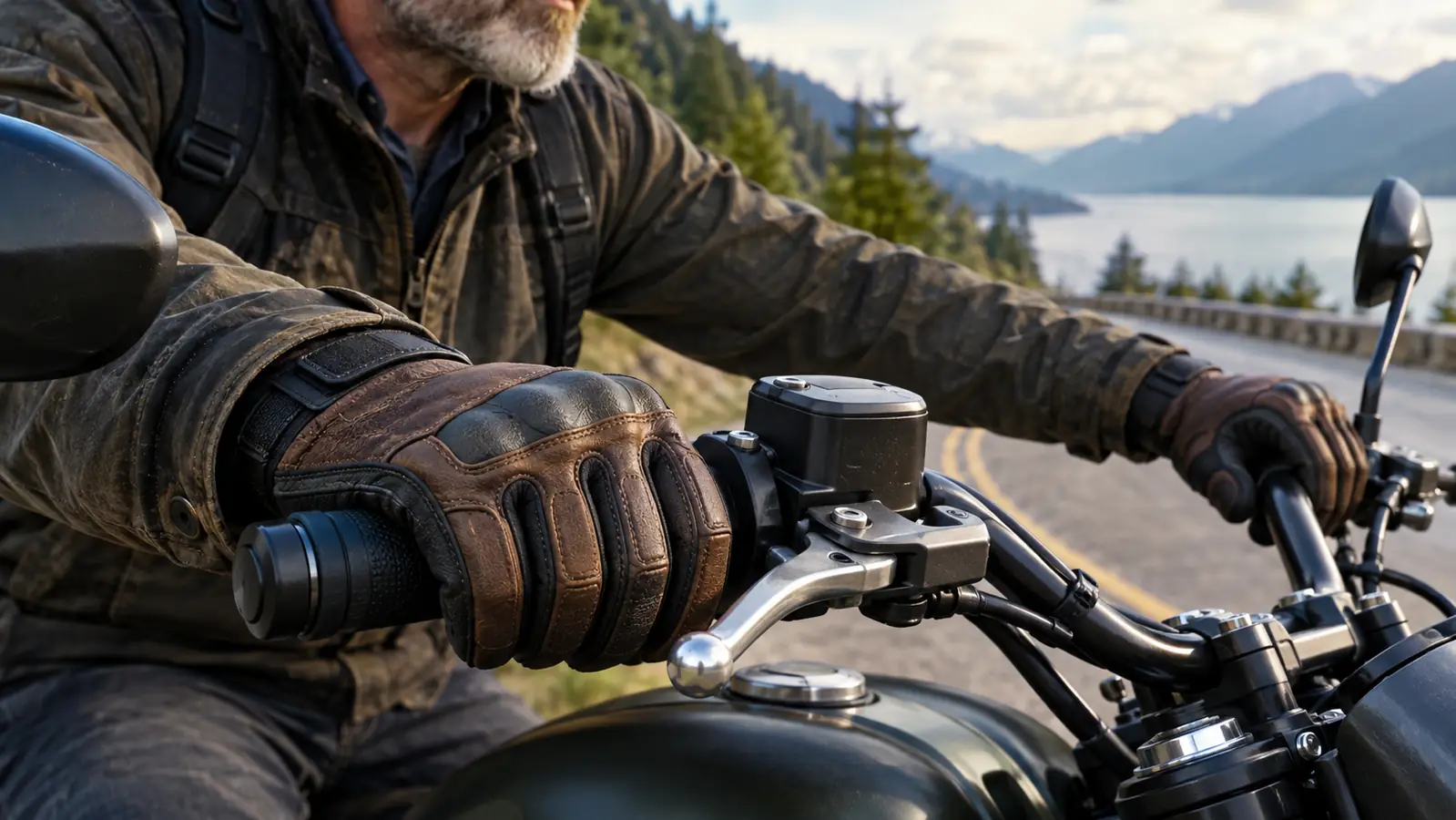
Step 2: Get the right size so the gel sits where it should
The first pair of gel gloves I owned were a size too big. The gel pad slid around and ended up nowhere useful, and I blamed the gloves for a problem that was actually a sizing mistake. Gel palm gloves only work when the pad stays put, and the pad only stays put when the glove fits. That is the whole game, and it is the mistake I see other riders make more than any other.
Measure around your hand at the knuckles, not at the wrist, and do it with your hand open and flat. Milwaukee Leather posts a sizing chart on the product page, and it matched what I needed. My hand measures about ten and a half inches around the knuckles, which puts me in an XL. When the gloves arrived, the fit was snug without being tight anywhere, and the gel pad lined up right under the base of my thumb, which is exactly where I needed it.
The glove should feel firm across the palm on day one. Leather stretches a little with use, so if the glove feels loose in the fingers when it is new, it will only get looser. If you are between sizes, go down rather than up. A gel glove that is too big moves around as you ride and presses on the wrong spots, and a glove that presses on the wrong spots is worse than no glove at all.
Step 3: Break the gloves in before a long day
New leather gloves are stiff, and stiff gloves make you grip harder, which brings the numbness right back. I wore my new pair around the house for a few evenings, and I did a couple of short runs to the grocery store before I trusted them on a full day of riding. That sounds like overthinking it, but leather gear needs a break in period no matter who makes it.
The break in matters more with these gloves because the leather is thick enough to protect. The gel palm needs to settle into the shape of your hand. Ten minutes of squeezing the grip at a stop, or just flexing your hands while you watch the news, speeds that up a lot. I also rolled the fingers a few times to soften the seams. It took about three evenings before the gloves felt like mine.
On my first real test, a three hundred mile loop down to the coast and back, the leather had softened just enough that I forgot I was wearing them. That is the feeling you are aiming for. A glove that is still fighting you will make you hold the bars tighter, and that is exactly what causes the numbness in the first place. Give them the time they need.

Step 4: Change your grip and your hands will thank you
Even with good gloves, I still catch myself white knuckling on a windy stretch. The habit is hard to break. What works for me is a simple rule: keep my fingers loose enough that I can tap the grip with my fingertips while I ride. That forces me to hold on with my palm instead of clamping down with my whole hand, and it keeps the blood moving through my fingers.
The gel palm helps here because it lets you hold the bars with less force. The padding spreads the pressure across your palm instead of concentrating it at the base, right where the nerves sit. After a few rides, I noticed I was easing my grip without thinking about it. That is the sign the gloves are doing their job. You should not have to work to hold the bars loosely.
Also move your hands. Every twenty or thirty minutes, flex your fingers and shift your hand position on the grip. Gel palm gloves make this easier because they reduce the soreness that makes you afraid to let go and reposition. A couple of seconds of movement every half hour makes a huge difference by the end of a six hour day, and it is the cheapest fix on this whole list.
Step 5: Build up to the long days gradually
Do not go from a twenty minute commute straight to a six hour day and judge the gloves on that one ride. Your hands need to adapt, and you need to learn where the gloves work best for you. I did a couple of two hour loops, then a half day, then the long summer trip. Each ride told me something about how to set up, how to grip, and when to stop and shake my hands out.
On that long trip, a six day run through the Cascades and down the coast, I rode days of five and six hours with the Milwaukee Leather gloves and finished every day with feeling in all ten fingers. That was the first time in years that happened on a trip that long. My wife Deb rides on the back sometimes, and on the shorter days she asked why I was not shaking my hands out at stops anymore. That is the kind of change you notice.
It is still not perfect. On the hottest days my hands sweat inside the leather, and after a very long day I still get a little stiffness in the knuckles. But the numbness, the dead finger feeling that used to end my rides early, is gone. That is the difference that matters to me, and it is the reason I keep reaching for these gloves instead of the pile of others in the garage.
What Else Helps
A few things pair well with gel palm gloves. Heated grips help on cold mornings, because cold hands stiffen up before the numbness ever starts. I added thicker grips to my bars a few years ago, and they give my hands a softer surface to hold on top of the gel. Neither one replaces the gloves. They just make the system work better, and they are cheap compared to a pair of good gloves.
Bar end weights cut vibration, and vibration is one of the main things that puts your hands to sleep on a long highway day. If your bike buzzes at cruising speed, that buzz is doing your hands no favors. It is worth a look at your suspension too. A bike that is wallowing or bouncing transfers more shock to the bars and straight into your palms, and no glove can absorb all of that.
Think about your jacket and your windshield as well. If your arms are stretched straight out, your weight lands on your hands. A taller shield takes the wind off your chest so you are not leaning into it for hours. Every pound of pressure you take off your hands is a pound the gel palm does not have to absorb, and your hands feel every one of those pounds by the end of the day.
One more thing: stay loose at the shoulders and elbows. I noticed that when I am tired, I tense up my whole upper body, and that tension runs straight down my arms into my hands. A quick check every hour, dropping my shoulders and wiggling my elbows, keeps the blood moving. It sounds small, but it is the difference between finishing a day fresh and finishing it wrecked.
After a six day trip through the Cascades, I finished every day with feeling in all ten fingers. That had never happened to me before.
Every rider is different, and what fixed my hands might not fix yours completely. But the combination of a good setup, a real gel palm glove, and a little patience has worked better than anything else I have tried in thirty years of riding. If you have been accepting numb hands as part of the sport, it is worth trying this before you give up on long days.
Give your hands a fair shot on the next long ride
If you ride a cruiser or a touring bike and you have been living with numb hands, the fix is probably simpler than you think. These Milwaukee Leather gel palm gloves are the ones I trust on every long ride now. Check today's price on Amazon and see if they fit your routine as well as they fit mine.
Amazon Check Today's Price on Amazon →