
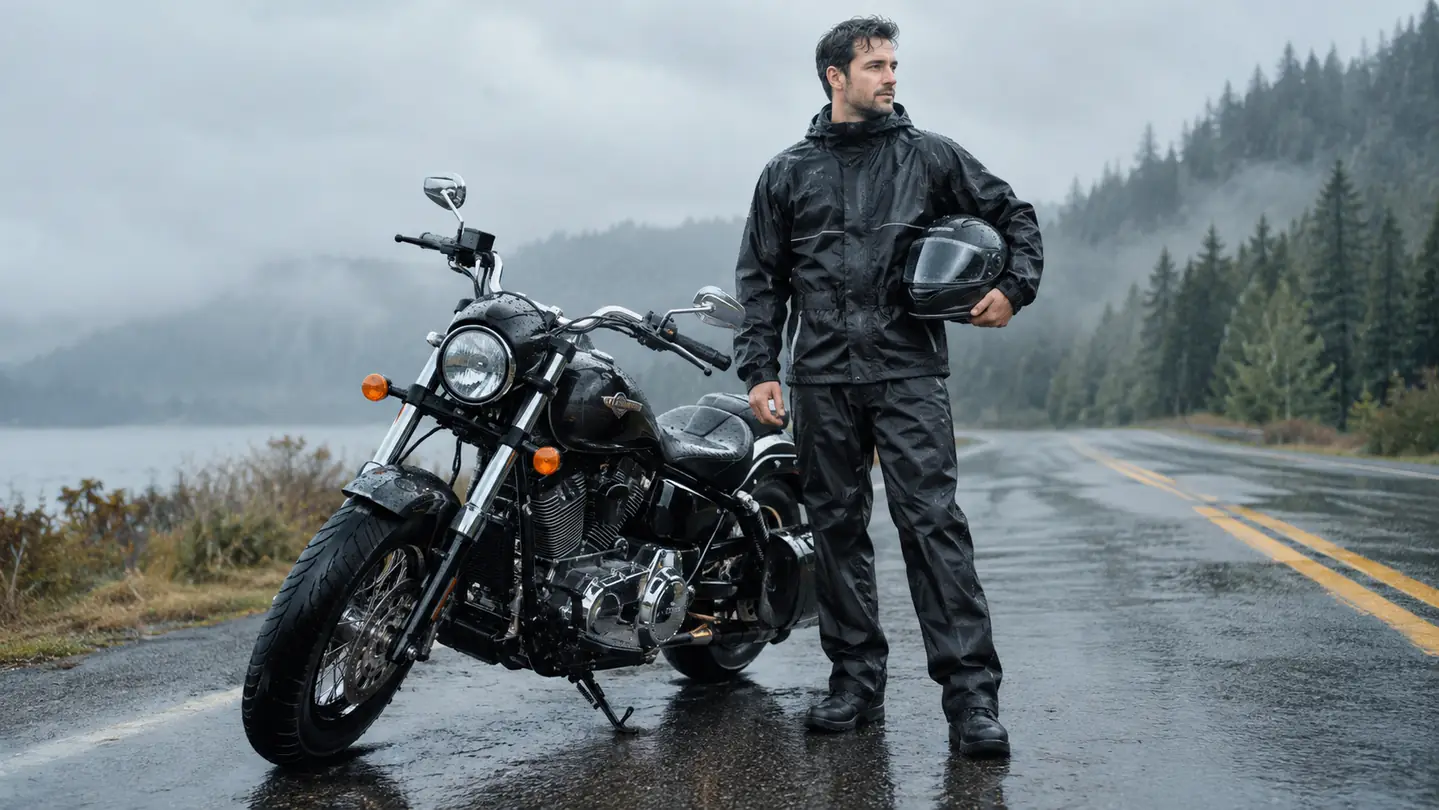
The first time I got caught in real rain on my Road King, I told myself it was part of the adventure. Forty minutes later I was wringing out my socks at a gas station outside Olympia, shivering over a cup of coffee, and the adventure part was long gone. I have ridden in the Pacific Northwest for nine years now, so I have had plenty of chances to learn what actually keeps a rider dry. The short answer is not a heavy riding jacket with a waterproof liner, no matter what the label claims. The short answer is a proper two-piece rain suit worn the right way, and the Nelson-Rigg Stormrider has been my go-to for the last several seasons.
The reason a rain suit beats a waterproof jacket is simple. A jacket keeps your torso dry, but the rain runs down the back of your neck, soaks into your jeans, and works its way up from the hem. A two-piece suit covers all of it at once, and it goes on over whatever you are already wearing. This article is the routine I actually use, step by step, from checking the sky in the morning to hanging the suit up in the garage when I get home. None of it is complicated, and all of it is stuff I wish someone had walked me through before that first soaked ride.
Ride Dry Before the First Drop Falls
The Nelson-Rigg Stormrider goes on over your regular riding gear in about two minutes and packs down small enough to live under the seat. That is the whole point: have it with you before you need it, and the rain stops being a problem.
Amazon Check Today's Price on Amazon →The Five Steps That Keep Me Dry
Step 1: Suit up before the first drop hits
The biggest mistake I made for years was treating the rain suit as a rescue item. I would ride out in dry weather, tell myself the clouds would probably pass, and then pull over under an overpass to wrestle a stiff suit on over a wet jacket while traffic sprayed me. By the time the suit was on, my base layer was already damp, and a damp base layer stays cold for the rest of the ride. The Stormrider takes about two minutes to put on, so there is no good reason to wait until the rain is already hitting your windshield.
Now I use the forecast the way I use a fuel gauge. If there is more than about a thirty percent chance of rain, the suit goes on before I roll out of the driveway. In the spring and fall around Tacoma, that means I ride in the suit plenty of days when it never rains a drop, and that is fine. The Stormrider breathes well enough that I do not feel like I am riding inside a plastic bag, and staying dry is worth the extra two minutes at the start of a ride.
The other half of this step is learning to read the sky yourself. When the wind shifts and the air gets that damp smell every Pacific Northwesterner knows, I stop at the next safe pullout and gear up. Putting a suit on in the rain takes twice as long as putting it on while the pavement is still dry, and the suit also keeps the wind off, which matters more than you might think on a cool day.
Step 2: Layer underneath so the suit can do its job
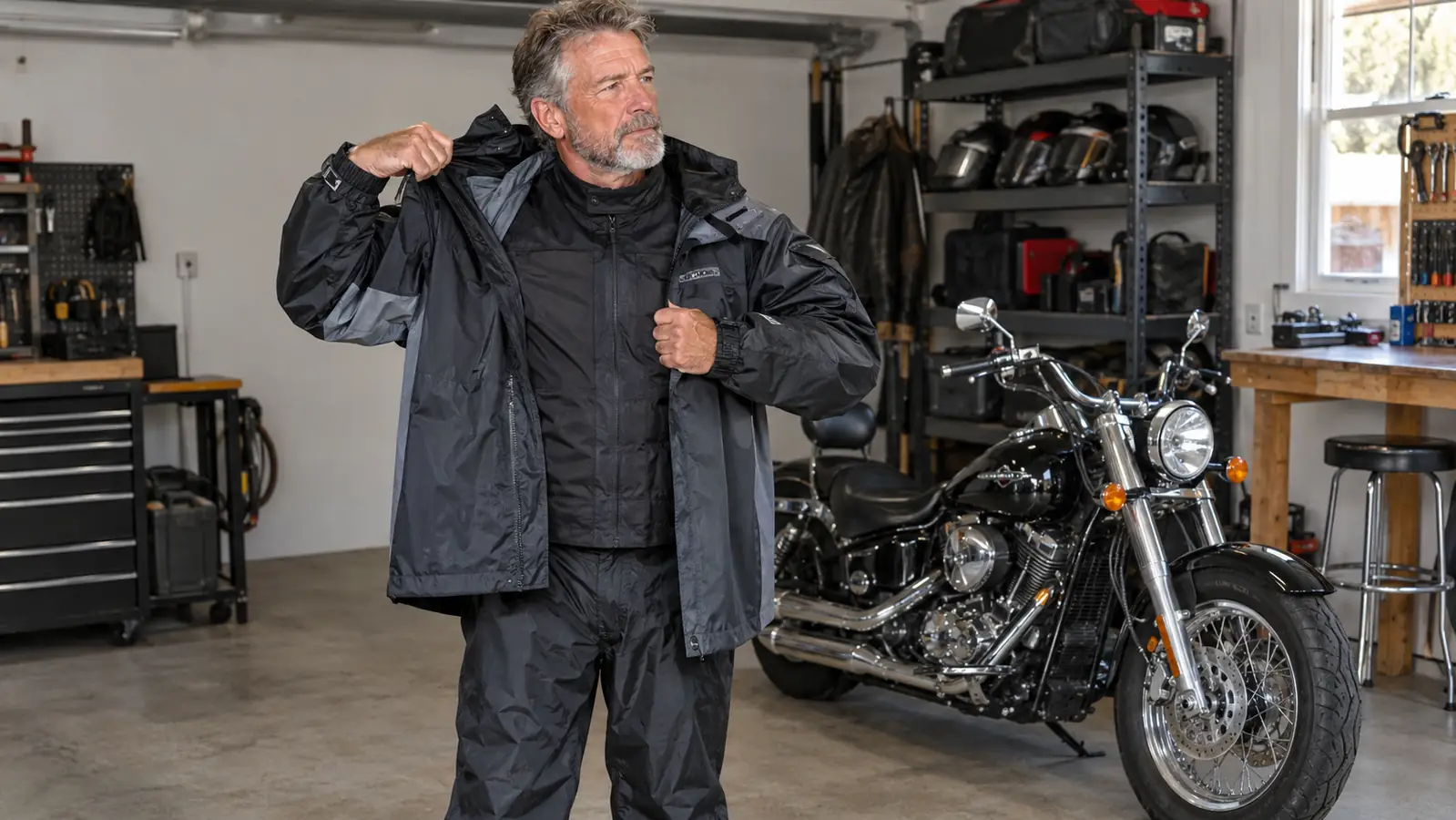
A rain suit is a shell. It keeps the water out, but it does not keep you warm on its own, so what you wear under it decides whether you arrive comfortable or shivering. On a normal spring ride I wear my riding jeans and a long-sleeve base layer under my mesh jacket, and the Stormrider goes on top of all of it. The suit is cut generously, which sounds like a downside until you realize that is exactly what lets it fit over real riding gear without binding at the shoulders or pulling across the back.
What I do not do is pile on extra insulation just because it is raining. A soaked cotton hoodie under a rain suit is a recipe for a miserable ride, because cotton holds moisture against your skin and the suit holds it there. If the temperature calls for more warmth, I reach for wool or a synthetic base layer that keeps working when it gets damp. The rule I ride by is simple: dress for the temperature, and let the suit handle the water.
One more thing on layering. I tuck my base layer in and make sure nothing is bunched up under the suit's zippers. A lumpy layer under a rain suit feels like a rockslide at highway speed, and it wears sore spots into a long day in the saddle. Ten seconds of smoothing everything flat before you zip up saves you an hour of fidgeting at every stop.
Step 3: Seal every opening
Water does not respect a rain suit's fabric. It respects the openings. The Stormrider has elastic cuffs on the jacket and adjustable closures at the ankles, and the difference between a dry ride and a wet one is mostly whether I take the thirty seconds to use them. I pull the jacket cuffs over my glove gauntlets, not under them, so rain running down my sleeves hits the glove and drips off instead of funneling into the cuff.
The collar is the sneaky one. Rain runs down the back of a helmet and straight into an open jacket collar, and once that water gets inside it travels all the way down your spine. I do the Stormrider collar up snug against my neck and tuck the flap under my chin. It takes one hand and five seconds, and it is the most effective thing I do on a rainy ride.
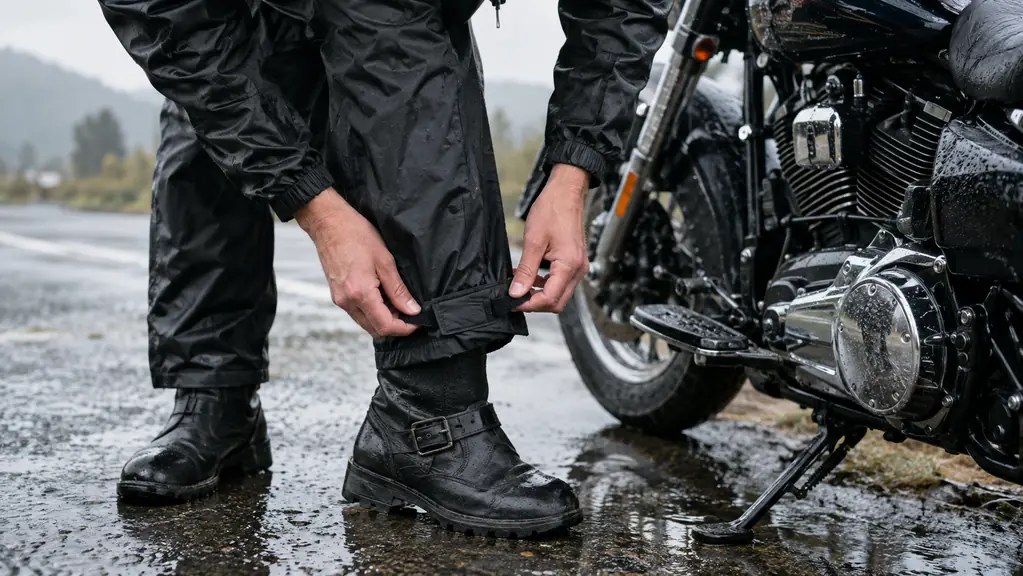
For the legs, I put the Stormrider pants over my boots, not tucked into them, and use the ankle closures to snug them around the boot tops. That way the water runs down the outside of the pants and off the boots. If I tuck the pants into the boots, the water runs down the inside of the pant leg and straight into the boot. Same amount of rain, completely different outcome.
Step 4: Change your riding, not just your gear
A rain suit keeps you dry, but it does not change the physics of a wet road. Rain is exactly when I back off the pace, add a full second of following distance, and make every input as smooth as I can. Braking, turning, even rolling on the throttle, all of it gets gentler in the wet. I also drop my speed a notch in the first ten minutes of rain, because that is when the road is slickest, before the oil has washed away. The Stormrider's reflective striping is a genuine help here, because drivers see you sooner in low light, but no amount of visibility makes up for riding beyond the conditions.
I also change where I ride in the lane. The center of the lane collects oil and gets slicker than the tire tracks, so in the rain I stick to the cleaner lines where cars have already polished the pavement. I avoid painted lines and metal covers whenever I can, especially when turning. These are small choices, and together they matter more than any piece of gear I own.
If the rain turns into a downpour and visibility drops, I pull over. I would rather arrive twenty minutes late and dry than on time and soaked. The Stormrider packs down small enough to live under the seat, so stopping to suit up or strip down is a two-minute job, not a production.
Step 5: Dry it right when you get home
A rain suit is easy to abuse and easy to take for granted. When I get home from a wet ride, I hang the jacket and pants on a sturdy hanger in the garage, not balled up on the floor of the mudroom, and I leave them out until they are completely dry to the touch. If the ride was truly foul, I hang the suit inside near a fan overnight rather than packing it away damp, and by morning it is ready to go back under the seat. Folding a damp suit traps moisture in the creases, and that is how the waterproof coating starts to fail from the inside.
I give the zippers a quick wipe with a dry rag and check the seams now and then for any sign of wear. I have had my Nelson-Rigg Stormrider for a few seasons of regular Pacific Northwest riding and the waterproofing has held up well. I treat it like gear that needs a little attention, not like something that takes care of itself.
The other half of care is simply keeping the suit on the bike. The Stormrider folds into its own storage bag, and that bag lives under the seat from October through May. A rain suit only works if it is with you, and a suit sitting in the garage while you are on the road is just a very expensive way to stay wet.
What Else Helps
A few extras make the whole system work better. Heated grips are worth their weight in gold on a cold, wet ride, because wet hands get cold fast even inside good gloves. A small towel in the saddlebag handles the visor and the seat before you mount up. And if you ride with a passenger, Deb has her own rain gear and we both suit up at the same time before we leave, because nobody stays dry on the back while the front rider dawdles.
I would also say this. A rain suit does not fix a riding jacket that already leaks. If your jacket lets water in at the zipper or the shoulders, fix that or replace it before you count on a suit to save the ride. The Stormrider is the outer layer, and it works best when everything under it is doing its job too.
On Saturday mornings when I ride out to referee youth soccer, the suit is in the saddlebag even if the sun is out, because spring games have a way of ending in a shower. Being prepared is the whole game.
One more suggestion: treat the visor before you leave. A drop of dish soap rubbed on the inside and buffed off keeps it from fogging, and a clean outside lets the rain bead up and blow away instead of smearing. Little things like that are the difference between seeing the road and guessing at it.
The collar is the sneaky one. Once water gets inside, it travels all the way down your spine. Five seconds with the Stormrider collar snug beats forty shivering minutes on the road.
Make the Next Rain Ride a Dry One
The Nelson-Rigg Stormrider is the suit I reach for first, and the one that lives under my seat from October through May. If you ride where rain happens, this is the piece of gear that pays for itself on the first wet ride.
Amazon Check Today's Price on Amazon →