
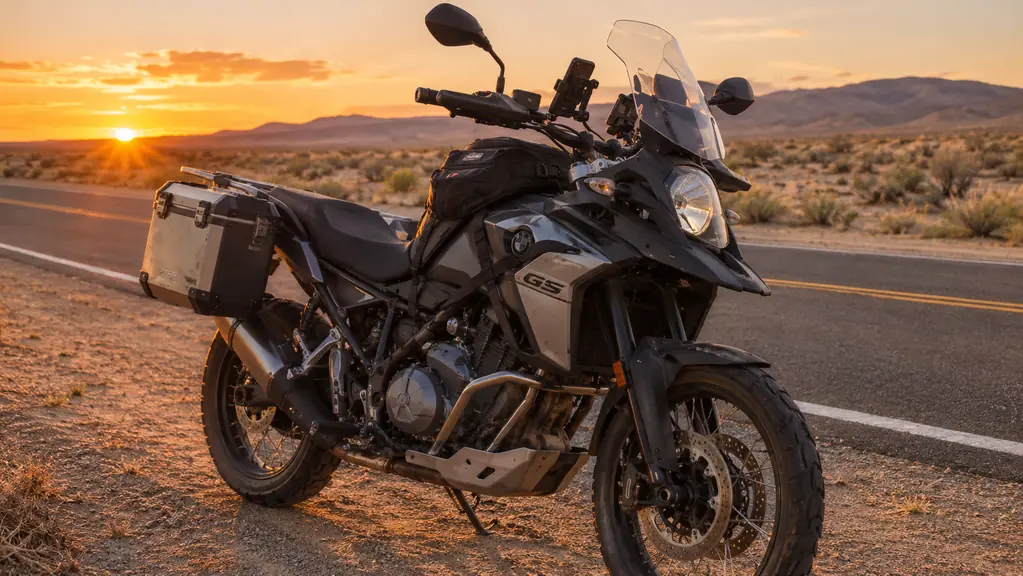
Short answer first, because that is what I want when I read one of these. If the thing you need most is to see the next turn without dropping your chin, the Lamicall mount is the better everyday choice. If you want the phone out of the wind and a place to drop your gloves at a gas stop, a tank bag with a clear-top phone pocket earns its space. I have run both on the same motorcycle for the better part of two riding seasons, and the honest version is that neither one is wrong. They live in different places on the bike, and that single difference changes almost everything about how they feel on a Sunday ride.
Some context on who is doing the comparing. I am 54, I live in Riverside County, California, and I have been riding for 19 years. My bike is a 2019 Honda Gold Wing Tour and it is the only one I ride now. Most of my miles are Sunday loops through the foothills and out toward the desert, plus one or two longer trips up the coast each year. My husband Ray rides pillion sometimes and has opinions about luggage. I run warm, my hands go numb on long days, and I have gotten picky about anything that adds clutter to the bars. That last point mattered more than I expected when I started paying attention to it.
| Lamicall Handlebar Mount | Tank Bag Phone Pocket | |
|---|---|---|
| Where the phone sits | Clamped to the handlebar, up in your field of view | Flat on the tank, well below eye level |
| Rain | Listed as not water resistant, so a shower means the phone comes off or goes in a zip bag | The clear top keeps the phone enclosed and out of direct rain |
| Phone fit | Fits phones 4.7 to 6.8 inches with thickness up to 0.59 inch | Whatever the pocket swallows, and a chunky case can be a fight |
| One-hand use | One-hand operation, the corners grip as the phone drops in | Open the flap or zip first, then two hands to seat the phone |
| Screen angle | Adjusts to horizontal or vertical on the bar | Fixed by the angle of the bag on the tank, and glare shifts as the bike moves |
| Bar space | Uses a stretch of handlebar, along with the four rubber pads in the box | Leaves the bars completely clear |
| Carrying more than a phone | Holds the phone, that is the whole job | The pocket is one part of a bag that also takes gloves, a water bottle, a hat |
| Walking away from the bike | Mount stays on the bar, phone comes with you in one motion | Bag unclips and comes with you with the phone still inside |
| Coverage | One year warranty listed on the mount | Usually nothing specific, the pocket is a feature of a bag |
| How it looks on the bike | A small clamp and cradle on the bar | A bag sitting on the tank |
A table can tell you which side takes a column. It cannot tell you what a thing feels like at highway speed with the sun behind you, or what you do with your gloves when you stop for coffee. Rows four and five in that table are the ones I would argue about with a friend, so here is the rest of it in the order it actually matters to me.
What Each Setup Actually Is
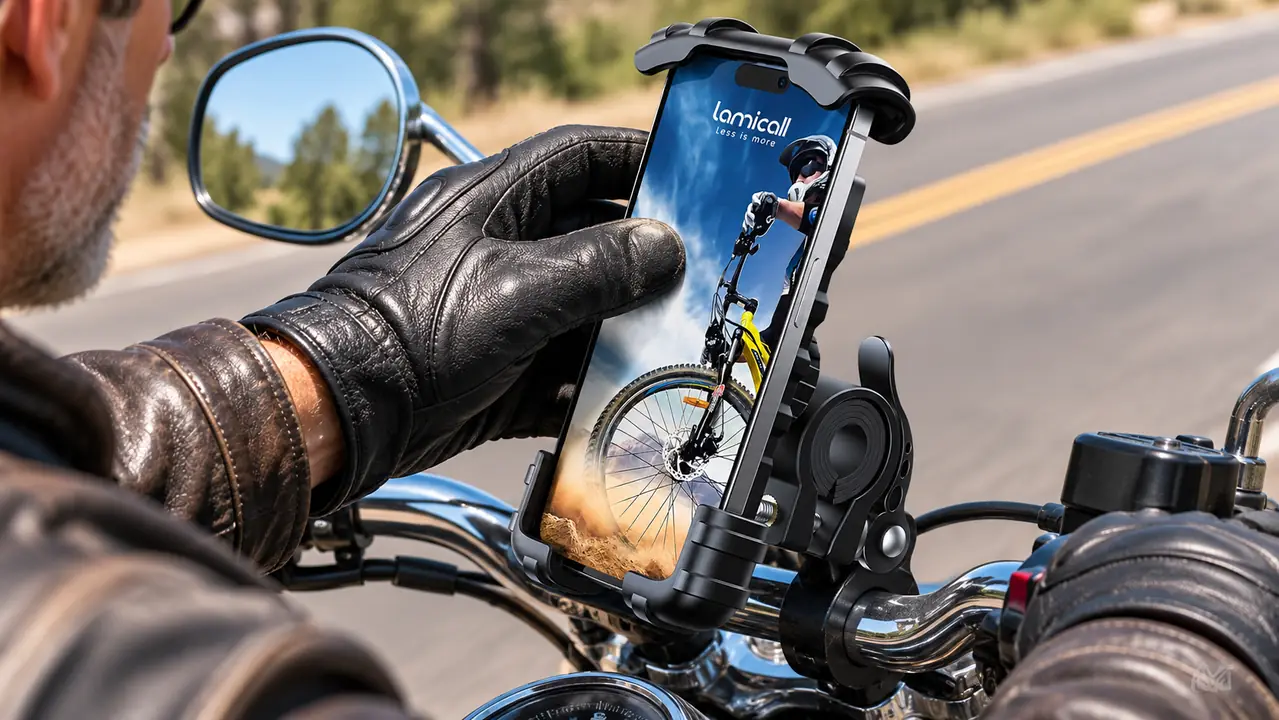
The Lamicall mount is a spring-loaded cradle that clamps to the handlebar and holds the phone by its four corners. The listing calls the mounting type a top 1 handlebar mount, and the clamp is compatible with motorcycles, bicycles and scooters. It comes with four rubber pads that sit between the cradle and the phone to take some of the buzz out. It is listed at 7 ounces and 6.38 by 3.78 by 1.81 inches, it adjusts from horizontal to vertical, and the title describes it as lockable. One year of warranty covers it. It is not water resistant, and I want that on the table early because rain is where this comparison turns.
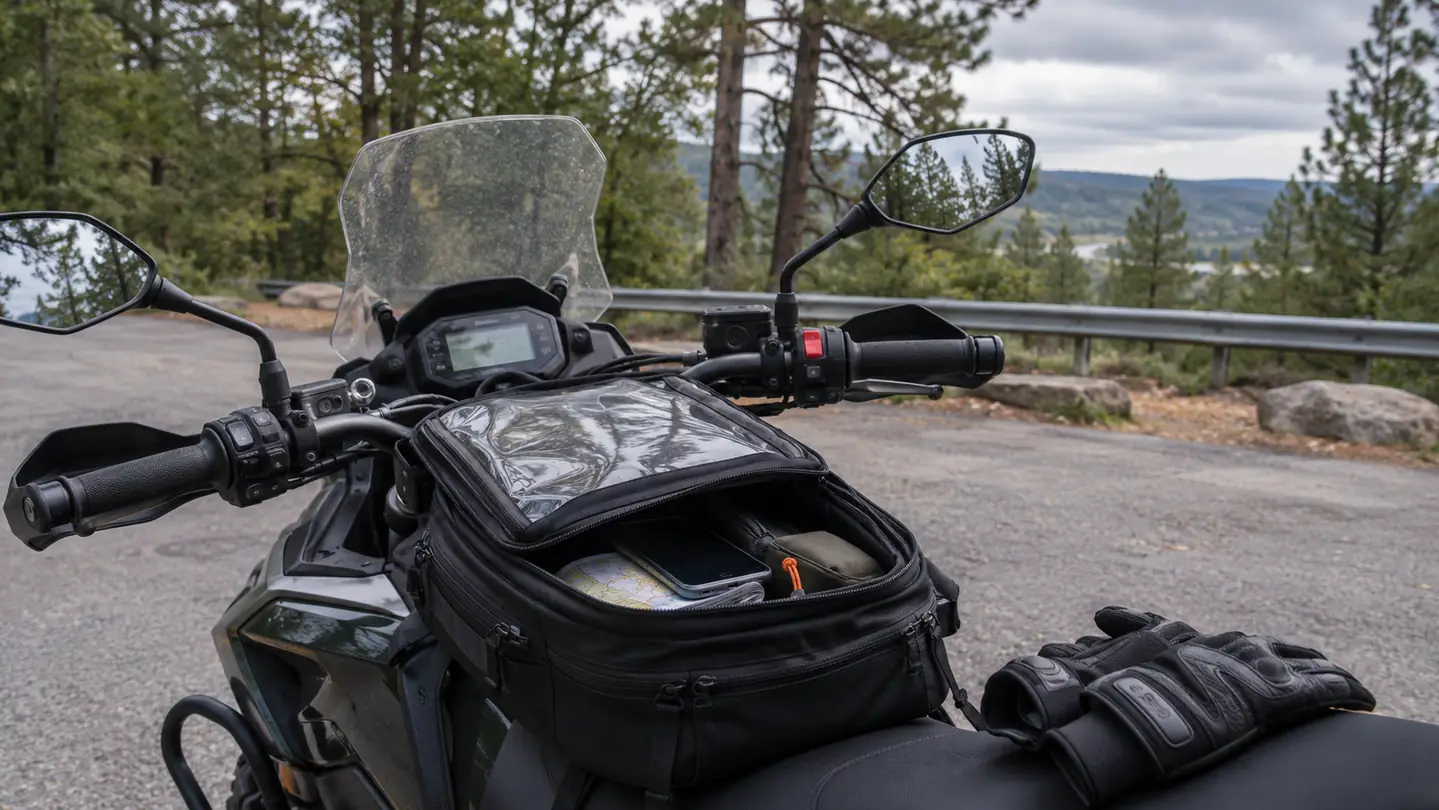
A tank bag phone pocket is not a gadget at all, it is a window. Most soft tank bags have a clear-topped sleeve on the lid or the top panel, sized to hold a phone or a paper map, and you slide the phone in under the plastic. The bag itself straps to the tank, usually with a couple of clips or a harness. That is the whole idea. The phone stays put, you can see the screen through the plastic, and the rest of the bag does the job a bag does. It is a very old arrangement and it still works, which is worth remembering before you buy anything new.
What I tried first, about three years before any of this, was a clear-topped sleeve that strapped around the tank bag lid. It did one thing well, which was keep the phone out of the wind. What it did badly was everything else. The plastic window picked up fine scratches from a glove zipper within a month, and by the second season the screen was hard to read in any light that came in low from the side. The phone also sat at an angle that made the map look tilted. I gave up on that sleeve and went back to stopping to check directions, which is a slow way to ride an unfamiliar road. That is the experience I brought to both of these setups, and it is why I did not assume the bag would win on convenience.
Where the Lamicall Mount Wins
Line of sight is the whole argument, and it is a bigger one than it sounds. On the bar, the phone sits where my eyes already are when I am scanning the road ahead. I can catch a turn instruction with a glance that costs me almost nothing. Down on the tank, I have to drop my chin and look down, and at speed that is a longer absence from the road than I want. I noticed this most on unfamiliar desert roads where the turns come up faster than the map suggests. The mount is also easier to nudge to a better angle when the sun moves around, because the adjustment is right there under my hand instead of under a flap of plastic.
One Sunday in April sticks with me. I was on a stretch of highway south of home, the kind with long sight lines and then a tight left that arrives without much warning, and the phone was on the bar telling me to turn in four hundred feet. I caught it with a glance, set up wide, and made the turn without grabbing more brake than I wanted. I have ridden that same corner with the phone down on the tank, and the version where I look down is the version where I arrive at the corner already late and already correcting. That is what the mount buys you, and it is worth being plain about it rather than dressing it up as a feature list.
Grip and fit are the second reason. The cradle holds each corner of the phone rather than squeezing the sides, and the four rubber pads that come in the box sit between the phone and the frame. My phone is a large one and it fits comfortably inside the stated range of 4.7 to 6.8 inches with thickness up to 0.59 inch, which means a normal case stays on. I have never had to take a case off to make it fit, and I have never had the phone shift in the cradle on a rough chip-seal road. One-hand operation is not marketing talk either. I press the phone in with one hand and it seats, and I pull it out the same way at a stop.
The last thing in this column is the small stuff, and small stuff is what separates a piece of gear you keep from one you take off after a month. At 7 ounces the Lamicall mount does not change how the bar feels, and the clamp has not loosened on me across two seasons of foothill roads. The horizontal and vertical adjustment means I can run it upright for turn-by-turn and lay it flat when I want the screen out of the glare. And there is a one year warranty behind it, which is more than most tank bag pockets can point to. None of that makes it waterproof, and I am not going to pretend it does.
Where the Tank Bag Pocket Wins
Rain, and I will not be graceful about it. The mount is listed as not water resistant, which means a summer shower in the foothills is a decision point. I either pull over and put the phone in a zip bag, or I take it off the bar entirely and put it somewhere dry. In a tank bag pocket, the phone is already under clear plastic with a bag around it, and the rain runs off the top. If you ride where the weather turns without warning, that is not a minor advantage. It is the difference between a phone that still works at the end of the day and one that spent twenty minutes getting rained on at a stoplight.
Two summers ago I got caught in a pop-up storm on the way back from the mountains. It went from bright to dark in about ten minutes and then it simply poured. The phone was on the bar at the time. I pulled under a gas station canopy, unclipped it, and put it in the inside pocket of my jacket, and I stood there for twenty minutes feeling foolish while the rain came off the roof in sheets. A tank bag would have shrugged that off without me doing anything. I have since made a habit of checking the forecast before I leave, and if there is any real chance of afternoon weather, the phone rides in the bag. That is not a knock on the mount. It is just how I handle a piece of gear that is honest about not being water resistant.
The other half of this column is capacity, and it is the reason I have not taken the bag off the bike. The pocket is one panel of a bag that also holds my gloves, a folded hat, a water bottle and the receipt from lunch. When I stop, everything goes in one place and comes out of one place, and I am not patting down four pockets in my jacket. It also leaves the handlebar completely clear, which some riders care about more than I do, and when I walk away from the bike the bag unclips and comes with me with the phone still inside it. On a long trip, that is a nicer feeling than leaving a cradle on the bar hoping nobody notices it.
The mount that keeps the next turn in your line of sight
Fits phones 4.7 to 6.8 inches with thickness up to 0.59 inch. One-hand operation, adjusts from horizontal to vertical, four rubber pads in the box, one year warranty. Rated 4.6 across more than 69,000 reviews.
Amazon Check Today's Price on Amazon →Who Should Buy Which
Buy the Lamicall mount if your rides are mostly day rides and you want directions where your eyes already are. If you ride unfamiliar roads, if you are the person who misses a turn because the screen was down by the tank, if your hands go numb and you want to seat the phone with one motion at a stop, this is the one. It also suits anyone who does not want a bag on the tank at all, either because of how it looks or because the paint underneath is a thing they care about. The phone stays in the range of 4.7 to 6.8 inches, so check that before you order.
Buy the tank bag pocket if the phone is only part of the problem. If you tour, if you ride where rain shows up uninvited, if you want your gloves and your water in one place when you stop, the bag does more work in a day than a cradle ever will. The trade is that you look down to see the screen, and on a busy unfamiliar road I do not love that. Some riders solve it by running both, mount on the bar for navigation and bag on the tank for everything else, and I understand the temptation. It is not redundant if you think of the bag as luggage that happens to hold a phone.
One practical note before you order either one. Measure the clear run on your handlebar first, because the clamp and the cradle together take up a few inches and you need straight bar to sit them on rather than a taper or a bend. On my bar there was room between the grip and the switch housing, but I have stood next to bikes at a gas stop where it would have been tight. If you go the bag route, carry the phone out to the bike and slide it into the pocket before you commit. A clear top that swallows your phone with the case still on is worth having. One that does not is a plastic window you will quit using by June.
If I had to pick one for the kind of riding I actually do, Sunday loops through the foothills with no rain in the forecast, I would keep the Lamicall on the bar and leave the bag at home. The reason is simple. On those rides I want to look at the road, not at my tank. The two seasons of running both taught me that the best place for a phone is the one that costs you the least attention, and for me that has been the handlebar every time.
Start with the bar, not the bag
Clamps to the handlebar, grips all four corners, and comes with four rubber pads and a one year warranty. Not water resistant, so keep a zip bag handy if the sky looks serious.
Amazon Check Today's Price on Amazon →