
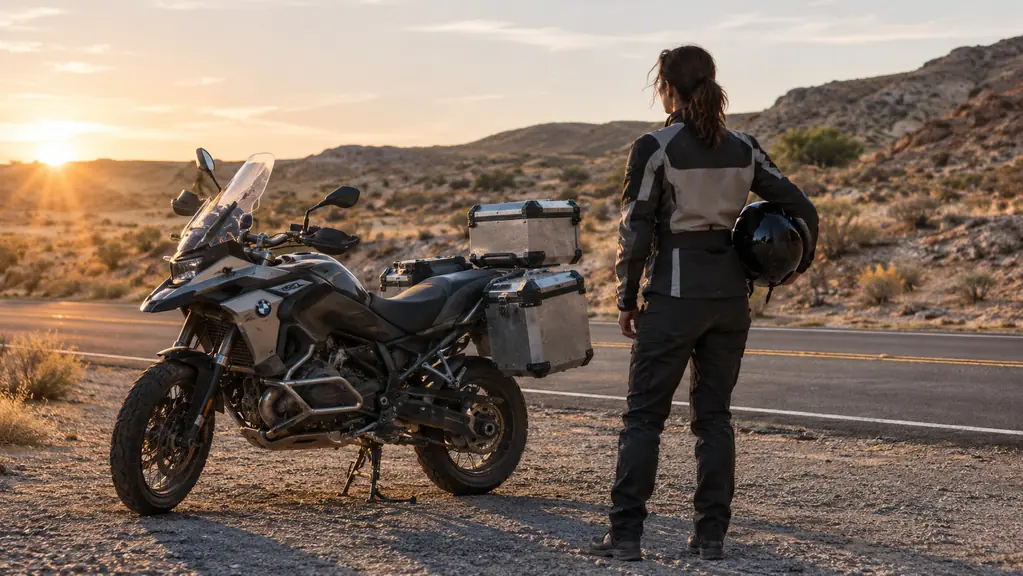
The BORLEN motorcycle jacket arrived lighter than I expected, and I will admit I judged it before I ever put it on. I have been riding 19 years, most of that on a Gold Wing, and I have owned jackets that felt like armor and jackets that felt like a windbreaker with a brand stitched on the chest. This one sits in the middle, closer to armor than the box suggested. I have put about 3,400 miles on it since it showed up, mostly Sunday loops through the foothills and desert roads near my home in Riverside County, plus one four day run up the coast. What follows is what I would tell a friend at a gas stop.
I am not going to pretend this is the last jacket anyone will ever buy. It is not, and there are a few things about it that annoy me on almost every ride. But I keep reaching for it, and after 19 years of buying gear I trust that instinct more than I trust a spec sheet. Here is the whole picture, including the parts the listing leaves out.
The Quick Verdict
A real 600 denier shell with CE shoulder and elbow protectors included, not sold separately. The back pad is plain foam, the cut runs roomy, and it gets hot in the desert. I still wear it most weekends.
Amazon Check Today's Price →The jacket I keep reaching for on Sunday morning
600 denier polyester, CE certified to EN 17092, with four removable protectors at the shoulders and elbows. I wear a men's small with a thin layer under it and the fit is true to size.
Amazon Check Today's Price on Amazon →How I've Used It
My riding is not glamorous. Sunday morning, coffee, out the door before the traffic wakes up, two hours of two lane through the foothills, home before lunch. Once or twice a year I string together a few days and run up the coast. I ride solo or with two friends, both faster than me, neither of whom cares what I am wearing.
So I am testing this jacket the way most people reading this will use it. Steady highway speeds, a lot of wind, mornings that start near 48 degrees and afternoons that finish in the high 80s, and the occasional stretch of cold fog coming over a pass. I have not crashed in it, and no review can honestly tell you how a jacket behaves in a crash. What I can tell you is what it is made of, what the labels actually certify, and how it has held up.
The shell is 600 denier polyester, listed as abrasion resistant and windproof. Denier is a fabric weight measure, and 600 is a real number for riding gear rather than a marketing number. It is not leather and it is not the heaviest textile on the rack. It is also a long way from the thin fashion jackets that turn up under the same search terms. After a season mine has a faint scuff on the right shoulder from a bag strap, no fraying at the seams, and no thin spots at the elbows where the fabric creases hardest.
The Armor Is the Reason to Buy It, With One Exception
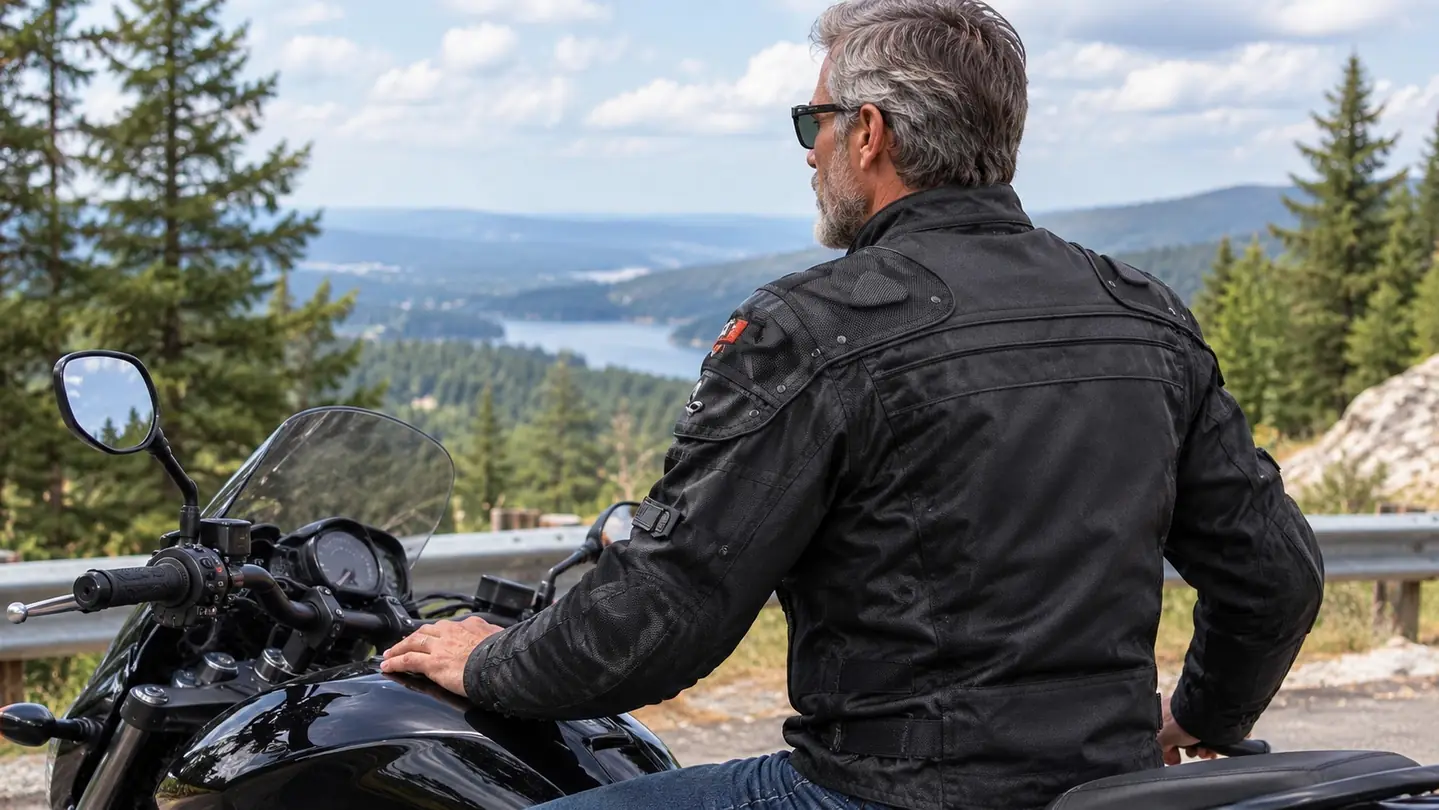
The BORLEN jacket ships with four CE certified protectors, two at the shoulders and two at the elbows, and all four are removable. That is the part that matters most to me. A jacket with armor pockets and nothing in them protects you only if you finish the job yourself, and a lot of riders never do.
The back is a different story. There is one EVA foam pad at the back, and it is removable. EVA is not a CE certified back protector. It is better than an empty pocket, and I want to be fair about that, because plenty of jackets in this range ship with no back pad at all. But the pocket is the part that counts, and if back protection is why you are shopping, plan on a certified pad to go in it. I swapped mine out. Check the dimensions of any pad against the pocket before you order, because back pads are not one size.
The jacket itself is CE certified to EN 17092, and that is a separate thing from the armor inside it. EN 17092 covers the garment, the shell and the seams, not the shoulder and elbow pieces. That distinction gets muddled in a lot of listings and it is worth knowing which one a seller is claiming. This one states both, which is more than most listings bother to do.
The Fit Is Regular, and Regular Means Roomy
I wear a men's small in this jacket, with a thin long sleeve underneath, and it fits. This is a men's jacket and I am not going to dress it up as something else. It is a men's cut that happens to work on me. The listing calls the fit regular, and regular is the honest word for it. There is room through the middle and through the chest.
That room is a trade, not a flaw. It means the jacket does not bind when I reach for the bars or turn my head to check a lane, and it means there is space for a layer on a cold morning. It also means that at highway speed there is fabric moving around my ribs that a trimmer cut would not have. I noticed it for the first week and stopped noticing it after that. If you want a jacket that looks tailored on the bike, this is not that jacket.
The adjustments do the work the cut does not. The cuffs tighten over gloves, the collar adjusts, and the hem adjusts, so you can shut the gaps at the wrist and the waist. Leaving the house at 48 degrees, cinching the collar and the cuffs is the difference between a miserable first hour and a fine one. It takes ten seconds and I do it every single time.
Waterproof Is a Word Worth Testing
The jacket is listed as waterproof and windproof. The windproof half I believe without reservation. Riding into a headwind at highway speed, I feel nothing coming through the shell.
Waterproof is a claim I test by riding in it. In steady light rain and road spray, the shell kept me dry. In a real soaking, the kind where the drops come in sideways and the trucks throw water at your shins, I got damp at the front seams after about 40 minutes. That is normal for a textile jacket without a rain shell over the top, and it is not a reason to skip the jacket. It is a reason to pack a rain layer if you are doing days rather than hours.
The other side of a shell that keeps water and wind out is heat. Anything that keeps weather out keeps heat in. I run warm, and in the desert in July this jacket is a lot to wear. I open the collar and the cuffs at stops and I drink more water than I used to, but above about 95 degrees I would rather be in something else. That is the design working as designed, and it is the honest trade for a jacket that keeps you warm at 6 a.m.
Two Pockets, One Collar, and the Small Stuff
There are two pockets on this jacket. Not four. Two. I am used to having a place for a phone, a wallet, keys and a tissue packet all at once, and with two, something has to ride in the tank bag. That is not really a complaint. It is a detail worth knowing before you order, because pocket count is the kind of thing nobody mentions until you are standing in a parking lot patting your chest.
The main closure is a zipper, and after a season it still runs clean and does not catch at the bottom the way a bad zip does. The collar is a band style that sits close to the neck instead of standing away from it, and that is a big part of why the wind stays out. It is also the thing I would warn people about. If your neck does not tolerate anything snug against it, this collar will bother you on a long day.
The sleeves are long, which suits a riding position, and the cuffs close down over a gauntlet glove without leaving a gap. I have not had a seam open, a protector pocket tear, or a zip pull come off. One season is not ten years, and I will say plainly that I do not know how this shell looks after five. What I know is that nothing has failed yet, and I have not been gentle with it.
What This Jacket Is Not
It is not leather, and it will not age the way leather ages. Leather molds to you and looks better every year, and it also weighs more and is miserable in the rain without care. Polyester does none of that. What it does is stay light, dry out fast, and hold its shape. I have owned both. At 54, with hands that go numb by hour three and a taste for long days, I will take the light shell most weekends and save the heavier gear for the short rides that deserve it.
It is not a track garment. This is built for the riding I do: upright, steady, on public roads with traffic and gravel and the occasional dog. Nobody should read this and think it replaces a one piece suit for a track day, because it does not, and nothing on the label claims it does.
It is not a rain suit and it is not a hot weather jacket. I said that above and it is worth saying twice, because those are the two places where riders end up disappointed with a jacket like this. If you ride in a wet climate or in real heat, this is one layer in a system, not the whole system. Buy it knowing that and it will do its job.
What I Would Change
If I could change one thing, it is the back pad. A certified back protector in the box would turn a good jacket into a complete one, and it would remove the one weak point a buyer has to solve for themselves. The EVA pad is removable and it is better than nothing, but it is not what I want between my spine and the road.
The second thing is the pocket count. Two is thin for a touring jacket. A phone lives in a pocket, so do keys, and on a long day so does a tissue packet and a set of earplugs. I would trade some of the room through the middle for one more pocket without hesitating.
Third, and this is smaller, I would trim the cut through the torso. Not fitted, just less fabric. At a steady highway speed the loose middle flaps enough that I noticed it, and a slightly closer cut would solve that without taking away the layering room that makes the jacket usable on a cold morning.
None of that is a reason to return the jacket. It is the difference between a piece of gear that is good and one that is finished. I fixed the back pad in ten minutes and the other two I have learned to live with, which is roughly what owning any jacket turns into after the first month.
What I Liked
- 600 denier polyester shell with a real abrasion resistant hand
- Four removable CE protectors at the shoulders and elbows, included rather than sold separately
- CE certified to EN 17092 as a garment, stated plainly on the listing
- Windproof enough that a cold morning ride is comfortable at highway speed
- Adjustable cuffs, collar and hem close the gaps where cold air gets in
- Held up over a season of Sunday miles with no seam, pocket or zipper trouble
Where It Falls Short
- Back protection is a removable EVA foam pad, not a certified protector
- Regular fit runs roomy through the middle and moves at highway speed
- Only two pockets, which is thin for touring
- Runs warm above about 95 degrees and the waterproofing stops short of a sustained downpour
- Band collar sits close to the neck, which some riders will not tolerate
Four CE protectors at the shoulders and elbows, included. The back is a plain EVA pad, not a certified protector. That is the one thing I would fix before I called this jacket finished.
Who This Is For
This jacket fits the rider I ride with most: someone in their 40s or older, on a touring or cruiser bike, doing Sunday loops and a couple of longer trips a year, who wants real protection without turning gear shopping into a project. It suits a man who wears a regular fit and wants room to layer, and it worked for me in a men's small with a thin base layer underneath. If your rides start cold and finish hot and you want one jacket that covers both ends of that, the BORLEN jacket is the one I would hand you.
Women who are considering it: the jacket is sold as a men's jacket and the listing is honest about that. I wear a men's small. It works because I sized for the shoulders and accepted room through the middle, which is the same compromise a lot of women make with men's riding gear. If you need a shaped waist or a shorter sleeve, this will not give you either.
Who Should Skip It
Skip it if you ride in serious heat most of the year. A windproof and waterproof shell is the wrong tool for 100 degree afternoons, and you will be miserable no matter how many times you open the collar. Skip it if you want a fitted silhouette, if you need four or five pockets, or if back protection has to arrive certified in the box rather than in a second order. And skip it if you want a women's cut. This is a men's jacket, it is sold as one, and while it works on me, that is a fit accident and not a design feature.
If the armor matters more to you than the pocket count, start here
Four removable CE protectors at the shoulders and elbows, a 600 denier shell certified to EN 17092, and cuffs, collar and hem that actually close. Swap the back pad and you have one jacket for Sunday mornings and the coast run.
Amazon Check Today's Price on Amazon →